News

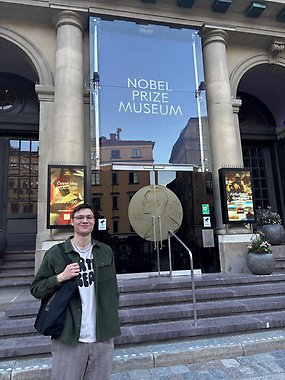
  • Magnus Axelsson Prize 2026

    Viggo Kraft is awarded the Magnus Axelsson Prize for the vision to give highly ambitious upper‑secondary students the opportunity to study physics and astronomy at Stockholm University before graduating, as well as for the initiative to strengthen the study environment within the research track.

    Department of Physics
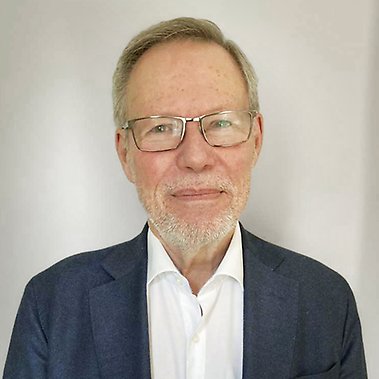
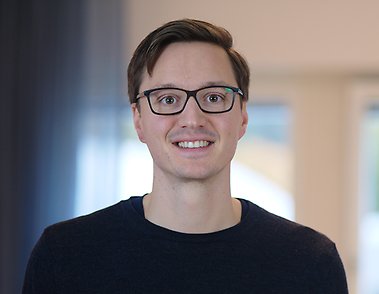
  • Anna Persson.

    The IPA PhD Thesis Award to Anna Persson for the Doctoral thesis Comparing theories of pre-linguistic normalization for vowel perception (2024)

    Anna Persson has been awarded the International Phonetic Association's IPA PhD Thesis Award for the Doctoral thesis Comparing theories of pre-linguistic normalization for vowel perception (2024). The committee decided to confer the award ex aequo, recognizing two outstanding theses whose scholarly excellence, originality, and contribution to the field of phonetics stood out in a particularly compelling way.

    Department of Swedish Language and Multilingualism
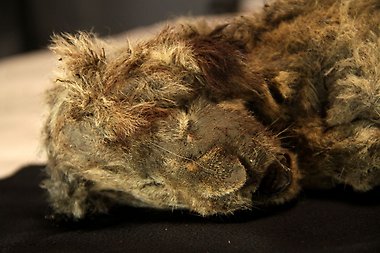
  • Cave lion cub

    Ancient genomes reveal the unique history of the extinct cave lion

    A new study on multiple genomes from the extinct cave lion has discovered that it represented a highly distinct evolutionary lineage, which separated from modern lions more than a million years ago. The results also show that the cave lion had a history of interbreeding with modern lions that was tightly linked to past climatic changes. These findings are published in the journal Cell in a study led by Swedish and British scientists.

  • AI helps systems do more with less

    Smarter decision-making can save both energy and bandwidth, for example when your wearables communicate with your phone. Shubham Vaishnav has explored lightweight AI-driven solutions for this.

    Department of Computer and Systems Sciences
  • Nils Landén Mammos, PhD candidate in economics at Stockholm University.

    Nils Landén Mammos: Parents’ wealth matters significantly for first-time homebuyers

    In his doctoral dissertation in economics, Nils Landén Mammos examines how macroprudential and monetary policies affect households and firms through the housing market. One of the essays studies how parents’ housing wealth helps young people enter the housing market and what this means for the pass-through of mortgage regulations.

    Department of Economics
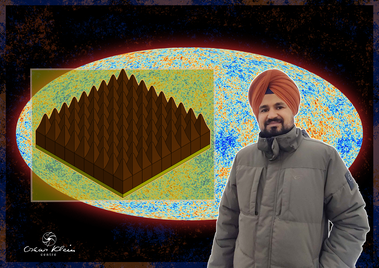
  • Shape before material: a new design rule for microwave absorbers in cosmic telescopes

    A recent study led by postdoctoral researcher Gaganpreet Singh at the Oskar Klein Centre brings together numerical simulations, in-house material fabrication and laboratory measurements at a level of detail not previously reported for this class of microwave absorber. The work shows that the geometry of a millimetre-scale absorber, and not the material it is made of, governs how well it traps incoming microwaves. The study, selected as an Editors' Pick in Applied Optics, could simplify the design of future telescopes observing the afterglow of the Big Bang.

    Oskar Klein Centre
  • Social contact gives young fish larger brains

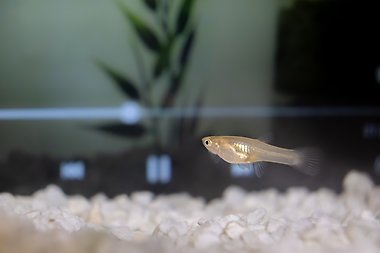
    Young guppies who were able to see and interact with live fish developed larger brains than guppies who only saw other fish on a screen. This is shown in a new study from Stockholm University, published in Biology Letters. The findings suggest that live social interaction in real time may be important for brain development.

  • Giorgio Basciu.

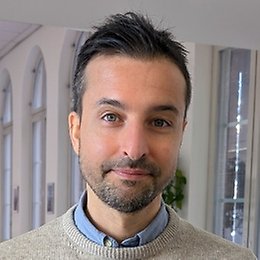
    The Scardigli award to Giorgio Basciu's for the Doctoral thesis Word Pairs and Other Syndetic Constructions in Old Norse Poetry (2025)

    Giorgio Basciu has been awarded the Scardigli Prize by the Italian Association of Germanic Philology (Associazione Italiana di Filologia Germanica – AIFG) for his doctoral thesis, Word Pairs and Other Syndetic Constructions in Old Norse Poetry (2025). The award is presented for outstanding research in Germanic philology.

    Department of Swedish Language and Multilingualism
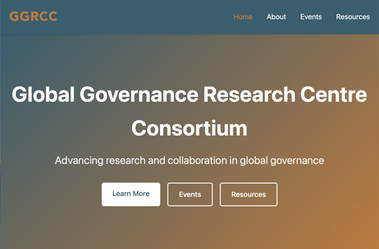
  • Screenshot of GGRCC website.

    A New Global Alliance for Global Governance Research

    The SCGG is a founding member of the new Global Governance Research Centre Consortium (GGRCC) – an international network of research centers on global governance. SCGG co-directors Lisa Dellmuth and Jonas Tallberg have been closely involved in developing this new initiative, which will be internally launched on June 8.

    Stockholm Center on Global Governance
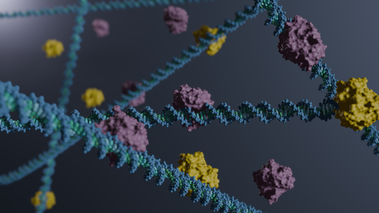
  • First human SMUG1 structures reveal how cells repair DNA

    Researchers have captured the first atomic structures of human SMUG1, an enzyme that helps cells repair damaged DNA. The findings provide new insight into how cells recognise and remove harmful DNA bases, and may support future efforts to develop drugs that target this DNA repair pathway.

    Department of Biochemistry and Biophysics
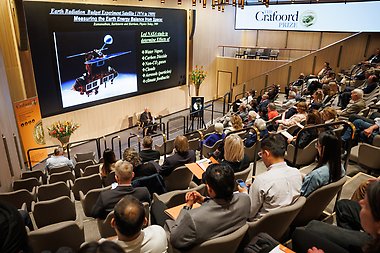
  • Understanding Earth’s energy balance: the science behind the 2026 Crafoord Prize

    Clouds above the Pacific, soot drifting from agricultural fires, polluted sea spray rising from warming oceans. At this year’s Crafoord Prize Symposium in Geosciences in Stockholm, leading climate researchers gathered to explore one of the defining scientific questions of our time: how aerosols, clouds and other climate pollutants are reshaping Earth’s energy balance, and what that means for societies around the world.

    Department of Environmental Science
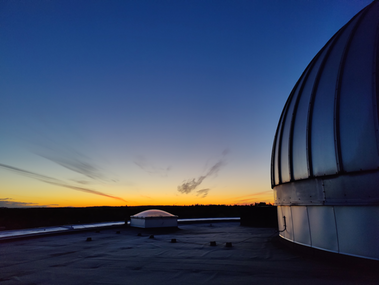
  • The AlbaNova Telescope in late evening.

    Practical astronomy – astronomy students learn to observe

    During the spring, PhD and master's students at the Department of Astronomy have observed astronomical objects with three different telescopes: Onsala Space Observatory, Nordic Optical Telescope, and the AlbaNova telescope. This observation exercise is an important part of their studies. The objects the students looked at are interstellar gas clouds in the Milky Way and exploding stars (supernovae).

    Department of Astronomy
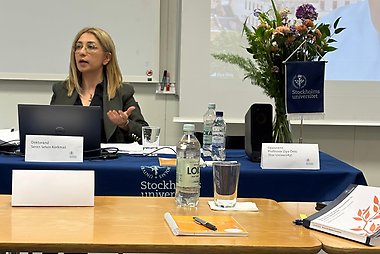
  • Seren Selvin Korkmaz has defended her dissertation

    Seren Selvin Korkmaz defended her dissertation on 28 May, entitled The Role of the Opposition in Autocratisation: The Case of Turkey’s Republican People’s Party (CHP) .

    Department of Asian and Middle Eastern Studies
  • João Quelhas, a PhD student in economics at Stockholm University.

    João Quelhas: Raising VAT on food again could prove controversial

    In April 2026, Sweden cut VAT on food from 12 to 6 percent – a measure intended to be temporary. However, with a general election approaching, it may prove difficult for politicians to raise the tax again, João Quelhas, a PhD student in economics at Stockholm University, told the Swedish newspaper Dagens ETC.

    Department of Economics
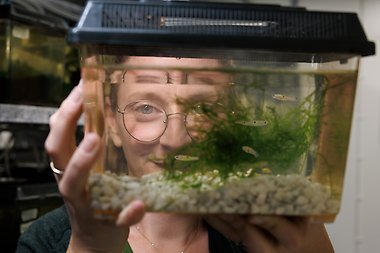
  • Wallenberg Academy Fellow Jessica Stephenson

    A fishy explanation for pandemics

    What can guppies and their parasites reveal about the occurrence of pandemics? Researcher Jessica Stephenson is studying the interplay between social behavior and the spread of infection.

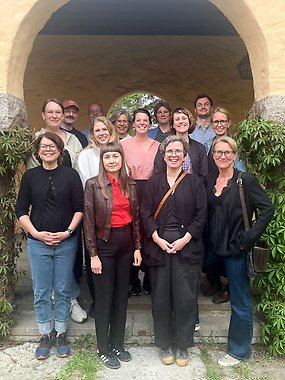
  • Participants at National doctoral retreat in German 25-26 May 2026.

    National Doctoral Retreat in German at Sigtunastiftelsen

    Research thrives on exchange. Therefore, the German section organized a national doctoral retreat in German Studies 25-26 May 2026 with participants from the universities of Gothenburg, Lund, Stockholm, and Uppsala.

    Department of Slavic and Baltic Studies, Finnish, Dutch and German
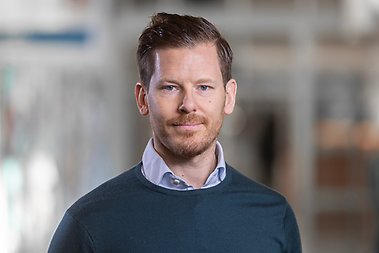
  • Jesper Böjeryd, researcher in economics at Stockholm University.

    Jesper Böjeryd on the risks of Sweden adopting the euro

    Jesper Böjeryd, a researcher in economics at Stockholm University, writes an op-ed in newspaper Svenska Dagbladet about a possible Swedish membership in the eurozone. ”Today’s debate ignores major potential costs,” he says.

    Department of Economics
  • The new study "How the Central Emergency Response Fund Crowds in Bilateral Humanitarian Aid" was published in the Global Studies Quarterly.

    UN Central Emergency Response Fund Increases Bilateral Aid, Study Finds

    A United Nations fund designed to release emergency aid when disasters strike does more than pay for immediate relief — it also tends to prompt individual governments to follow suit and direct aid to underfunded emergencies, according to new research by Lisa Dellmuth, a professor of International Relations at Stockholm University affiliated with the SCGG.

    Stockholm Center on Global Governance
  • Guest article on radiological emergency preparedness

    The Department of Medical Radiation Physics is conducting a project on optimising radiological emergency preparedness. The aim is to contribute knowledge that can facilitate and streamline the response measures that may be required in the event of ionising radiation. The work is led by Professors Iuliana Toma-Dasu and Andrzej Wojcik. PhD student Tomas Palmqvist has summarised the two studies presented during a licentiate seminar. This has been published as a guest post on the website of the Knowledge Centre for Radiation Medicine in Disasters (KcRN).

    Department of Physics
  • Captured carbon dioxide could become a Swedish industry of the future

    Today’s carbon capture technology is expensive and energy-intensive. Researchers at Stockholm University are working together with RISE Research Institutes of Sweden, other higher education institutions and companies to develop more efficient solutions for capturing carbon dioxide, using it as a resource and storing it long-term.

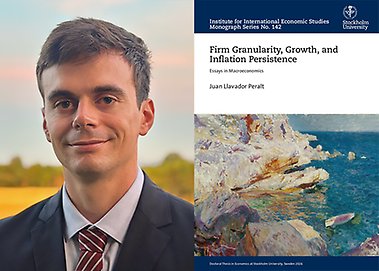
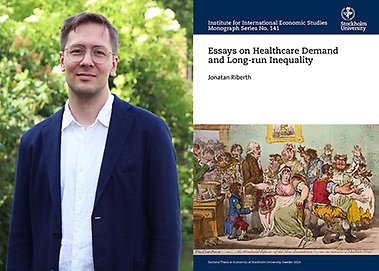
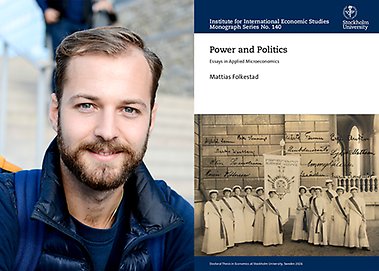
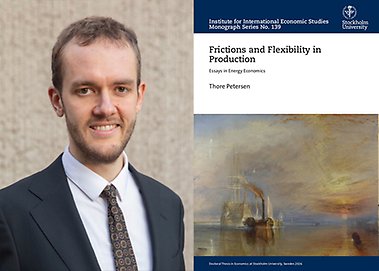
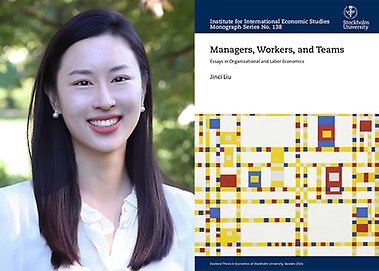
  • What Makes a Good Manager? It’s in the Feedback

    New doctoral thesis examines how managerial practices, organizational design, and worker preferences shape productivity and retention in the modern economy.

    Institute for International Economic Studies