


Practical astronomy – astronomy students learn to observe
During the spring, PhD and master's students at the Department of Astronomy have observed astronomical objects with three different telescopes: Onsala Space Observatory, Nordic Optical Telescope, and the AlbaNova telescope. This observation exercise is an important part of their studies. The objects the students looked at are interstellar gas clouds in the Milky Way and exploding stars (supernovae).
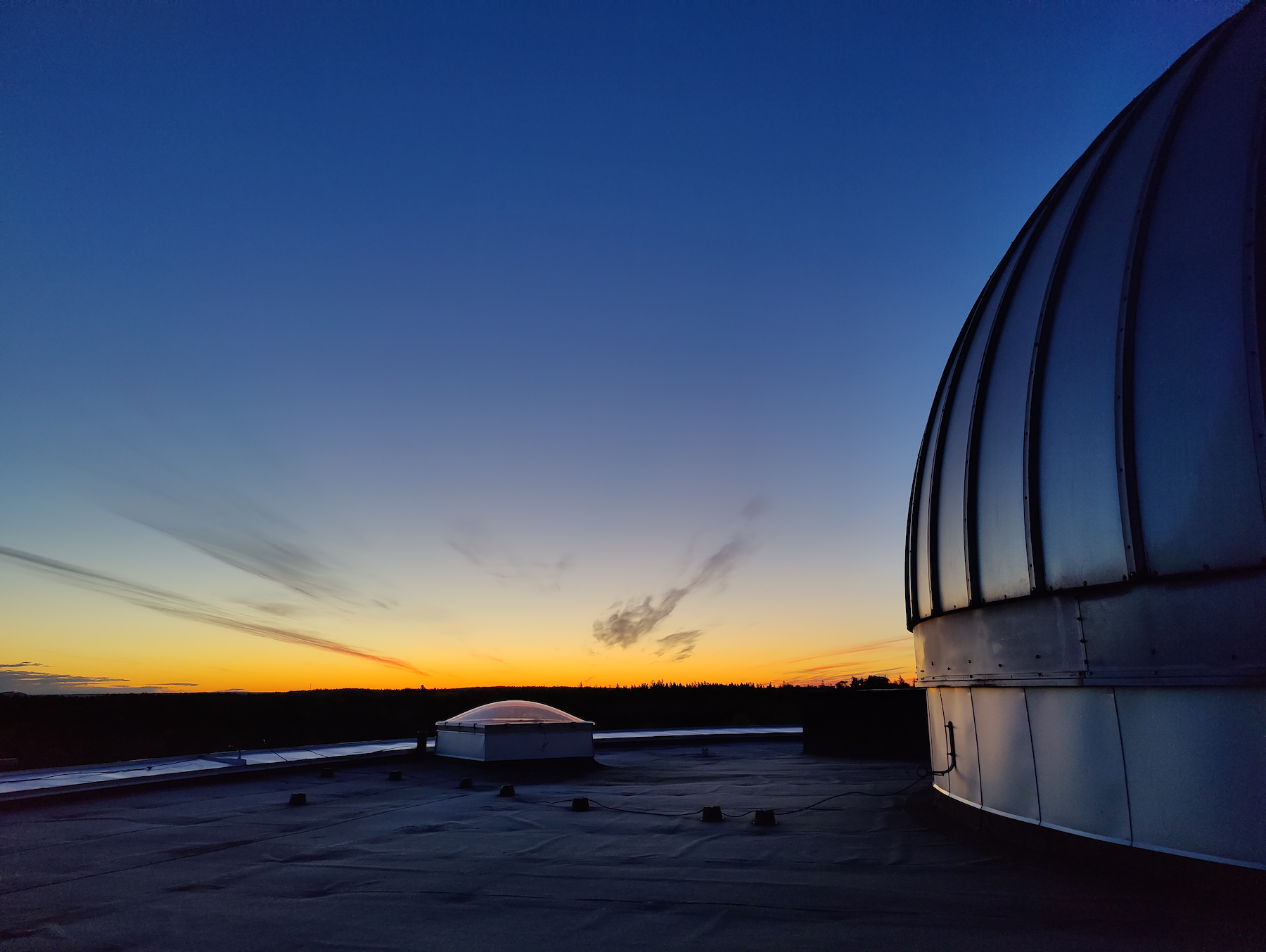
Night outside the AlbaNova telescope.
In the university course Observational techniques II, master’s and PhD students learn how astronomical observations are done in practice. The students practice writing proposals for telescope time, prepare and execute the observations, and postprocess the collected data. The course is given in the spring term each year, and the observations happen in two different weeks, one on-site at Onsala Space Observatory, and the other at AlbaNova using the Nordic Optical Telescope on the Canary isles by remote control.
It’s inspiring to watch the students getting excited when using the telescopes directly to look at celestial objects they previously only read about, says Ragnhild Lunnan, assistant professor at the Department of Astronomy and course lecturer.
Astrophysical chemistry in the gas clouds forming new stars
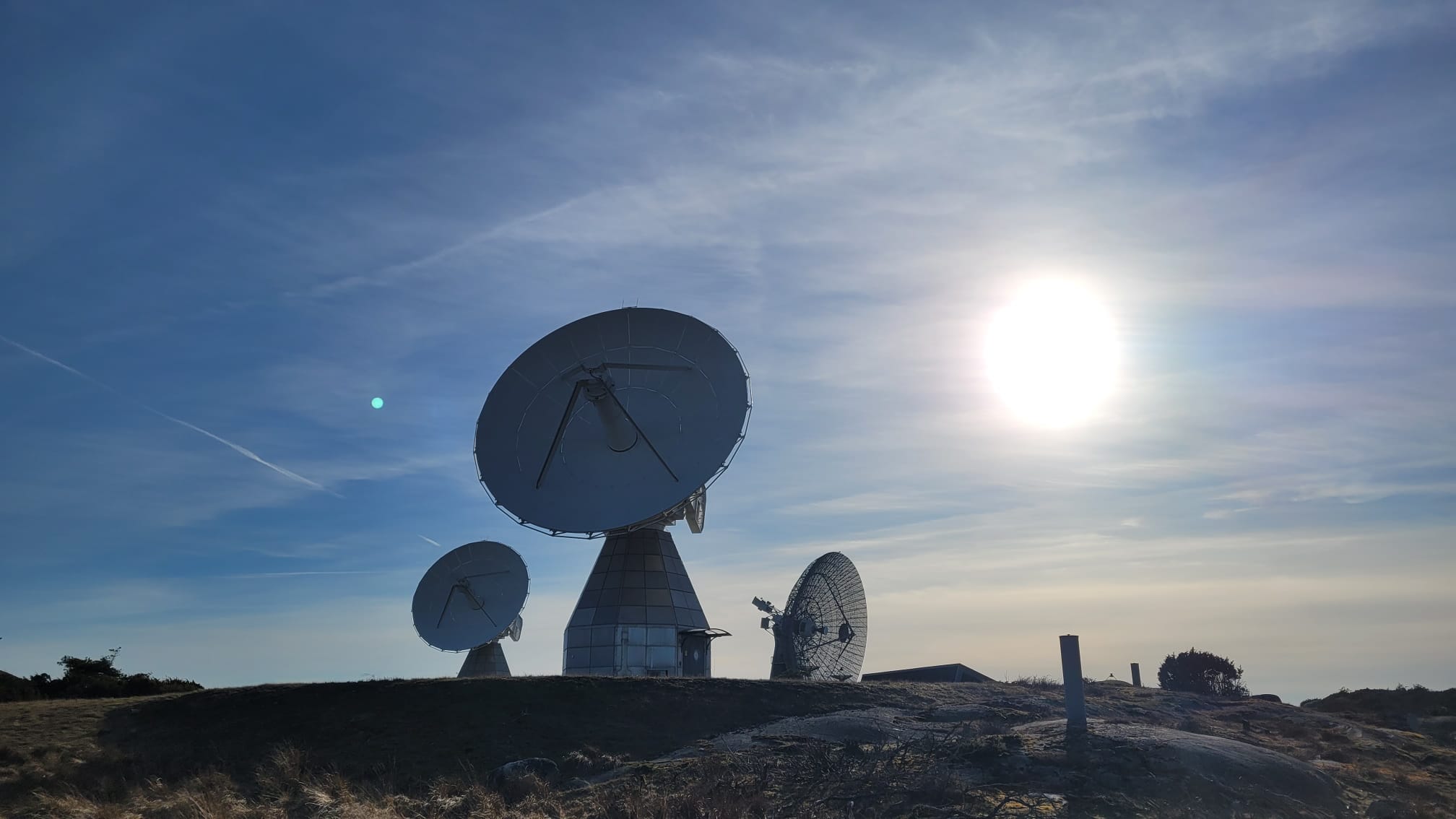
The Onsala 25m telescope (to the right) and twin telescopes. These telescopes were not used by the students but are actively used for astronomy and geoscience.
The students visited Onsala Space Observatory earlier this spring. The observatory is located outside Onsala south of Gothenburg and is hosted by the Department of Physics and Astronomy at Chalmers University of Technology. The students used a radio telescope with a diameter of 20m to observe clouds of interstellar gas in the Milky Way.
Radio telescopes of this type can be used to obtain spectra of astronomical objects. The goal of the observations was to get spectra of an interstellar gas cloud. In these gas clouds, new stars are born, which means they are very interesting for astronomers to study. With spectra covering radio frequencies, so called spectral lines can be identified. The lines that can be observed by the Onsala telescope come from molecules in the gas clouds. By measuring the strength and other properties of the lines, the students were able to calculate the conditions in the gas clouds, for example the gas temperatures and densities.
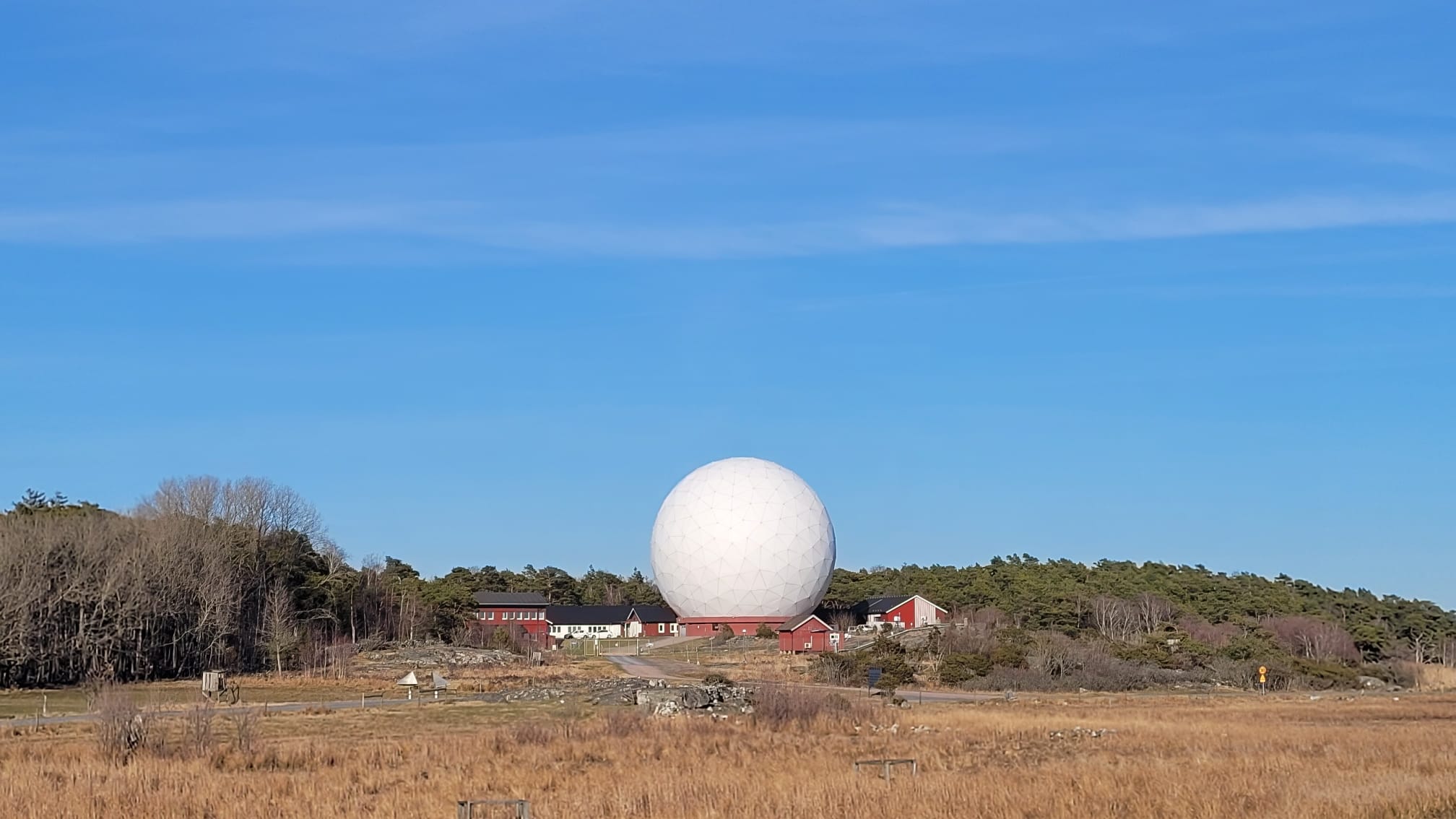
The Onsala 20m telescope. The telescope is surrounded by a radome that protects sensitive electronics from the outside.
Observing exploding stars
In the second part of the course, the students used the Nordic Optical Telescope (NOT) and the AlbaNova Telescope to study supernovae. NOT was used to obtain spectra of visible light from eleven supernovae. One of the supernovae were also also possible to observe from Stockholm and for this and its host galaxy images could be taken with the AlbaNova Telescope.
A supernova spectrum can be used in a similar way as radio spectra to determine which elements are present in the material ejected in the explosion, but also to classify the supernova. Supernovae come in different flavors where the properties of the precursor star determine which spectral lines are present. By doing measurement on the spectra, the students could classify seven of them, a result which was also published to the astronomy community as a Transient Name Server AstroNote. In addition the students did follow-up observations on a number of supernovae previously studied by astronomers at the department.
We were a bit disappointed the first night when it was cloudy at the telescope, but luckily we could do our observations the night after, says Emma Lundqvist, PhD student at the Department of Astronomy.
The NOT observation week was unfortunately cursed by quite bad weather on the Canary isles, which meant that some of the planned observations were impossible to do. Weather conditions are a natural limitation for astronomy, which means that most telescopes observing optical and infrared light, and that are used by professional astronomers, are located on mountain tops with many cloud and rain free nights. Despite the problematic conditions, the students were able to conduct their supernova observations.
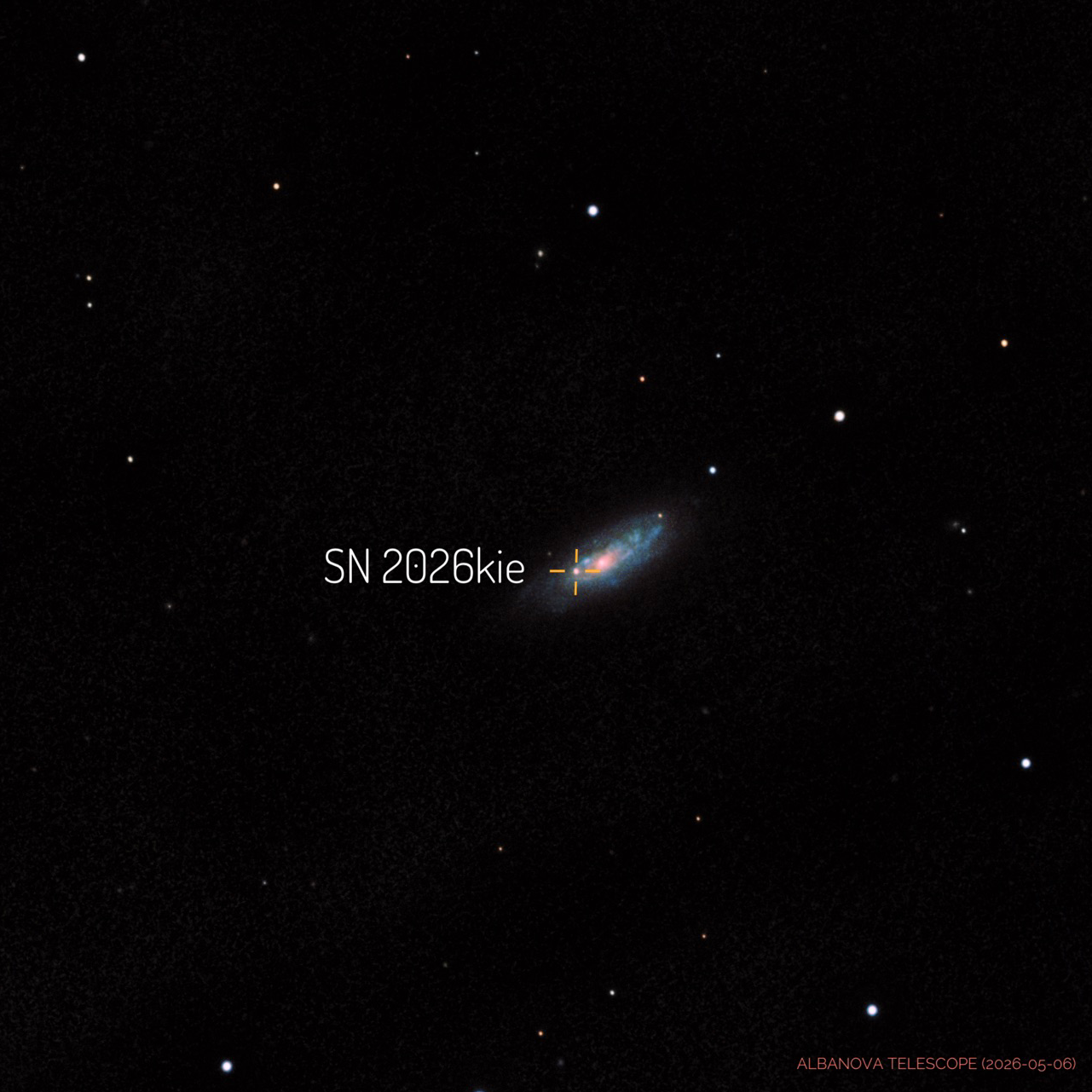
Supernova 2026kie and its host galaxy. Three colour composite from the AlbaNova Telescope.
Facts
In a spectrum electromagnetic radiation is divided into different frequency (or wavelength) bins. This makes it possible to see how the radiation varies as a function on frequency. Spectral lines are features in the spectrum showing up at a specific frequency. Different elements or molecules cause spectral lines to appear at different frequencies, which means that astronomers can, for example, use them to identify which elements that are present in the object being studied.
More information
Read more about the course Observational techniques II.
Read more about Onsala Space Observatory.
Read more about the Nordic Optical Telescope.
Read more about the AlbaNova telescope.
Contact
Ragnhild Lunnan, Institutionen för astronomi, ragnhild.lunnan@astro.su.se
Last updated: 2026-06-03
Source: Department of Astronomy