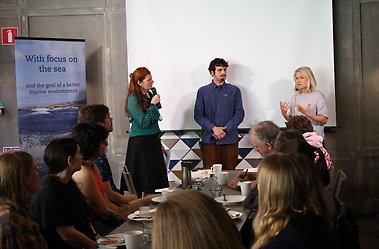
Cyanobacteria play a more important role in the food web than previously thought, and global warming can increase the competition for food between pelagic fish species. This new knowledge was revealed through DNA metabarcoding methods, presented at the latest Baltic Breakfast.
The Swedish government on Thursday (May 21, 2026) appointed law professor Mark Klamberg at Stockholm University, as member to the Permanent Court of Arbitration (PCA) in The Hague — an institution whose most consequential function today is nominating judges to the world’s highest court.
Have rising housing wealth made societies more equal, or are debts simply being passed on to the next generation? In EFN Finansmagasinet, Jonas Vlachos, Professor of Economics at Stockholm University, examines today’s housing market.
There are currently issues with email delivery from certain external senders to Microsoft addresses. As a result, emails do not always reach students who have redirected their student email accounts, and IT Services is working to resolve the problem.
Workplace bullying has long been linked to poor mental health among employees. But people exposed to bullying are also at greater risk of taking sick leave and starting treatment with psychotropic medication. These findings come from a new doctoral thesis in public health sciences at Stockholm University examining workplace bullying in Sweden and Denmark.
The transdisciplinary master's programme TRACEE was born out of collaboration between eleven European universities in the CIVIS alliance. Professor Anna Sobek is very impressed with its first-year master's students.
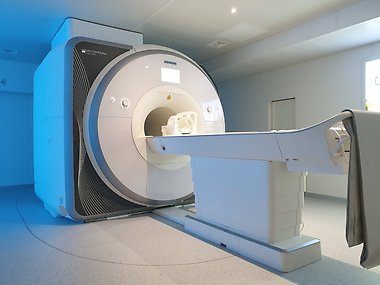
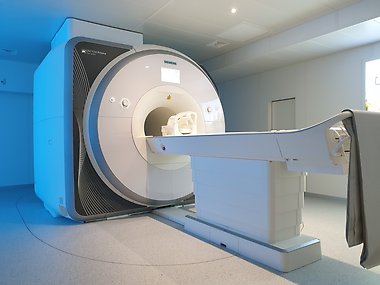
Stockholm University researchers are welcome to apply for SUBIC time grant Stockholm University Brain Imaging Centre (SUBIC) is announcing a new call for the semiannual funding opportunity with the purpose to allow increased access to the various method platforms that SUBIC offers. Interested researchers that are successful in their application will be provided with free of charge access to the method platform of choice as well as limited but needed support to successfully complete the awarded project. Applicants can apply for access to all equipment. List of SUBIC equipment What is the purpose of the funding? The general purpose of this funding mechanism is to allow users at Stockholm University to either collect pilot data for future grant applications or to collect data for their first complete study on the instrument mentioned in the application to promote use among groups not normally accustomed to the instrument. Projects will be assessed by an expert committee based on the criteria outlined below. Proposals receiving good ratings will be awarded with free time on SUBICs instruments and/or free support according to specification. No monetary or other financial means are distributed via this funding mechanism. Please note that if your project requires an ethical permit, you must have it before starting the project. Application The application consists of 3 pages. (1) A filled-out Application form , (2) a 1-page CV for the main applicant, and (3) an outline of the proposed project, according to the project template . Please compile all three final documents into one PDF document. Applications (Application form, Proposed project page, and CV) should be emailed to subic@su.se no later than June 12th 2026. Any researcher (awarded a PhD before the grant deadline) that are employed by Stockholm University can apply. How will the applications be assessed? Applications will be assessed by a committee consisting of SUBIC staff and researchers tied to SUBIC. Projects will be assessed based on their scientific value as well as prior experience and existing funding of the applying research group. Priority will be given to projects with perceived high scientific value as well as to groups with no-to-limited experience with the instrument in question, no history of previously awarded in-house funding, no external funding for the project in question, and the estimated potential of the project in question to lead to externally funded future projects (criteria listed in no specific order). When will the decision be announced? The decision of the grant award will be announced no later than June 19th . When is the start of the grant period, and how long is the grant awarded? The start of the grant period is Aug. 2026 and the grant is valid for one year, but an extension may be possible after discussion with SUBIC. Contact If you have questions, please don't hesitate to contact us at subic@su.se .
How can teacher education contribute to a more inclusive and linguistically just educational environment? This was the focus of an international workshop organized by the Department of Language Education on May 20. Particular attention was given to Sámi languages and sign language in Norway.
The Royal Swedish Academy of Sciences has elected three new members. One of them is Anders Götherström, Professor of Molecular Archaeology at Stockholm University.
Short-term contracts and insecurity in the job market drive many to postpone having children. But for non-Western migrants, the opposite is the case, according to a new study in Demography by Mimmi Lounela, PhD at Stockholm University. The correlation is especially strong among men.
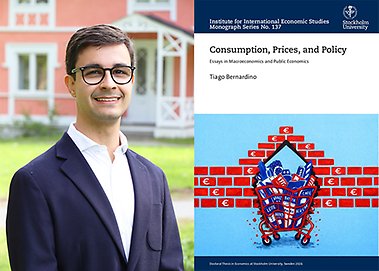
Hedda Thorell, a PhD student in economics at Stockholm University, and Gökhan Ider at Freie Universität Berlin, have been awarded the Lamfalussy Fellowship, along with an honorarium of 10,000 euro. Together they study the design of monetary policy in the euro area.
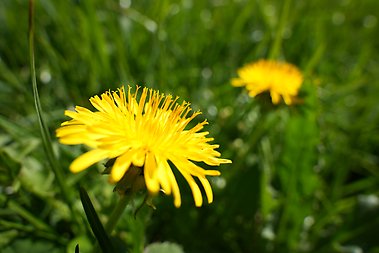
Dandelions in Sweden reproduce without pollination, and their seeds are genetic copies of the plants they grow on. Yet most dandelions still produce pollen. Recently, however, more and more pollenless dandelions have been discovered, a development that could reduce the availability of food for many insects.
Why do people who hold a specific view on the climate issue also tend to hold similar views on taxes or vaccinations, even though the topics are unrelated? A new study a mathematical model showing how the mechanism of "source filtering" quickly divides a population into two opposing camps that disagree on almost everything.
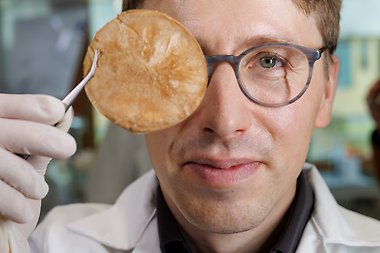
Each year, the world’s pulp and paper industry burns around 70 million tons of a by-product – lignin. Wallenberg Academy Fellow Mika Sipponen wants to put lignin to better use: as a base for new living materials. Microorganisms in them can help to purify water and capture carbon dioxide.
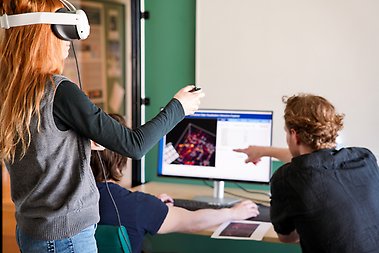
A master's thesis project hosted at the Oskar Klein Centre asked twelve researchers to label structures in a simulated patch of the universe — once on a flat screen, once inside a VR headset. The pilot suggests the headset is the better instrument for the job, and maps out what would have to change before it could become a normal part of a researcher's workflow.
The German Academic Exchange Service DAAD has awarded Hanna Henryson the Jacob and Wilhelm Grimm Sponsorship Prize for her work as a researcher and teacher in German-language literature. The prize honours excellent early career researchers and has been awarded since 2011.
Department of Slavic and Baltic Studies, Finnish, Dutch and German
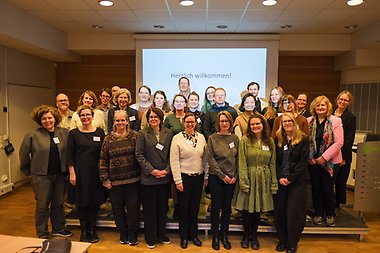
On 23–24 April, teachers and researchers in German from across Sweden gathered for two productive conference days in Stockholm. The event was organised by the colleagues in German at Stockholm University. Participants included representatives from Umeå University, Dalarna University, Uppsala University, the University of Gothenburg, Linnaeus University, and Lund University.
Department of Slavic and Baltic Studies, Finnish, Dutch and German
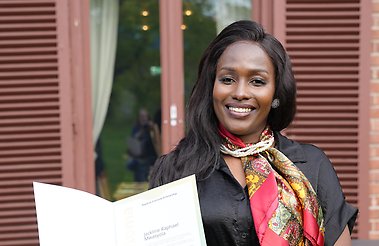
On 11 May, Swedish Institute's scholarship holder graduates were celebrated at the Stockholm University Faculty Club. After one or two years of master's studies at Stockholm University they will soon head back to their home countries.
The Swedish Research Council has decided which higher education institutions will receive funding within the call for Grants to recruit international guest researchers to Sweden 2026. One grant goes to Stockholm University, to recruit Jessie Creamean from the USA.
On 23–24 April Kurt Villads Jensen and Heiko Droste organized the workshop "Baltic Bloodbaths – The Use of Political Violence in the Baltic Sea Region 1400–1600.". The workshop took place at Stockholm university's Gula villan and at the Department of History.
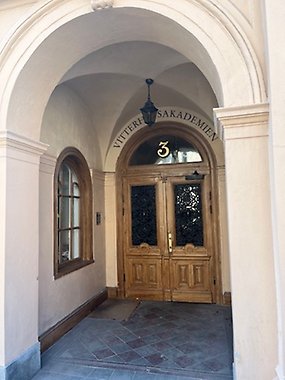
On 16–17 April Karin Sennefelt and Anton Runesson organized the workshop ”Early Modern Nourishment: Eating, Health, and Knowledge in Europe, 1500–1800”. The workshop took place at The Royal Swedish Academy of Letters, History and Antiquities, Villagatan 3 in Stockholm.
The Swedish government will provide funding to three universities to launch new master’s programmes aimed at strengthening Sweden’s influence within the EU.
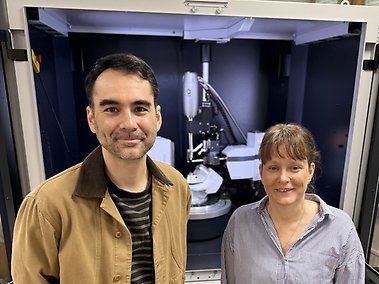
At the Department of Chemistry, there is a professional role that is seldom visible externally but plays a crucial part in world-class research. The staff scientist is the engine driving progress forward and enabling groundbreaking discoveries at the highest international level.
The PhD student and psychologist John Kaneko’s dissertation Curiosity for Learning in Early Childhood Education and Care presents quantitative and qualitative studies regarding curiosity-driven learning in preschool children.
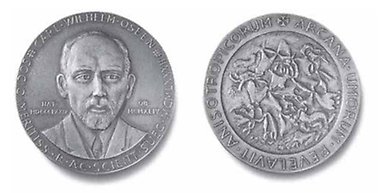
The Board of the Swedish Physical Society has decided to award the 2026 Oseen Medal to Rasmus Öberg of Umeå University for his dissertation “Spotlight the killer: detecting harmful chemical and biological agents using optical spectroscopy,” in recognition of his contributions to the development of highly sensitive spectroscopic methods for detecting harmful chemical and biological agents.