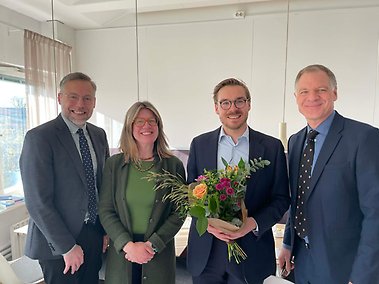
The Department of Economics is co-developing a new master’s programme in public administration and the European Union, which has now been awarded government funding.
The drug policy in Sweden is not shaped by evidence alone. Rather, it is a complex policy arena driven by competing moral frameworks and values, in which participation in policymaking processes largely leaves people who use drugs and their families out of the discussion. This is shown in a new thesis in Public Health Sciences by PhD student Tuulia Lerkkanen at Stockholm University.
How are young people's lives, knowledge, and dreams for the future shaped by the place they grow up? Research in child and youth studies at Stockholm University shows that the image of rural youth, especially those interested in EPA tractors, is much more complex than what is often presented in public debate.
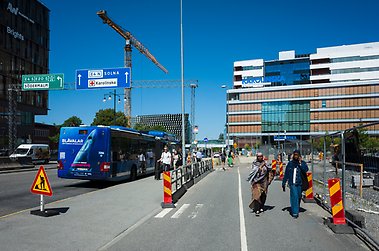
Seven researchers at the Department of Economics have been awarded major grants from the Handelsbanken Research Foundations following this spring’s application round. One of them is Laura Montenbruck, who receives SEK 1 million for a project examining discrimination against female bus passengers in Delhi.
The Hubble and James Webb Space Telescopes have revealed thousands of young star clusters emerging from their birth clouds. The observations, published in Nature Astronomy, show that more massive clusters clear away their natal gas faster than lower-mass clusters. The result has important implications for our understanding of star formation and how the young stars affect their surroundings.
According to a Vice President’s decision on April 16th, Matthew Hayes is promoted to Professor of Astrophysics. Matthew’s research focuses on the origin and evolution of galaxies and supermassive black holes. He uses modern observational facilities (such as the James Webb and Hubble space telescopes) to study galaxies both near and far away.
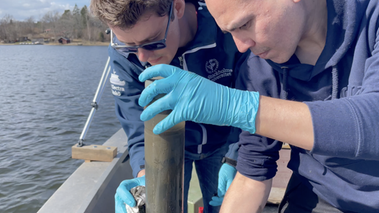
Remarkable so-called cable bacteria have for the first time been found decimetres down in completely oxygen-free sediments. The discovery raises new questions: how can they survive there – and what impact does their presence have on oxygen-depleted marine environments?
The way work and care are divided in a relationship affects how hard women are hit financially when they separate. A new study in PNAS shows that more equal relationships, in both same-sex and opposite-sex couples, reduce financial losses, but this advantage disappears when caregiving responsibilities fall on one person, usually the one who gave birth.
Financial markets are often described as transparent regarding price formation and stock prices, yet much of the activity that shapes prices takes place out of sight—through time delays, less transparent trading venues, and hidden informational advantages.
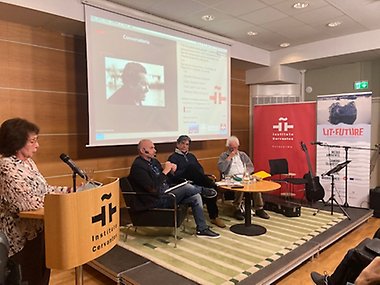
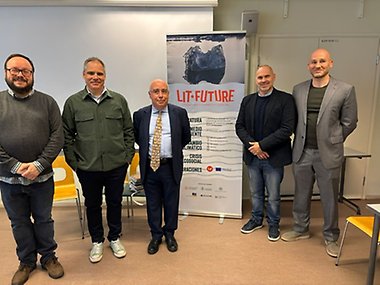
"Yo no quiero enmudecer". Gabriela Mistral para lectores del siglo XXI. Conmemoración del 80 aniversario de la concesión del Premio Nobel de Literatura
Two PhD students have developed a new open system designed to make it easier for researchers to understand, use, and replicate studies based on register data. The tools are already used by researchers and Swedish government agencies, and autolabel is installed in Statistics Sweden's secure research environment MONA.
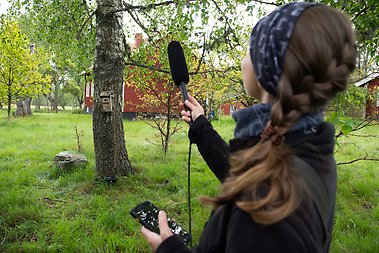
Every spring, millions of migratory birds return to their breeding grounds. Once there, song plays a crucial role – both in establishing territories and in attracting a mate. Using new analytical methods, researchers at Stockholm University can now track how birdsong changes over time and how dialects emerge between different populations.
New research published in the Journal of Labor Economics finds that gender norms influence the division of childcare responsibilities between parents when their wages change. Peter Skogman Thoursie, Professor of Economics at Stockholm University, is one of the study’s authors.
Sweden’s long-standing reputation as a global leader in universal social welfare is facing a critical turning point. A new reform proposed by the Swedish government would introduce stricter residence-based eligibility rules, requiring migrants to live in Sweden for at least five years within a fifteen-year period in order to qualify for social security benefits. According to researchers from the Department of Public Health Sciences at Stockholm University, the proposal risks undermining the foundational principle of equal access to welfare and may significantly widen existing health and social inequalities.
"Las huminadades digitales […] mantienen la relevancia del pensamiento humanista". Entrevista a Daniel Escandell Montiel, experto en Humanidades Digitales.
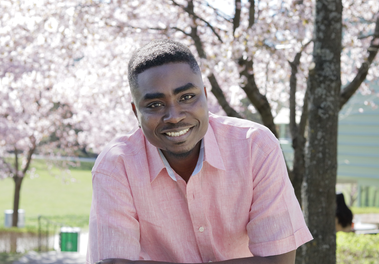
Congratulations to Farouq Sessah Mensah, awarded a Wallenberg–Bienenstock Postdoctoral Scholarship after completing his PhD. He will continue his research at Stanford University, building on his strong work at Stockholm University and the networks he has developed.
Over the past 50 years, attachment theory has provided important insights into the significance of caregiving relationships for children’s development. At the same time, the theory can be difficult to apply in clinical work with parents and young children, and an excessive focus on attachment patterns risks leading to misconceptions and misinterpretations.
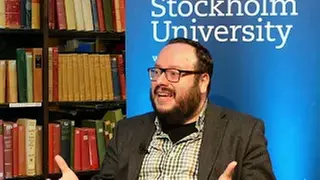
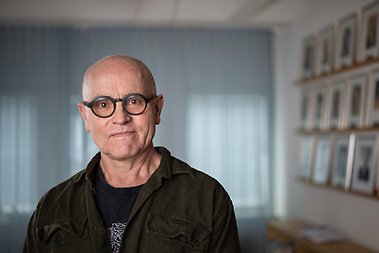
John Hassler, Professor of macroeconomics at Stockholm University, has been awarded the Guldhumlan prize in the category Researched and explained. He is recognized for his ability to explain and make economic issues accessible to a wider audience.
John Hassler, Professor at the Institute for International Economic Studies (IIES), has been awarded the Guldhumlan prize in the category Researched and Explained.
Researchers have drilled all the way down to the base of the Antarctic ice sheet, 2.8 kilometres beneath the surface. For the first time, by analysing the information contained within an ice core, scientists will obtain a continuous record of the Earth’s climate dating back 1.2 million years, and possibly even further.
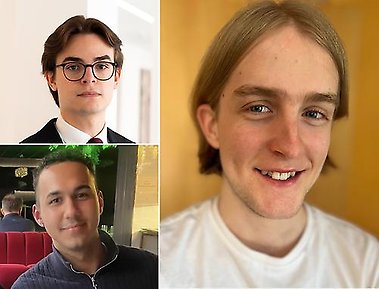
Isak Englund, Shawn Hellberg and César Kylberg have been awarded the Cassel Prize for Spring 2026 in recognition of their strong academic performance in the introductory course in Economics.
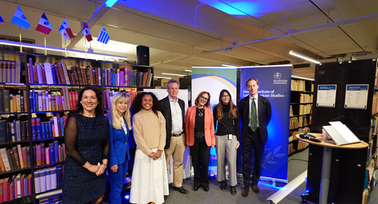
Researchers from Brazil and Sweden met at NILAS, Stockholm University to commemorate 200 years of diplomatic and cultural ties through a shared exploration of archival heritage.
A new research project at the Department of Law has received SEK 3 million in funding from Region Stockholm. The project will explore how healthcare systems can derive greater benefit from data used in the development of artificial intelligence.
From butterflies to peacocks, bold circular "eyespots" are among nature's most eye-catching patterns. But why do they appear in some animals and not others? A new study of skates and rays finally provides an answer – and it lies in the full range of defences an animal has at its disposal.
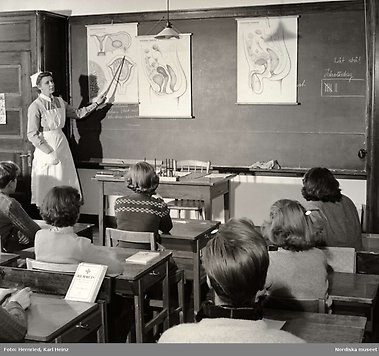
The research initiation funded by the Swedish Foundation for Humanities and Social Sciences: “Intimate Connections in Europe – Transnational perspectives on the history of school sex education” was held as a 3-day workshop in Stockholm (April 8–10), with 12 teaching researchers from five European countries: Germany, Sweden, Austria, the Czech Republic, and Switzerland participating.
Ultra-faint dwarf galaxies, tiny satellite galaxies orbiting the Milky Way, have long been seen as cosmic fossils. Now, a new study by researchers at the Oskar Klein Centre and the LYRA collaboration uses an unprecedented set of simulations to show just how powerfully these faint systems can reflect the conditions of the early Universe and tell us why some galaxies grew and others did not.
The scientific journal Tellus has been relaunched as a unified, independent, and scientist-led platform for Earth system science. The first set of publications reflects this renewed scope, bringing together research that advances understanding of the processes and interactions shaping the Earth system in a changing climate. With an expanded editorial structure and broader scientific scope, Tellus aims to publish high-quality, interdisciplinary research across the atmosphere, oceans, land, cryosphere, and biosphere—fields that are increasingly interconnected in the study of global environmental change.