


A fishy explanation for pandemics
What can guppies and their parasites reveal about the occurrence of pandemics? Researcher Jessica Stephenson is studying the interplay between social behavior and the spread of infection.
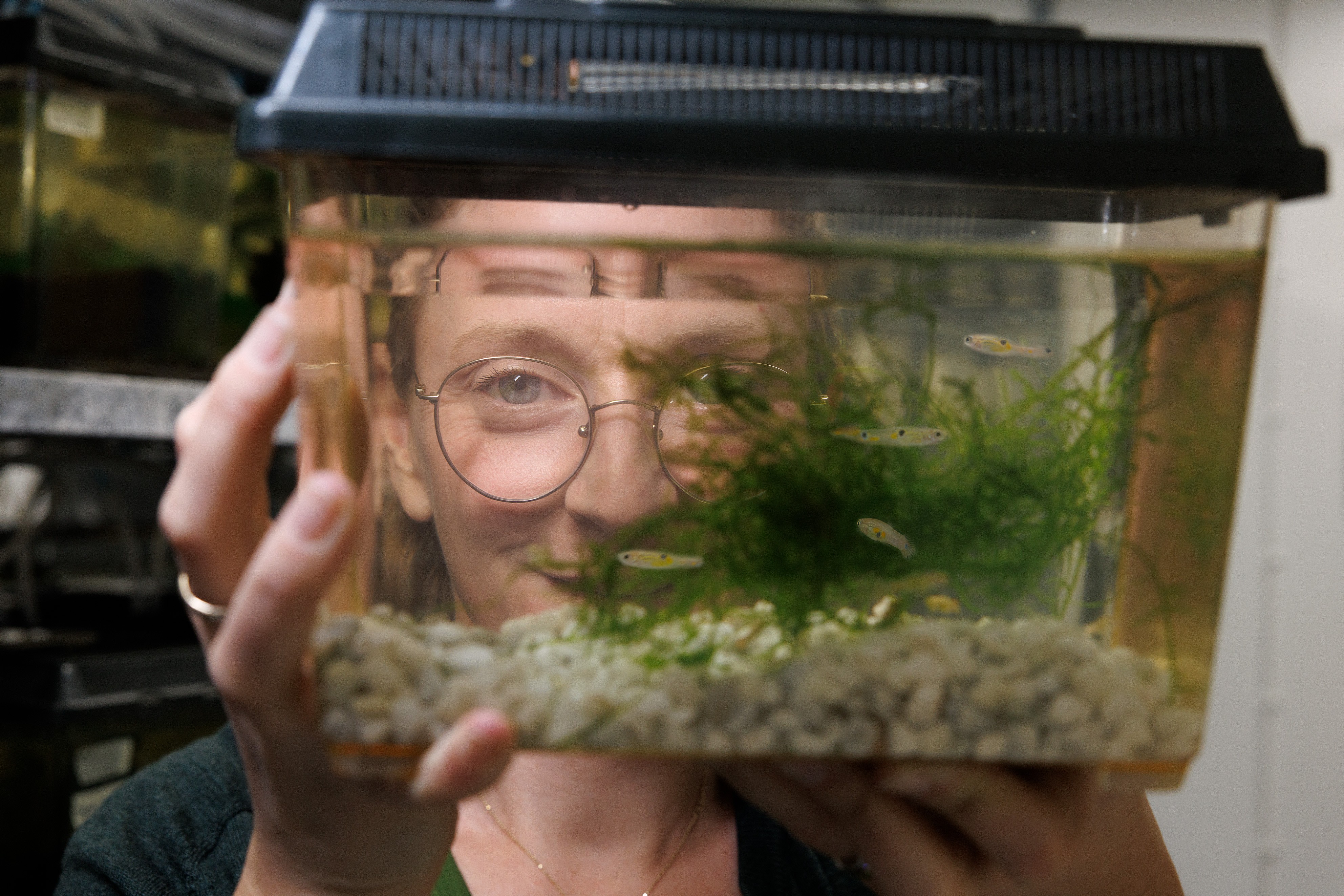
Wallenberg Academy Fellow Jessica Stephenson is doing research on guppies. Photo: Magnus Bergström/KAW
Gyrodactylid parasites – flatworms or flukes – are small, transparent, and attach themselves to the skin and gills of fish, sometimes in large numbers. The parasite feeds on the skin and fins of the host, often causing a fatal infection. In Norwegian fjords and in rivers on the Swedish west coast, for instance, they have caused major problems for salmon populations.
In Trinidad, off the coast of Venezuela, wild guppies are also affected on a large scale. For over ten years, British biologist Jessica Stephenson has studied the interaction between guppies and parasites in order to understand how pandemics arise, most recently at the University of Pittsburgh in the U.S.
She is a Wallenberg Academy Fellow, and since the summer of 2025 she has been pursuing the same exciting line of research at the Department of Zoology at Stockholm University.
“Our overarching research topic is to understand how host social behaviors influence the transmission of parasites.”
Read full article at the Knut & Alice Wallenberg Foundation web
Last updated: 2026-05-29
Source: Communications Office