


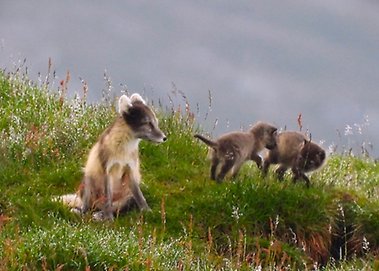
Heading to the mountains to survey curious Arctic foxes
In the coming days, doctoral students Julie Bommerlund and Chris Cockerill will head into the Swedish mountain region to spend just over a month surveying Arctic foxes, an endangered species.
In the coming days, doctoral students Julie Bommerlund and Chris Cockerill will head into the Swedish mountain region to spend just over a month surveying Arctic foxes, an endangered species.
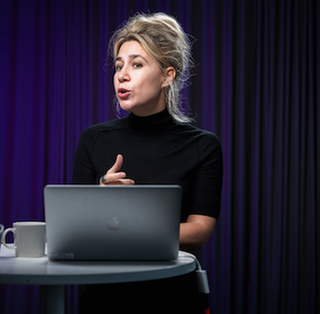
An editorial piece in Nature highlights the work of Professor Sabina Čehajić-Clancy, emphasizing the growing role of researchers in developing evidence-based approaches to reduce polarization, strengthen social cohesion, and help societies address deepening divisions.
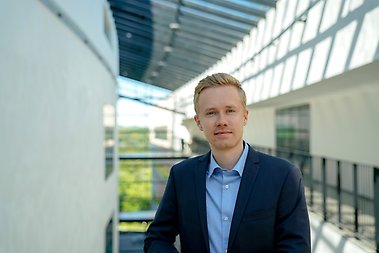
Ludvig Doeser, who is completing his PhD at Stockholm University and the Oskar Klein Centre later this year, has been awarded a Wallenberg–Bienenstock fellowship at Stanford University. The goal is to take on one of cosmology's central tasks: reconstructing how our Universe evolved into the cosmic web of galaxies we see today by developing an AI-driven digital twin of the local Universe.
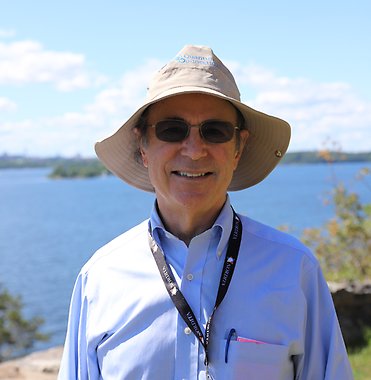
Dr Frank Wilczek initiated Quantum Connections, which has now been held 16 times. The event takes place in Stockholm each June and brings together graduate students and postdocs from both theoretical and experimental backgrounds, spanning the broad landscape of quantum frontiers. Since 2025, it has expanded to include both a Summer School in Sweden in June and a Winter School in China in January.
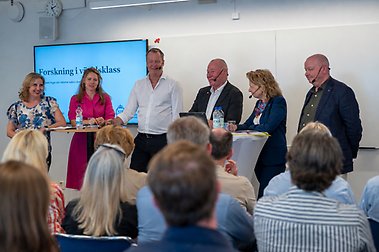
Long-term conditions, national coordination and a more strategic approach in the EU and globally. These were the main themes when the University Alliance Stockholm Trio brought together university presidents, research funders and politicians for the seminar World-class research – what investments and reforms are needed in Sweden and the EU? during Almedalen Week.
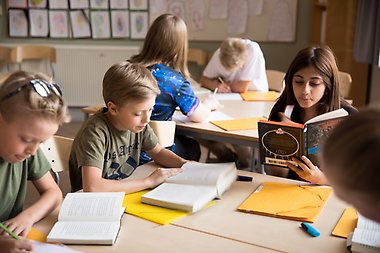
Ambitious educational public policies have the capacity to cushion the role of the genetic lottery in people’s life chances. This is one of the main conclusions of a scientific study by Stockholm University, the Universidad Carlos III de Madrid and the University of Lausanne, analysing the impact of an educational reform in England. These findings could be applied to the design of future educational policies, the researchers suggest.

Congratulations to DSV researchers Silas Majyambere, Tony Lindgren, Workneh Yilma Ayele, Alejandra Gómez Ortega and their co-authors! Four publications have been awarded at two international research conferences in May and June.
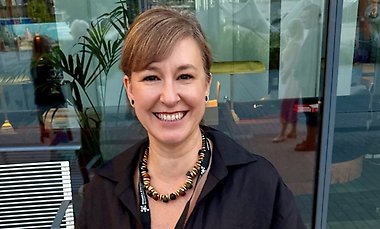
Press coverage. Could the medicines, plastics and chemicals of the future be made from carbon dioxide rather than oil? That is the vision behind the new research centre ACCELERATE, in which researchers from Stockholm University and KTH Royal Institute of Technology play a key role.
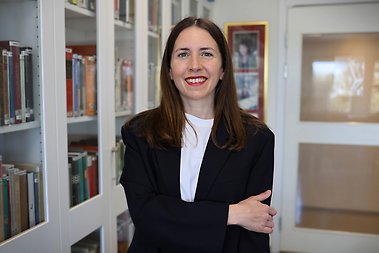
Legal frameworks often struggle to align with the realities of AI systems. In her research Liane Colonna tries to clarify how law is transforming in the context of AI and contribute to policy debates about effective legal regulations, like the EU AI Act.
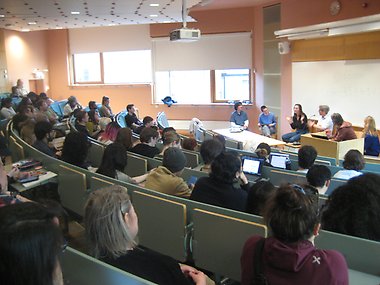
How can research, policy and civic engagement help shape a more sustainable future? These questions took centre stage at Threads of Change, a student-led event that brought together students, researchers and organisations from across Stockholm Trio.

After more than a year on hold, Sweden's research satellite MATS is returning to science operations this month. The mission is led from the Department of Meteorology (MISU) at Stockholm University, where project leader Linda Megner and principal investigator Jörg Gumbel head the scientific team. Operations were paused from April 2025 until June 2026 because of a clerical error in the licensing of the radio frequencies MATS uses to communicate. With the paperwork corrected, the satellite is once again cleared to send its data home.
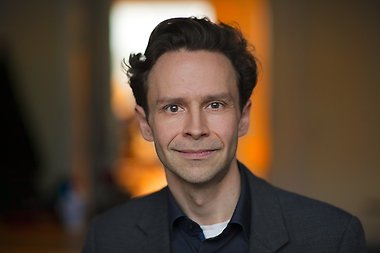
Ville Kaila, Professor of Biochemistry at Stockholm University, has been awarded an ERC grant of 2.5 million euro for research into how cells capture and use energy.
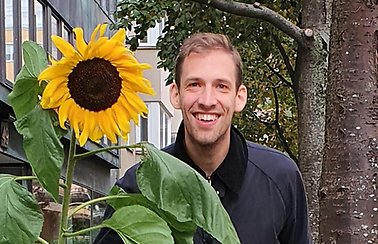
Karl Harmenberg, newly recruited Associate Professor at the IIES, is the only recipient from Stockholm University this year.
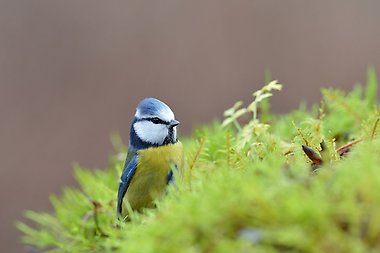
Habits are often seen as automatic and inflexible behaviours. But a new study, published in Evolution Letters, suggests that habits may have evolved as a way for animals to handle several tasks at once. By shifting to habitual behaviours for routine tasks, animals can free up attention to detect predators and other threats in the environment.
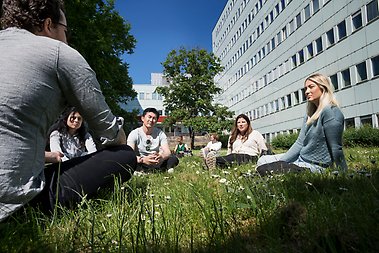
Stockholm University is placed 167th in the QS World University Rankings 2027, which was presented on June 18.
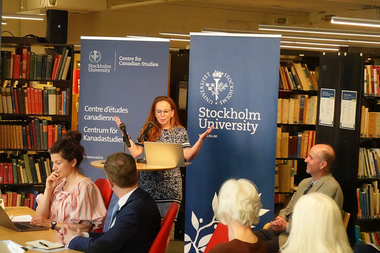
On 17–18 June 2026, researchers and experts from various countries gathered at Stockholm University for the conference "From Polarity to Circumpolarity: The Future of Canadian Studies in Europe" to discuss the development and future of Canadian Studies from a European perspective.
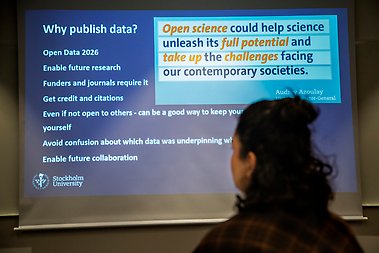
The cost of scientific publishing continues to rise, even as demands for open access increase. At Stockholm University, efforts are underway to move away from expensive commercial models and instead strengthen alternative publishing pathways, where neither researchers nor readers are required to pay.
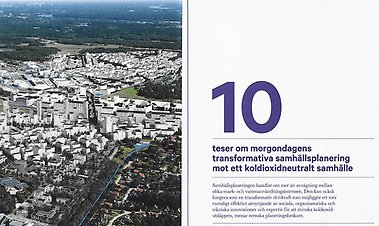
Anders Rickegård and Peter Schmitt , researchers at the Department of Human Geography, Stockholm University, have together with colleagues from Linköping University and Blekinge Institute of Technology published an article in the Swedish journal Plan No. 2, 2026.

Can we deliberately influence the climate to slow warming — and should we? These are the central questions in a new interdisciplinary research project led by Frida Bender, professor of climate modelling at the Department of Meteorology.
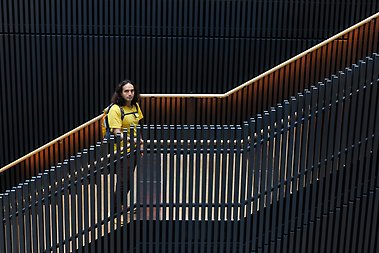
Wushi Goldring is exploring the role played by group theory and symmetries in algebraic geometry, and is seeking to find new and groundbreaking applications to be used in advanced mathematics and physics.
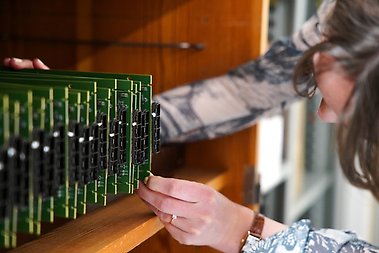
A pre-production run of radiation-hard readout boards for the ATLAS experiment at CERN has been completed at the Department of Physics, Stockholm University. The work, carried out across the department's ELPA and Instrumentation divisions, includes Oskar Klein Cectre researchers Christophe Clément (Professor, ELPA) and PhD student Julia Salwén (ELPA), with PhD student Federico Bonaldo recently joining the team. The yield from the pre-production batch came in well above CERN's threshold, and the results were presented to an international expert panel at CERN on 12 May.
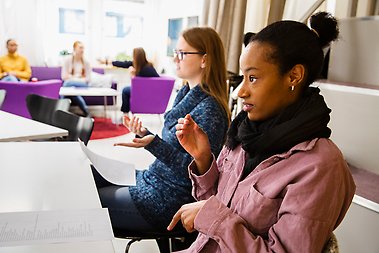
This new study compares perceptions and practices of sign language in Sweden and Türkiye across special schools and mainstream settings.
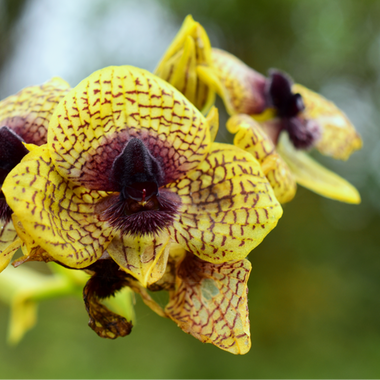
Royal Botanic Gardens, Kew’s State of the World’s Plants and Fungi 2026 report reveals the true scale of the biodiversity crisis has not yet been fully understood, but rapid data and technology advances offer hope.

Automation saves time, improves accuracy and allows employees to take on more advanced tasks. But to unleash the full potential of the technology, the organisation must build a governance structure to support their employees. This is not always the case.
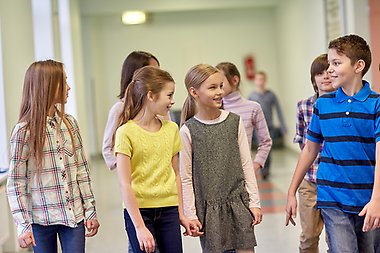
Schools play a key role in promoting the mental health of children and young people. However, approaches to the school's role in this work appear to vary across municipalities. In addition, schools' contribution to mental health promotion and prevention is often treated as separate from their core educational mission. This is the conclusion of a new public health study from Stockholm University.
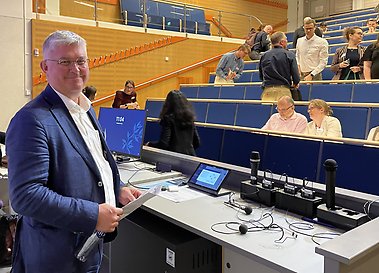
Security experts and researchers from across Europe and the rest of the world gathered last week at Stockholm University for the European Security Studies Conference (ESSC) 2026, one of the continent’s leading academic conferences on security issues. The conference took place on June 11–12, bringing together a broad group of participants to discuss the evolving challenges shaping European and global security.
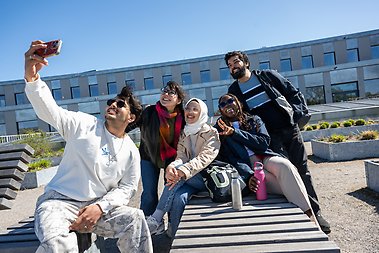
Are you passionate about your studies at Stockholm University? Do you enjoy creating content for social media and sharing your everyday student life? We’re looking for Digital Student Ambassadors to join our team during the autumn term and help future students discover what it’s really like to study at Stockholm University.
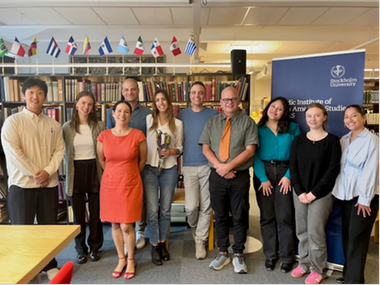
On 5 June, Master’s students in Latin American Studies presented and defended their dissertations, marking the culmination of their studies.

When generative AI swept across the world, students were left to fend for themselves. Trust between teachers and students took a serious knock.
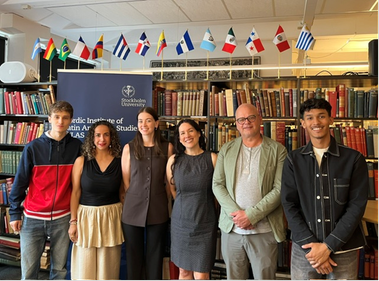
On 2 June, Bachelor students in Latin American Studies successfully presented and defended their Bachelor’s dissertations.