


Can Factories Go Green Faster Than We Think?
Cutting emissions from industry is often seen as slow and costly. But in a new doctoral thesis, IIES graduate student Thore Petersen paints a more optimistic picture: many factories may be far more adaptable in their energy use than we think.
Hidden flexibility in how firms use energy
Using detailed data from German manufacturing, Thore finds that even very similar factories use very different mixes of fossil fuels and electricity—differences that can’t be explained by location or industry alone.
When production volume changes, electricity use adjusts three times more than fossil fuel use. This suggests firms can shift energy sources—but fossil fuels are slower to adjust due to practical “frictions.”
Once these frictions are accounted for, firms appear much more capable of switching to electricity than standard estimates suggest.
Greening industry could be cheaper
The implications for climate policy are striking. Thore estimates that the true ability of firms to switch energy sources is three times as high as previous research has suggested. In practical terms, this means that firms can reduce fossil fuel use more easily and the economic cost of doing so (such as lost production) is much lower
In fact, his results imply that achieving a given reduction in emissions could cost only about half as much as earlier estimates indicated, suggesting that policies such as carbon taxes may be more effective (and less economically damaging) than often assumed.
Why we underestimate change
A key reason we’ve been too pessimistic is timing. Firms don’t adjust instantly, so short-term data understates their long-term flexibility.
Thore develops a way to correct for this bias and shows that long-run responses can be roughly three times as large as short-run estimates suggest.
This finding isn’t limited to energy use. It applies to many areas where businesses face adjustment costs, helping economists and policymakers better distinguish and understand how firms respond to a change over time.
When policy can backfire
The thesis also explores when government intervention may do more harm than good.
In one chapter, Thore looks at industrial policies designed to protect the economy from supply chain disruptions. While such policies can redistribute risk, they also influence how firms make decisions.
If governments cannot commit to clear rules in advance, firms may anticipate future interventions and adjust their behavior accordingly. This can lead to inefficient choices that outweigh the benefits of policy action.
The result: in many realistic scenarios, intervention actually reduces overall welfare compared to leaving the market alone, unless the risk of disruption is extreme.
Overall, the message is nuanced but encouraging: Industry may be faster and cheaper to decarbonize than we thought—but getting policy design right remains crucial.
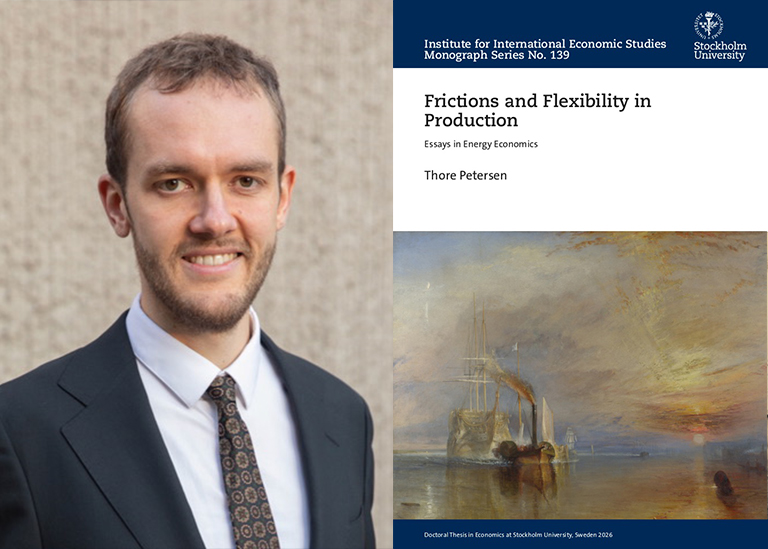
Thore will defend his thesis “Frictions and Flexibility in Production: Essays in Energy Economics” on June 9.
Last updated: 2026-05-27
Source: Institute for International Economic Studies