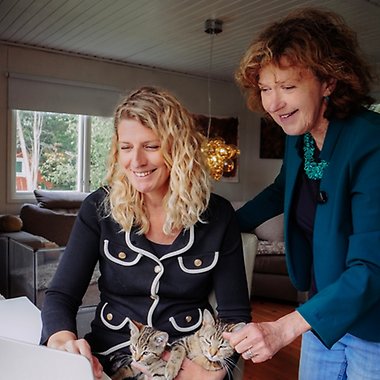
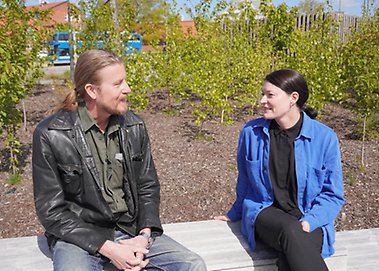
With support from organizations such as Formas and Vinnova, Stockholm University alumna Helena Isolde Sundsgård is building a global platform to strengthen genetic variation among both wild and domestic animals. The venture is backed by scientific expertise from Professor Linda Laikre at Stockholm University. The goal: to safeguard the genetic future of animals and build a world-leading tech company with genuine societal impact.
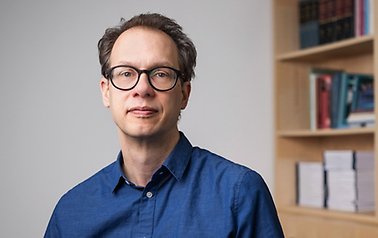
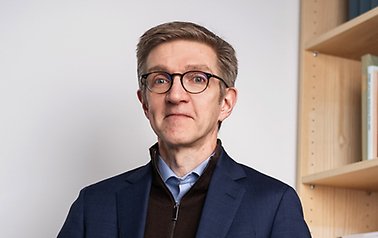
Jonas Vlachos, Professor of Economics at Stockholm University, is one of ten researchers newly appointed to the Swedish National Agency for Education’s scientific council.
Ulrike Schimpf, researcher and Head of technical operations at the Department of Chemistry, studies cervical mucus in order to better understand infertility issues and improve women’s health. With the help of research infrastructure located at the Arrhenius laboratory, she is hoping to develop new ways of treating infertility.
Five of the seven planetary boundaries that have been exceeded can primarily be linked to today's food systems. By switching production and eating a "planetary health diet", we can halve food's climate emissions, save millions of lives and strengthen the economy. This is shown by the EAT Lancet Commission 2025, the largest research report of its kind ever published. On October 3, the new EAT-Lancet commission´s report Healthy, Sustainable, and Just Food Systems will be published in the leading medical journal The Lancet. The Commission's report has been produced by an international team of researchers in areas such as nutrition, climate, health, economics and agriculture. Several researchers from the Stockholm Resilience Centre (SRC) at Stockholm University have contributed to the commission and played a central role in the work. Updated based on the latest research
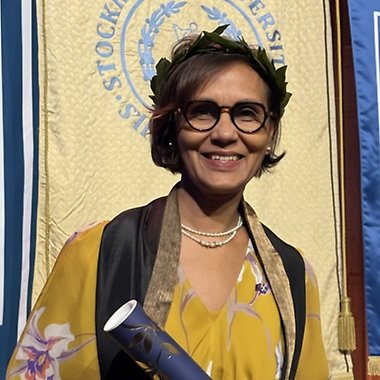
Last week, Gita Mishra AO, Professor at the University of Queensland, Australia, was in Stockholm to receive her honorary doctorate at Stockholm University. During her visit, Professor Mishra, a world-leading researcher in life course epidemiology and women’s health, gave a public lecture on women´s health at the university. Ilona Grünberger, Professor of Health Equity Studies/Public Health Medicine at the Department of Public Health Sciences at Stockholm University, got an interview with Professor Mishra. Congratulations on your honorary doctorate and thank you for accepting the invitation to visit Stockholm University. In your public lecture, you presented many original findings, for example the unfavorable cohort trends in obesity or mental health problems among women. Most of these findings were from a large nation-wide study directly funded by the Australian government. Could you tell us more about the importance of that study and its potential to continue to inform practice and policy in your country but also in an international perspective?
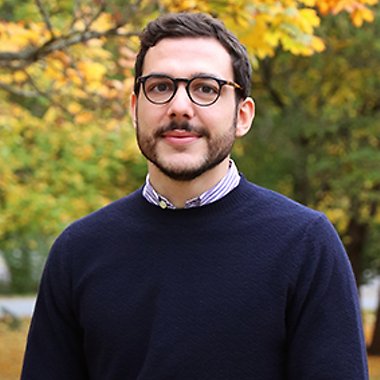
Why are female-managed farms less productive than male-managed ones in Uganda? Can a mobile credit-and-savings account transform small businesses in Tanzania? How do young people decide which careers to pursue? And what explains persistent homophobia in parts of Sub-Saharan Africa? These are some of the big questions tackled by IIES graduate student, Iacopo Bianchi, in his doctoral thesis "Productivity, Career Choice, and Colonial Legacies: Essays in Development Economics". Across four papers, Iacopo combines experiments, surveys and historical analysis to uncover hidden forces that shape development outcomes today. Gendered frictions in Ugandan agriculture
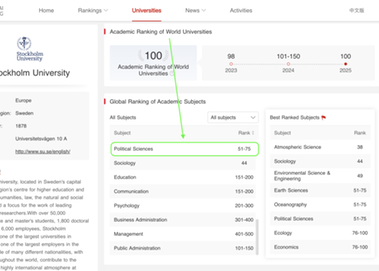
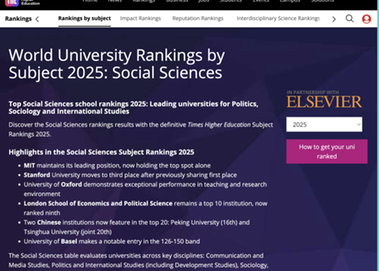
The Department of Political Science at Stockholm University is ranked 86th in the world in the subject of Political Science, according to the Times Higher Education World University Rankings by Subject 2025 (category: Politics and International Studies).
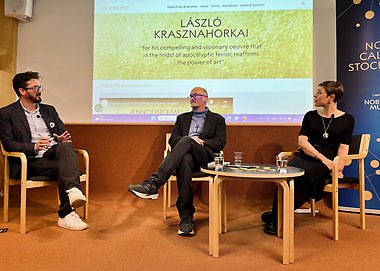
What role does the Nobel Prize play in the uncertain global times we face today? And who deserves the prize this year? These questions will be explored by scholars of literature as the Nobel Prize in Literature is revealed.
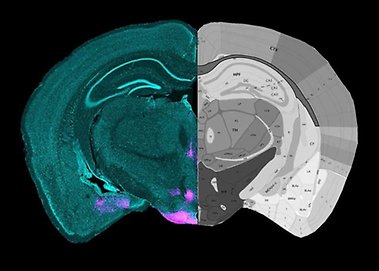
A new study has found a system in the brain that explains why female mice, who are not normally aggressive, suddenly exhibit this behaviour after becoming pregnant and giving birth.
At TEDx, John Hassler reveals a new way to think about climate and prosperity. We've been told a terrifying story about climate change. We stand before two doors: behind one is environmental collapse, and behind the other is economic ruin from the drastic policies meant to stop it. It’s a classic "wicked problem" where every choice leads to disaster. But what if that story is wrong? What if there's a third door? In this talk, you'll discover why the choice between our planet and our prosperity is a false dilemma.
The last Friday in September, Stockholm University celebrated its newly appointed doctors, professors, jubilee doctors and honorary doctors of the past academic year. During the academic ceremony at Stockholm City Hall, the President also presented the Award for Good Teaching as well as gold medals in two sizes. The September sun shone brightly into the Stockholm City Hall as Stockholm University celebrated the 2025 Inauguration and conferment ceremony. The festive hall was filled with guests and decorated with flowers in rich autumn colours as well as flags representing this year’s honorary doctors.
How should we rank occupations? Is it best to rank them by education, income, or social prestige? For decades, social scientists have used complex scales to place occupations in a socioeconomic hierarchy. Now, a new tool called Occupational Earning Potential (OEP) has been launched. OEP is an intuitive linear scale that shows each occupation’s position in the income distribution.
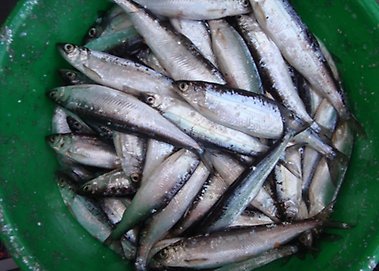
Rémi-André Olsen, bioinformatician at the Department of Biochemistry and Biophysics and based at SciLifeLab in Solna, is part of a new study on European cisco published in Molecular Ecology.
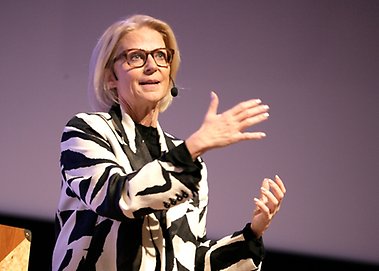
On September 25, Minister for Finance Elisabeth Svantesson attended an economics lecture at Stockholm University, where she outlined the government’s new budget and took questions from students.
A major new scientific review, “Planetary Health Check 2025”, shows that seven of nine planetary boundaries have now been exceeded. For the first time, this also includes the boundary for ocean acidification. This means that several of Earth’s life-supporting systems risk crossing critical thresholds, with severe consequences for both ecosystems and societies.
The Department of Ecology, Environment and Plant Sciences (DEEP) at Stockholm University is inviting applications for a tenured Associate Professor position in Plant Ecology. Situated in Sweden’s dynamic capital, the university offers a world-class research environment where education and research thrive together. The successful candidate will engage in cutting-edge research, teach undergraduate and master’s courses in plant ecology, and mentor PhD students and postdoctoral researchers. The position is fully financed and the teaching on undergraduate courses normally counts to around 25%. DEEP offers a broad suite of expertise and access to departmental infrastructure, including: access to greenhouse and common garden, temperature-controlled growth chambers, microscopy facilities, molecular labs, access to shared freezers, etc. Currently, DEEP comprises 25 research groups, 35 PhD students, and 10 postdocs, all contributing to a diverse and engaging research community. Our faculty members balance active research with teaching at the bachelor’s and master’s levels, ensuring a rich academic experience for both students and staff. If you are passionate about advancing plant ecology and shaping the future of research and education – apply before 16 November! Read more and apply in English here. Read more in Swedish here. Please note that the application preferably shall be written in English. Contact: Kristoffer Hylander, Head of Department kristoffer.hylander@su.se
Department of Ecology, Environment and Plant Sciences
With streaming’s dominance, declining cinema attendance, and a tradition-bound production model, both creativity and finances in Swedish cinema are under threat. At the same time, new technology and agile working methods are opening the door to an entirely new way of making films – and this is where Tobias Falk, film director and Senior Lecturer at Stockholm University, steps in.
Sweden’s economy is recovering slowly. ”Households have high levels of debt and mostly variable-rate mortgages,” says Martin Flodén, Professor of Economics at Stockholm University.
Researchers and social workers are joining forces in the six-year research programme The future of social service work with substance use (FUSS), which aims to better understand, rather than evaluate, how the Swedish care and support system functions for people with substance use problems. At the heart of the initiative lies the meeting between theory and practice, with a strong ambition to co-produce new knowledge.