News

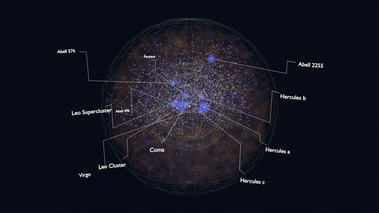
  • A cloud of white-blue dots shows supernovas in the universe, overlayed by a dark red layer showing cosmic dense regions of space. Large blue spheres indicate superclusters in the universe with higher than average supernova rates.

    Supernova hotspots could skew how we measure the expansion of the universe

    New findings from PhD student Antoine at Oskar Klein Centre, Fysikum/SU, puts calculations of the Hubble constant into question. Supernovas were assumed to either be evenly distributed, or scale with a structure's mass. But new simulations based on ZTF observations show them distributed in dense superclusters at rates far exceeding what mass alone can account for. This could affect how cosmologists calculate the Hubble constant in the future.

    Oskar Klein Centre

  • Astronomy Day and Night 2026

    Everyone interested in astronomy, young or old, is welcome to the Astronomy night and day (ADON) event on Saturday 19th of September. For more than ten years ADON has been celebrated in Sweden and scientists from the Department of Astronomy at Stockholm University have participated every time. As usual we collaborate with the House of Science (Vetenskapens hus) to make this happen. The event is free of charge.

    Department of Astronomy
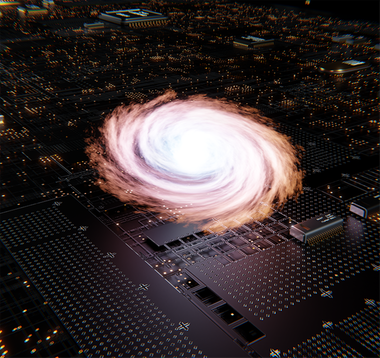
  • Galaxy against a motherboard backdrop. Made in Blender.

    How the EDUCATE centre is learning to work with agentic AI

    During the spring of 2026, researchers at the EDUCATE centre — the Oskar Klein Centre's new centre of excellence for the dark universe, run jointly by Stockholm University and KTH Royal Institute of Technology — began testing what a new generation of AI tools can and cannot do in everyday research. The work is part of the centre's agentic-AI initiative, and it drew in people from across the group: among them Renske Wierda, a PhD student in particle physics at KTH; Christian Ohm, an experimental particle physicist at KTH; Prerna Baranwal, a research engineer at KTH; and Arthur Loureiro, a researcher at the Oskar Klein Centre, Stockholm University amongst others.

    Oskar Klein Centre
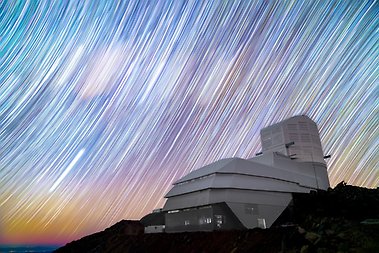
  • Image: Countless star trails appear as colorful brushstrokes spread across the night sky above NSF–DOE Vera C. Rubin Observatory.

    OKC revs up to do science as the Rubin Observatory begins its ten-year survey

    After more than two decades of construction and testing, the NSF–DOE Vera C. Rubin Observatory in Chile has formally begun the Legacy Survey of Space and Time (LSST), a ten-year record of the southern sky. At the Oskar Klein Centre (OKC) — which brings together researchers from the departments of physics and astronomy at Stockholm University and the department of physics at KTH Royal Institute of Technology — the milestone marks the point where a decade of preparation turns into data. We asked centre director Ariel Goobar, professor of physics, and several of his colleagues what they are now setting out to do.

    Oskar Klein Centre
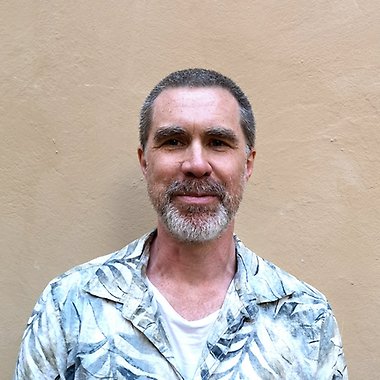
  • Profile picture of Ragnhild Lunnan

    Ragnhild Lunnan awarded the Nagler price in physics

    The Royal Academy of Sciences has awarded the Nagel price in physics to Ragnhild Lunnan, assistant professor at the Department of Astronomy. She is one of two scientists sharing the price for 2026.

    Department of Astronomy
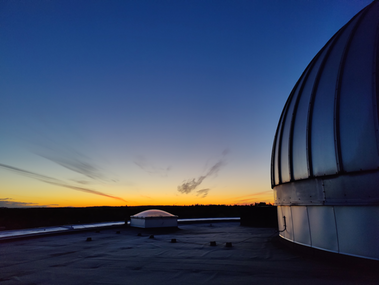
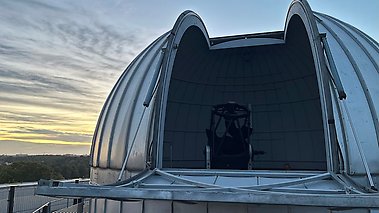
  • The AlbaNova Telescope in late evening.

    Practical astronomy – astronomy students learn to observe

    During the spring, PhD and master's students at the Department of Astronomy have observed astronomical objects with three different telescopes: Onsala Space Observatory, Nordic Optical Telescope, and the AlbaNova telescope. This observation exercise is an important part of their studies. The objects the students looked at are interstellar gas clouds in the Milky Way and exploding stars (supernovae).

    Department of Astronomy
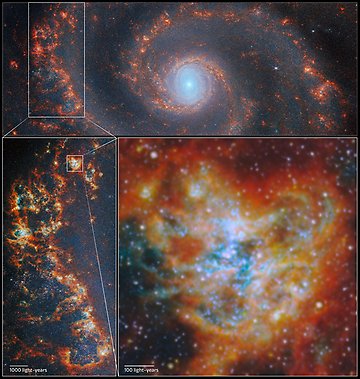
  • Three images of spiral galaxy M51.

    When the clouds clear – the emergence of young star clusters

    The Hubble and James Webb Space Telescopes have revealed thousands of young star clusters emerging from their birth clouds. The observations, published in Nature Astronomy, show that more massive clusters clear away their natal gas faster than lower-mass clusters. The result has important implications for our understanding of star formation and how the young stars affect their surroundings.

    Department of Astronomy
  • Profile picture of Matthew Hayes

    New professor of astrophysics at the Department of Astronomy

    According to a Vice President’s decision on April 16th, Matthew Hayes is promoted to Professor of Astrophysics. Matthew’s research focuses on the origin and evolution of galaxies and supermassive black holes. He uses modern observational facilities (such as the James Webb and Hubble space telescopes) to study galaxies both near and far away.

    Department of Astronomy
  • Photo of the AlbaNova telescope in evening light.

    Study astronomy at Stockholm University

    The 15th of April is the last day to apply for studying at Stockholm University starting in autumn 2026. If you’re interested in astronomy and want an education that can lead to a research career or other jobs in natural sciences and data analysis, we are very happy to welcome you to the Department of Astronomy.

    Department of Astronomy
  • Photo of the Alfa Centauri group 

    Space concert at Tekniska museet with Alfa Centauri

    As light emitted in the dawn of the Universe meets the sound of a piano, something remarkable happens. On the 15th of April Tekniska museet hosts a concert where music, research and magnificent space images merges to create an experience that moves between the heartfelt and the infinite.

    Department of Astronomy
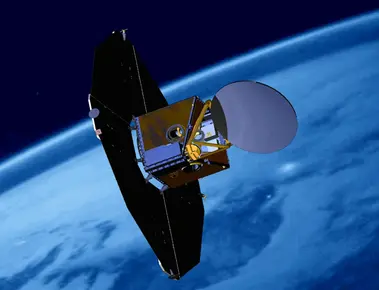
  • Illustration of the Odin satellite.

    The Odin satellite celebrated after 25 years in space

    The Odin satellite is one of the most successful Swedish space projects ever. It was launched on February 20th, 2001, and has now been in operation for more than 25 years. On February 19th the satellite’s 25th anniversary was celebrated at the Swedish National Space board’s offices in Solna with a day of presentations on the contributions of Odin to research in aeronomy and astronomy. During its lifetime, Odin’s orbit has slowly declined and will, sadly enough, burn up during re-entry into the atmosphere in 2026.

    Department of Astronomy
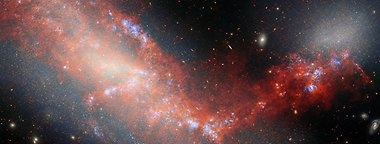
  • JWST image of the galaxy pair NGC 4490 and NGC 4485.

    Astronomy lecture about The unseen at the Nobel Prize Museum

    On March 13th the Nobel Prize Museum hosts a recurring science event focusing on The unseen. Giacomo Bortoli, doctoral student at the Department of Astronomy, is one of the presenters and will give a talk on how the James Webb Space Telescope has made it possible to observe previously unseen galaxies and phenomena inside them.

    Department of Astronomy
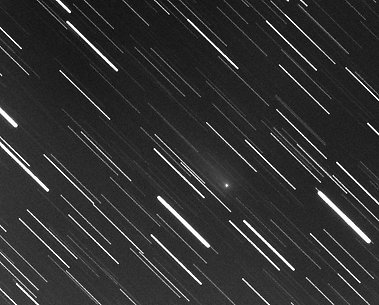
  • AlbaNova Telescope image of the comet I3/ATLAS

    First light images from the new AlbaNova Telescope

    The new AlbaNova Telescope, which was lifted into place in September 2025, is now outfitted with a camera. The first images from the telescope show that the system works well. The installation of the camera and other systems continues during the spring, and public shows are expected to resume in the autumn of 2026.

    Department of Astronomy
  • Profile picture of Arjan Bik

    New docent in astronomy

    Arjan Bik at the Department of Astronomy has been promoted to docent. Arjan’s research focuses on the effect massive stars have on their surroundings, both at small scales (on proto-planetary discs), and on larger scales (on the interstellar medium inside star-forming galaxies).

    Department of Astronomy
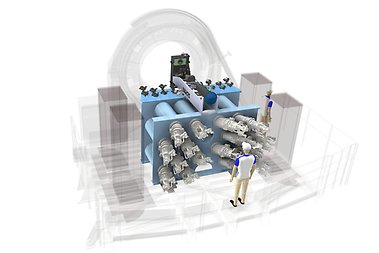
  • Artist's impression of the BlueMUSE instrument at VLT.

    Construction agreement signed for the new instrument BlueMUSE on ESO's VLT

    On January 30th European Southern Observatory (ESO) signed an agreement for the construction of the Blue Multi Unit Spectroscopic Explorer (BlueMUSE), an upcoming instrument for ESO’s Very Large Telescope (VLT). The signing marks a major first step in the development of BlueMUSE , which will offer new and unique science opportunities to astronomers. Its evolved technology will enable detailed observations within our galaxy and revolutionise the study of the distant Universe by allowing the detection of the diffuse material in the space between galaxies and helping us understand how matter moves within it. The Department of Astronomy at Stockholm University is a member of the consortium building the new instrument.

    Department of Astronomy