


Space concert at Tekniska museet with Alfa Centauri
As light emitted in the dawn of the Universe meets the sound of a piano, something remarkable happens. On the 15th of April Tekniska museet hosts a concert where music, research and magnificent space images merges to create an experience that moves between the heartfelt and the infinite.
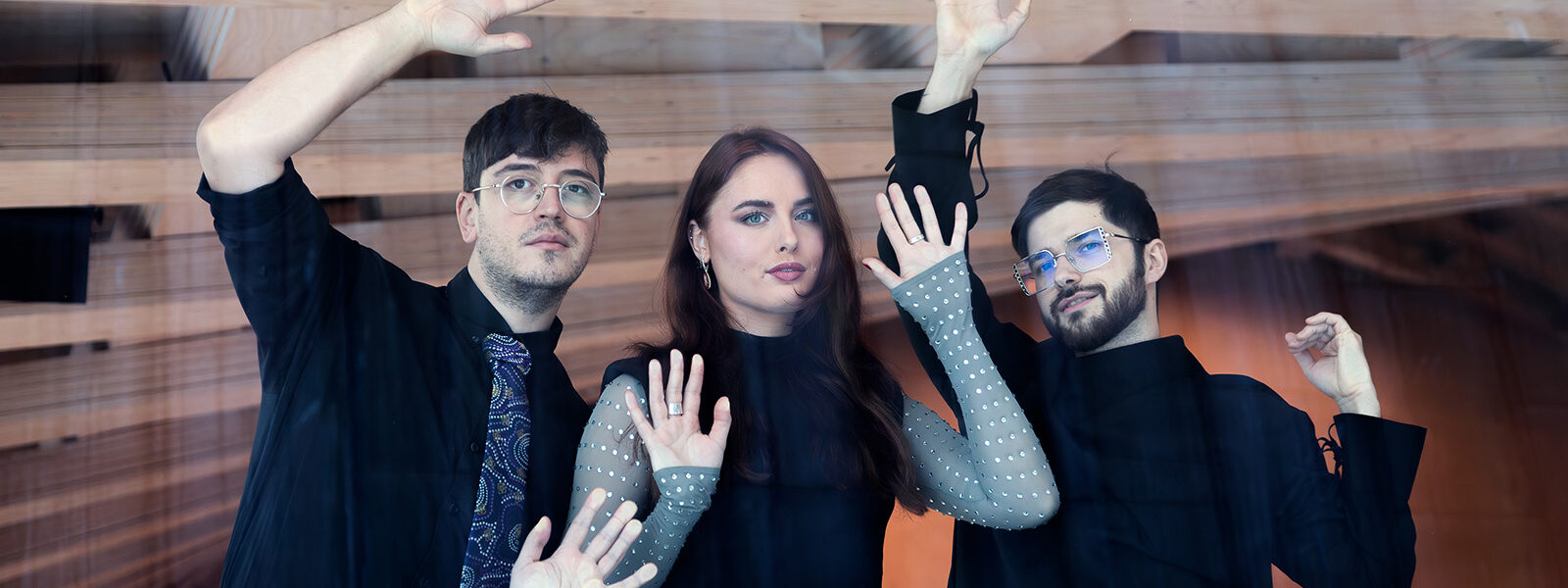
Ivelin Georgiev, Julia Lindgren, and Octavian Leyva Dragomir together form the group Alfa Centauri.
The singer and pianist, Julia Lindgren and Octavian Leyva Dragomir approach space through classical music. The cosmologist Ivelin Georgiev, researcher at the Department of Astronomy, addresses the big questions we have about the Universe. Together the trio call themselves “Alfa Centauri”, named after our closest stellar neighbors (a triple star system). The Space concert with Alfa Centauri is a unique performance full of both scientific rationality and artistic expression. The music is contemporary, explorative, and reflects upon the existential attraction of space.
The music is composed exclusively for this event and contains pieces composed by Erik Flock, Michał Ciesielski, Gabriel Kleber, and Zacharias Wolf. The program is held in English in the award winning Wooden hall of Tekniska museet.
In this performance we will take a journey across space – from our familiar night sky to the mysterious and colossal structures of the Universe. In doing so, we will combine astronomy research with beautiful compositions, allowing the viewer to experience space both visually and aurally, and hopefully reflect upon their own space in the cosmos, says Ivelin Georgiev, researcher at the Department of Astronomy.
Ivelin Georgiev’s research focuses on the first billion years of the Universe, and epoch referred to as cosmic reionization. He studies the 21-centimeter emission feature, which is a telltale signature of neutral hydrogen gas present between galaxies. This signal gives scientists a direct view on how the first stars and galaxies formed. By using powerful radio observatories, such as LOFAR and the future Square Kilometer Array, he contributes to mapping out the earliest structures that existed in the Universe. In the Space concert, he combines modern research with the dramaturgy of the music of the performers and opens a window to the first light of the cosmos.
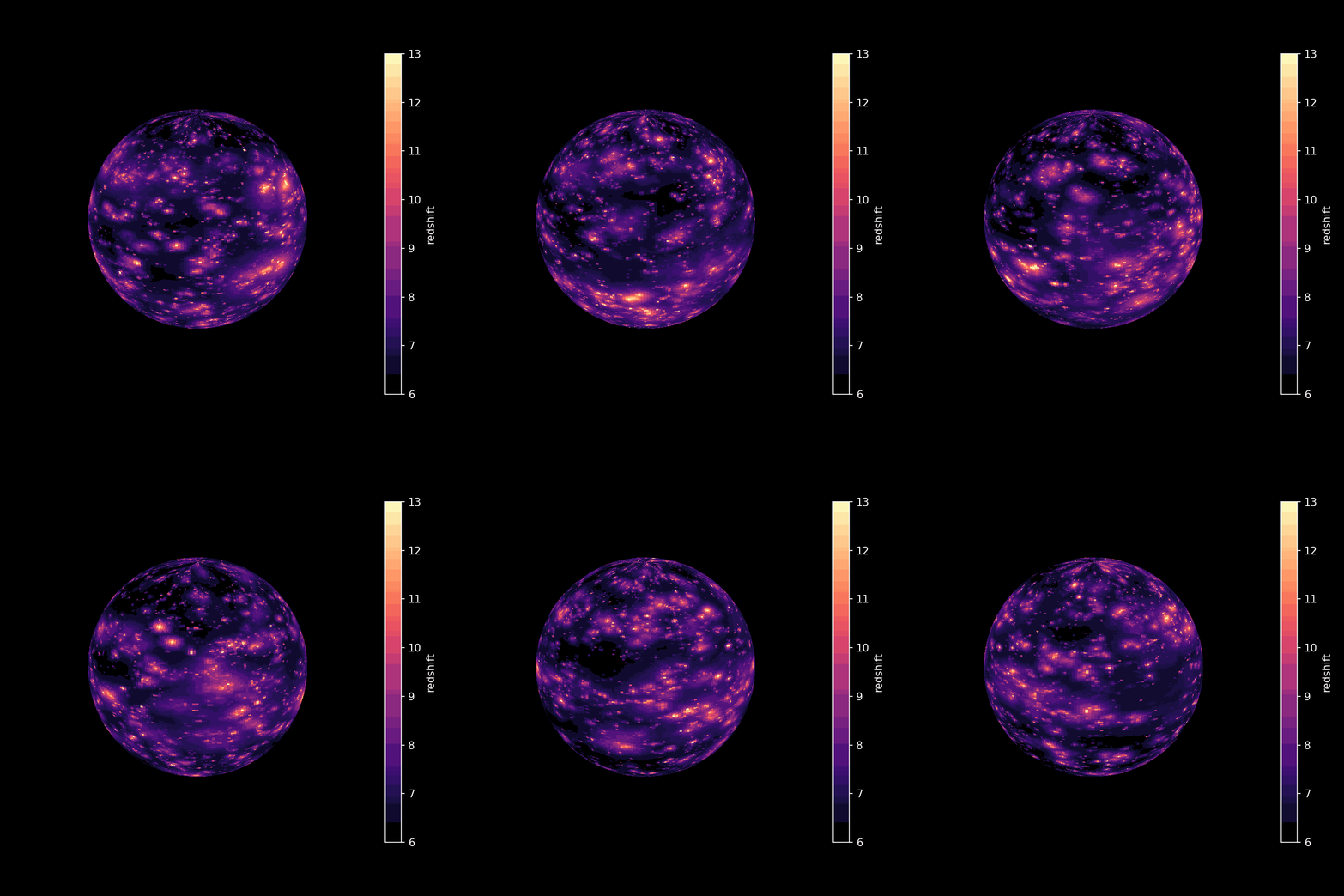
This image, based on computer simulations, shows a timeline of re-ionisation of the Universe. Very early in the history of the Universe (at a redshift of 13, roughly 200-300 million years after Big Bang) only regions close to massive galaxies were re-ionised (white/yellow patches). The re-ionisation era ended approximately around redshift 6 when almost all of the hydrogen in the intergalactic medium was ionised (black regions in the illustration).
Last updated: 2026-03-23
Source: Department of Astronomy