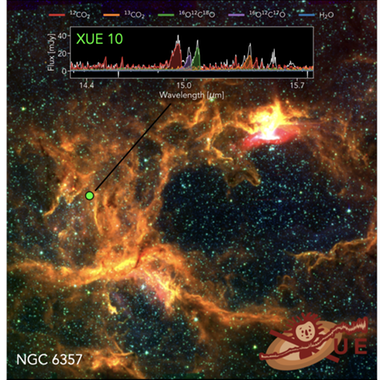
Unusual carbon dioxide-rich disk detected around young star challenges planet formation models
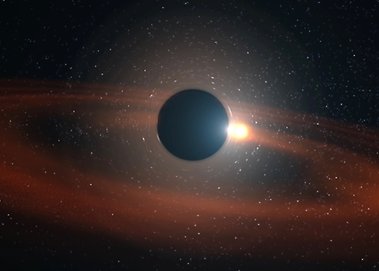
A study led by Jenny Frediani at Stockholm University has revealed a planet-forming disk with a strikingly unusual chemical composition: an unexpectedly high abundance of carbon dioxide (CO₂) in regions where Earth-like planets may one day form. The discovery, made using the James Webb Space Telescope (JWST), challenges long-standing assumptions about the chemistry of planetary birthplaces. The study is published in Astronomy & Astrophysics.