News

  • Exploring the Contextual Stern–Gerlach Experiment

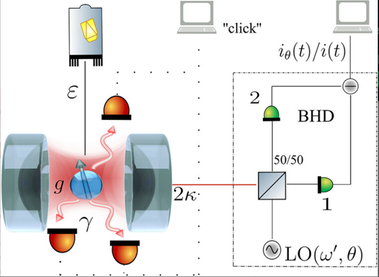
    We have developed a new quantum version of the famous Stern–Gerlach experiment, using an artificial atom inside a cavity or superconducting circuit. Instead of a particle’s spin, the system has two possible quantum states. A resonant electromagnetic field takes the role of the magnetic field in the original experiment, explains Themistoklis Mavrogordatos, guest researcher at Fysikum, Stockholm University.

    Department of Physics
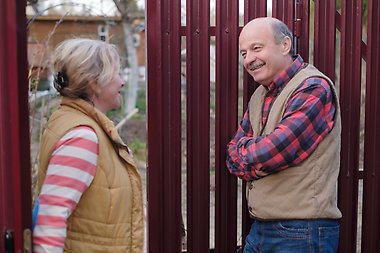
  • Two seniors talking to each others.

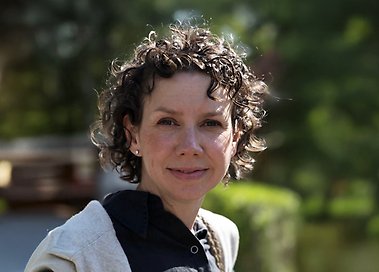
    Homogeneity fosters good neighbours

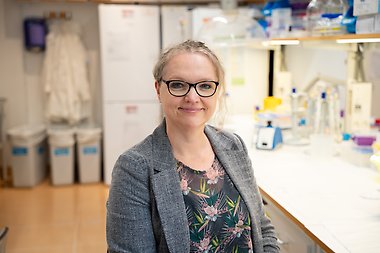
    Greeting neighbours is commonplace in Sweden, but higher levels of neighbour interaction are more unusual. This according to research by geography professor Karen Haandrikman, that also shows that homogeneity fosters the extent of neighbourly interaction.

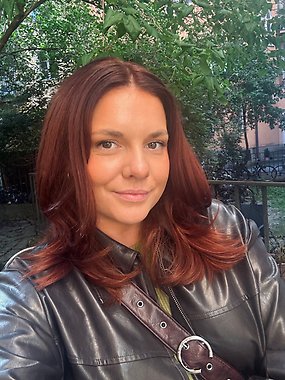
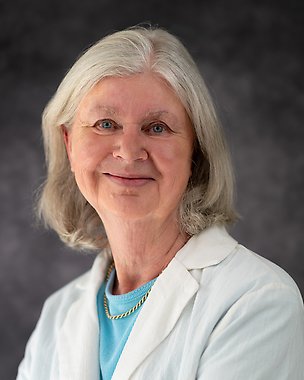
  • Meet Lovisa Jansson, our new digital ambassador

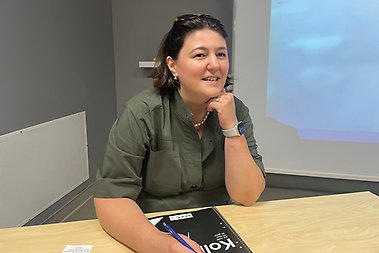
    Fysikum now has three digital ambassadors. Ignacio Verdugo is a doctoral student in the Medical Radiation Physics department. Medeea Husaru, is a bachelor's student in the Physics program and Lovisa Jansson is a doctoral student. Lovisa is 27 years old and comes from Degerfors in Värmland. She has studied in the bachelor's program in physics and the master's program in general physics. She is now a doctoral student in the Chemical Physics department at Fysikum. – The more I studied physics, the more it felt like the only right thing to do, says Lovisa.

    Department of Physics
  • Sol Juárez: Social inequalities cause immigrants' health to deteriorate

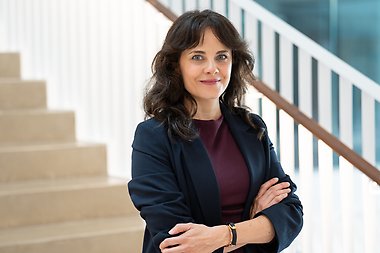
    Immigrants arriving in Sweden often have better health than the Swedish-born population – but that advantage fades over time, and their children face an even higher risk of premature death. Newly appointed professor of public health sciences Sol Juárez has spent her career at Stockholm University investigating why – and points to structural causes rather than culture or biology.

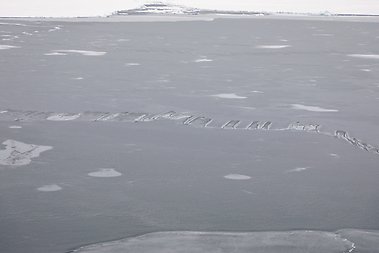
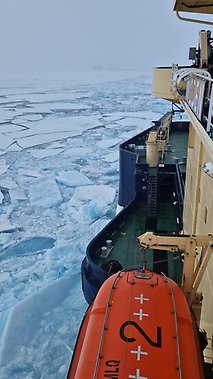
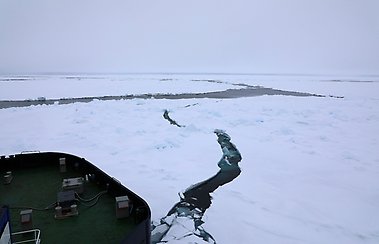
  • Caption: Grease ice forming on open water areas, pictured here with finger rafting.

    Expedition Arctic Ocean 2026, blog post 12: Greasy

    There has been a fascinating transition happening in the past two days. The open, ocean water in between ice floes has started to freeze. This process begins with the formation of grease ice. It is clearly some sort of “solid” interface sitting on top of the water, although it is still quite flexible allowing waves to propagate through.

    Department of Meteorology
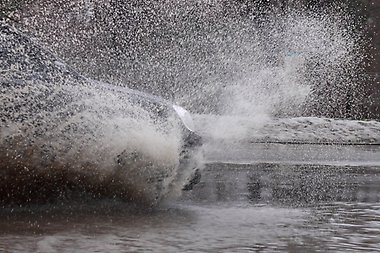
  • A car in water

    A warmer climate is changing the water cycle, but not in the same way everywhere

    The water cycle is changing in different ways across the world as the planet warms. A new study shows that the amount of water evaporating from land is increasing in the Northern Hemisphere but decreasing in the Southern Hemisphere. Looking only at the global average hides these differences, with implications for drought, flooding and water availability.

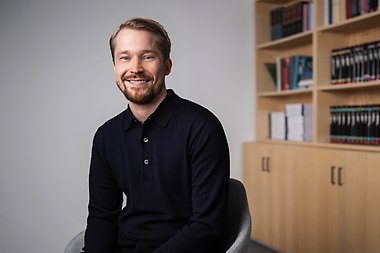
  • Jósef Sigurdsson, Associate Professor of Economics at Stockholm University

    Jósef Sigurdsson receives ERC Starting Grant

    Jósef Sigurdsson, Associate Professor of Economics at Stockholm University, has been awarded a European Research Council (ERC) Starting Grant of nearly 1,5 million euro, to develop his research on the origins of economic success.

    Department of Economics
  • Collage with Maria Rugenstein, Rosa Weber and Jósef Sigurdsson

    6.5 million euros in Starting Grants awarded to Stockholm University

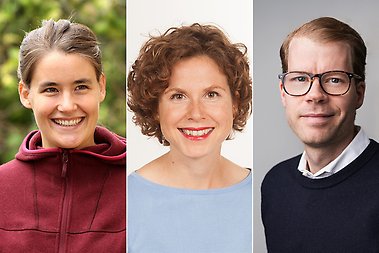
    Three research projects hosted by Stockholm University have been awarded ERC Starting Grants by the European Research Council (ERC). In total, the grants amount to approximately 6.5 million euros for research in fields including economics, sociology and meteorology.

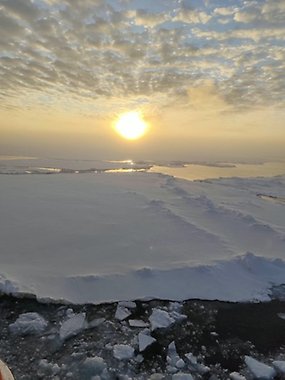
  • Caption: Sun at 10:45 am visible from Oden, somewhere in the Arctic Ocean.

    Expedition Arctic Ocean 2026, blog post 11: Sunset and sunrise

    It’s been a couple of weeks since we reached the North Pole and now we are moving around the other side of the Arctic Ocean. Since we left from Svalbard we have lived in constant daylight, but lately we have been experiencing almost a day-night cycle. In the morning when we wake up, it’s very bright outside.

    Department of Meteorology
  • How firms’ choices shape the wider economy

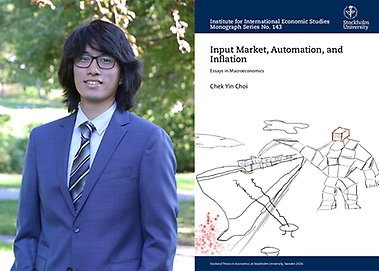
    A new doctoral thesis by Chek Yin Choi at the IIES at Stockholm University, examines how firms' decisions shape productivity, labor markets and inflation.

    Institute for International Economic Studies
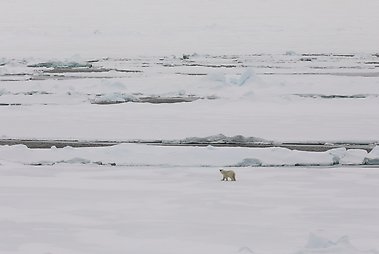
  • Caption: Polar bears are known to be very curious, this one kept turning to look at us.

    Expedition Arctic Ocean 2026, blog post 9: Polar bear!

    Yesterday we saw a polar bear! It is actually not the first one we have come across, we also saw one a couple of days ago, but that one was so far away that it was hard to see it even with binoculars. But last night I got a call on my ship phone as I had just gone to bed, and Faustine told me that there was a polar bear close to the ship. I called Melissa, in the met team phone chain we had established in case there was a bear sighting – no one wants to miss that!

    Department of Meteorology
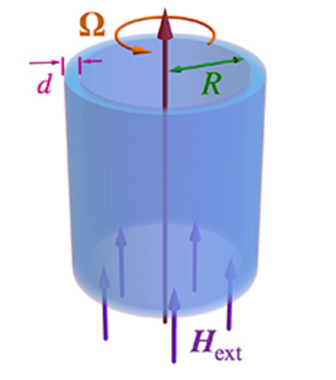
  • Rotation could make superconductivity easier to achieve

    Superconductors are materials that can carry electric current without electrical resistance. But this remarkable state usually exists only below a certain temperature, known as the critical temperature. In a new theoretical study, Maxim Chernodub, senior scientist in the University of Tours, France, and Nobel Laureate Frank Wilczek, professor at the Department of Physics, Stockholm University, propose that this temperature could be increased simply by rotating a thin superconducting cylinder.

    Department of Physics
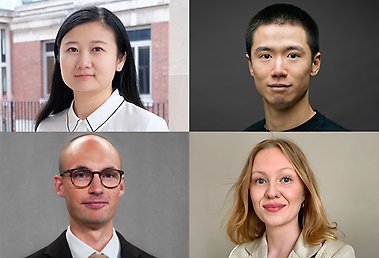
  • Four new colleagues join the ERC-funded project PROTECT

    The department is delighted to welcome four new researchers to PROTECT — Protectionism in Place: Explaining How Subnational Change Affects Public Support for Protectionism.

    Department of Economic History and International Relations
  • Caption: Oden pushes through an area of heavy ridging in the sea ice.

    Expedition Arctic Ocean 2026, blog post 8: A (somewhat) more typical Arctic

    I’ve felt increasingly uneasy about the state of the Arctic system as we’ve travelled north, and then south after passing the North Pole. So much open water. Large stretches, and one after another. It made for smooth sailing, but it’s not a good sign for the ice. At the same time, apart from our first day in the ice, we’ve seen almost no open melt ponds (perhaps a better sign for the ice!).

    Department of Meteorology
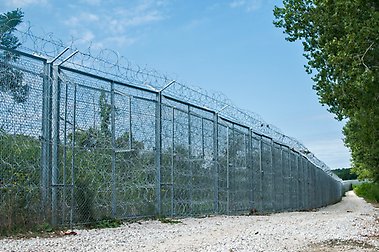
  • Barbed wired border fence.

    Ideas of exclusion go beyond far-right movements

    Beliefs about who belongs in the society and who can be excluded are well established in mainstream political ideas of liberal democracy, according to recent studies by Vanessa Barker, professor of sociology. Additionally, the results suggest that tools of repression within criminal justice to punish and deter migrants have destabilising effects on the society.

    Department of Sociology
  • students in front of a computer

    New terms of use for university accounts from 7 September

    Stockholm University has updated and modernised the terms of use for university accounts and other IT resources. From 7 September, all students and staff must accept the new terms in order to continue using the University's digital services.

  • Profile photo of Clare Levine

    Public Health Sciences Gave Clare a New Way of Understanding the World

    When Clare Levine discovered and applied to the Master’s Programme in Public Health Sciences at Stockholm University in 2016, her reaction was: “How did I not know about this field before?” With a background in sociology and psychology, she saw how the programme brought together her previous interests and skills while opening the door to something much bigger. Today, Clare Levine works as a statistician at the National Board of Health and Welfare.

    Department of Public Health Sciences
  • AI has the potential to create greener IoT

    The growing number of devices in manufacturing, health care and agriculture are helpful in many ways. But they also consume huge amounts of energy. Praveen Kumar Donta tries to solve this energy problem.

    Department of Computer and Systems Sciences
  • The liver may hold the key to the Alzheimer’s puzzle

    The liver may play an important role in explaining why people who carry the APOE4 gene have an increased risk of developing Alzheimer’s disease. This is the finding of groundbreaking research at Stockholm University. “Hopefully, in the long term, we will be able to offer preventive treatment to these individuals, in the same way that we currently prescribe medication for high cholesterol,” says Henrietta Nielsen, a researcher at Stockholm University.

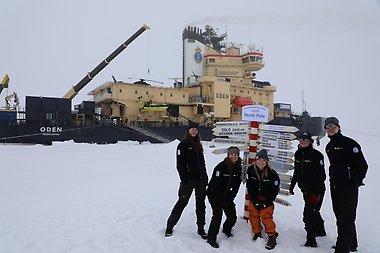
  • Caption: The meteorology and aerosol team on the ice, with the traditional North Pole pole indicating the distance to the participants' hometowns (from the left: Linnea Huusko and Irene Bellagente (Stockholm University), Missy Westland (University of British Columbia), Faustine Mascaut (Chalmers University of Technology), and Matthew Shupe (University of Colorado, NOAA, and Stockholm University).

    Expedition Arctic Ocean 2026, blog post 6: The North Pole

    Today we arrived at the North Pole! When we started getting close to the pole we all gathered on the bridge as the crew guided Oden as close as possible to 90°N. As far as I was able to tell, we reached 89°59.9960’N, which is only a few meters from the true North Pole (measured from the center of the ship). We celebrated reaching the pole with (nonalcoholic) bubbles and a fanfare on cornet and clarinet.

    Department of Meteorology
  • Big nets, tiny larvae – Follow along as researchers map herring in the Stockholm Archipelago

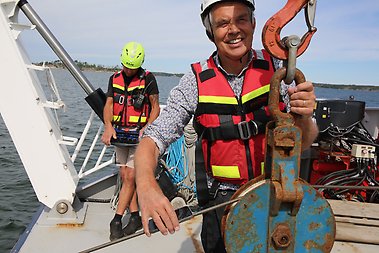
    To be or not to be: the future of herring in the Stockholm Archipelago has been a hot topic in recent years, with coastal fishermen warning that large industrial trawlers have emptied the archipelago of fish that were once abundant. Scientifically, however, the archipelago's herring stocks have been poorly studied. To address this, researchers at Stockholm University are now conducting their fourth annual trawling expedition, using meter-long nets to catch tiny, newly hatched herring larvae.

    Stockholm University Baltic Sea Centre
  • GREENCARB Expedition on its way!

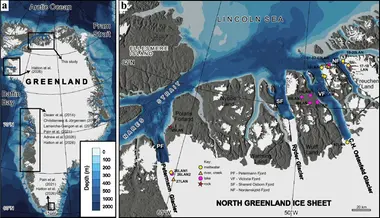
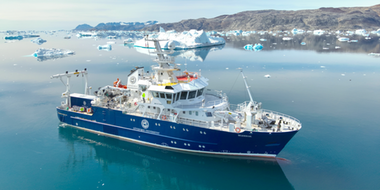
    What happens to carbon when glaciers retreat? This is the central question for researchers heading to the fjords of south-east Greenland this week.

    Bolin Centre for Climate Research
  • Sonia Giurumescu, PhD candidate in economics at Stockholm University

    Sonia Giurumescu earns PhD in economics

    On 26 August 2026, Sonia Giurumescu defended her doctoral dissertation in economics at Stockholm University. After graduation, Sonia is going forward with a two-year postdoc position at the Operations Research and Econometrics (CORE), UCLouvain.

    Department of Economics