News

  • A taxi driver standing next to his car, lake in the bakground.

    Segregated labour market reinforces stereotypes about immigrants

    Employers in Sweden tend to prefer candidates with Swedish-sounding names in professions where individuals with foreign backgrounds are underrepresented, a new sociological study reveals. At the same time, the level of discrimination decreases in industries with a higher proportion of foreign-born workers. This dynamic contributes to reinforcing stereotypes about which jobs are deemed suitable for people with foreign backgrounds, according to Magnus Bygren, one of the researchers behind the study.

    Department of Sociology

  • illustration photo blurred showing a crowd of peoplewalking on city street.

    New framework explains how inequality shapes resilience

    People who are most likely to face unemployment or low-paid work are also more likely to fall into poverty when these setbacks occur. A study based on data from more than three million people across Europe shows that resilience depends not only on individual abilities, but also on people's exposure to risks and their capacity to cope with them.

    Swedish Institute for Social Research
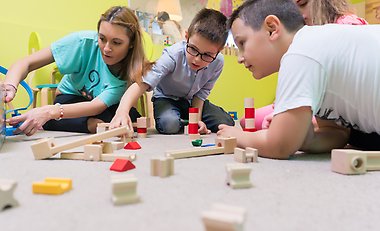
  • Illustrationsbild från en förskoleverksamhet. En pedagog bygger en bana med träklossar tillsammans med barn.

    For-profit preschools pay lower wages – but staff have better health outcomes

    Wages, worker qualifications and indicators of staff health differ between municipal, for-profit and non-profit preschools in Sweden. A new study by Karin Edmark (Swedish Institute for Social Research, Stockholm University) and Lovisa Persson (Research Institute of Industrial Economics (IFN) and Kristianstad University) compares the provider types using nationwide register data covering the period 2001–2020.

    Swedish Institute for Social Research
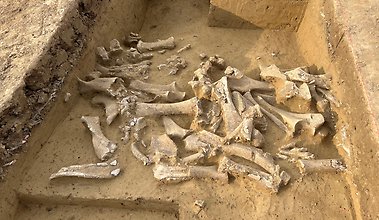
  • Partly uncovered mammoth bones and molars in a square excavation

    Ancient DNA reveals Ice Age hunter-gatherers preferentially targeted female mammoths

    Analysing ancient DNA of over 500 mammoth bones, an international team of researchers found that Ice Age humans selectively targeted female woolly mammoths. The results of the study, published in Current Biology, show that in contrast to the sex ratio among naturally occurring woolly mammoth remains, large bone accumulations associated with ancient human activity are dominated by females.

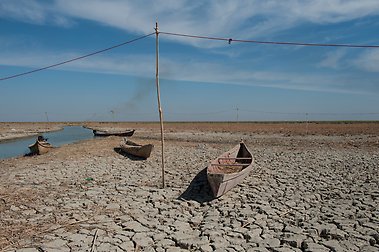
  • Boats on parched land

    Unravelling the climate behind the collapse of Bronze Age civilizations

    The most severe droughts in the ancient Eastern Mediterranean arose when multiple natural climate cycles coincided, according to a new study from Stockholm University published in Science Advances. The findings shed new light on the climate conditions surrounding the Late Bronze Age collapse and may help improve understanding of future drought risks in a warming world.

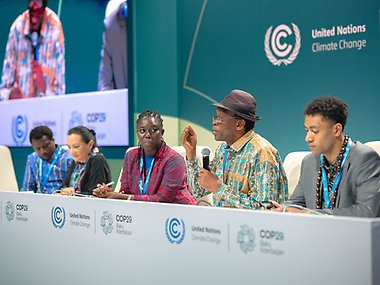
  • Participants in UN climate meetings want greater focus on implementation

    UN climate negotiations are often criticized for moving too slowly. A new study published in Nature Climate Change examines what changes government delegates and other participants at the COP29 climate conference would like to see. Among other findings, the results indicate strong support for better monitoring of countries’ climate commitments.

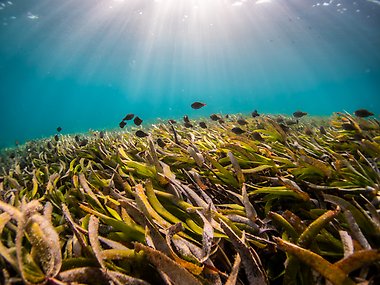
  • Seagrass meadows support more nutritious fisheries than nearby coral reefs

    Seagrass meadows play a major overlooked role in feeding and nourishing coastal communities, according to a new study published in Cell Reports Sustainability and led by researchers at the Department of Ecology, Environment and Plant Sciences, Stockholm University.

    Department of Ecology, Environment and Plant Sciences
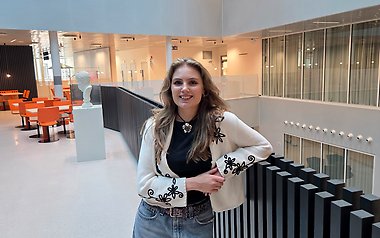
  • Profile photo of Hanna Blomdahl

    Master's Student Hanna Blomdahl Works as a Teaching Assistant at the Department

    After completing her Bachelor's degree in Public Health Sciences at Stockholm University, Hanna Blomdahl decided to continue with the Master's Programme. Having now completed her first year, she reflects on a year filled with international perspectives, deeper academic knowledge, and new opportunities. Alongside her studies, she works as a teaching assistant at the Department of Public Health Sciences.

    Department of Public Health Sciences
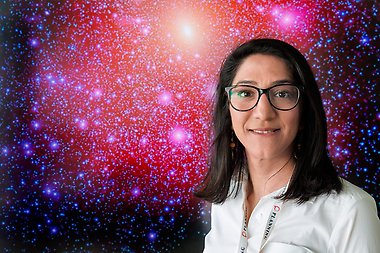
  • Simulating dwarf galaxies to shed light on dark matter

    The smallest galaxies in the universe contain unusually large amounts of dark matter – the invisible and unknown matter believed to make up most of the universe. Azadeh Fattahi aims to gain a better understanding of dark matter by modelling how these dwarf galaxies form and evolve.

  • Forestry waste could replace agricultural chemicals

    By-products from the forestry and agricultural sectors could help deliver more sustainable food production in times of climate change, environmental degradation and geopolitical instability. That is the idea of Mika Sipponen at Stockholm University, who is preparing a multidisciplinary collaboration involving industry partners and researchers from other Swedish universities.

  • Galaxy against a motherboard backdrop. Made in Blender.

    How the EDUCATE centre is learning to work with agentic AI

    During the spring of 2026, researchers at the EDUCATE centre — the Oskar Klein Centre's new centre of excellence for the dark universe, run jointly by Stockholm University and KTH Royal Institute of Technology — began testing what a new generation of AI tools can and cannot do in everyday research. The work is part of the centre's agentic-AI initiative, and it drew in people from across the group: among them Renske Wierda, a PhD student in particle physics at KTH; Christian Ohm, an experimental particle physicist at KTH; Prerna Baranwal, a research engineer at KTH; and Arthur Loureiro, a researcher at the Oskar Klein Centre, Stockholm University amongst others.

    Oskar Klein Centre
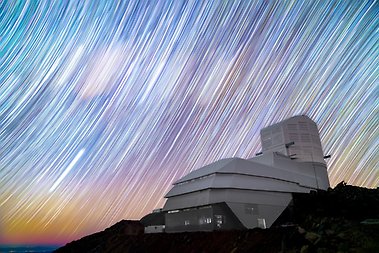
  • Image: Countless star trails appear as colorful brushstrokes spread across the night sky above NSF–DOE Vera C. Rubin Observatory.

    OKC revs up to do science as the Rubin Observatory begins its ten-year survey

    After more than two decades of construction and testing, the NSF–DOE Vera C. Rubin Observatory in Chile has formally begun the Legacy Survey of Space and Time (LSST), a ten-year record of the southern sky. At the Oskar Klein Centre (OKC) — which brings together researchers from the departments of physics and astronomy at Stockholm University and the department of physics at KTH Royal Institute of Technology — the milestone marks the point where a decade of preparation turns into data. We asked centre director Ariel Goobar, professor of physics, and several of his colleagues what they are now setting out to do.

    Oskar Klein Centre
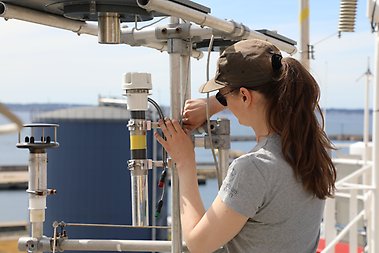
  • Image: Linnea installing a sensor to measure temperature and moisture on top of I/B Oden.

    First Journeys North: MISU PhD Students Join Veteran Researcher on Arctic Expedition

    In September, the Icebreaker Oden will once more set out on a journey to the Arctic region. On board, a mix of PhD students and researchers will engage in research and education, and a mission to map the seafloor. Meet MISU researcher Matthew Shupe and two MISU students who are presently preparing for the journey ahead. “This is a great opportunity to build new research capacity by bolstering the next generation of polar scientists,” Matthew explains.

    Department of Meteorology
  • Profile picture of Ragnhild Lunnan

    Ragnhild Lunnan awarded the Nagler price in physics

    The Royal Academy of Sciences has awarded the Nagel price in physics to Ragnhild Lunnan, assistant professor at the Department of Astronomy. She is one of two scientists sharing the price for 2026.

    Department of Astronomy
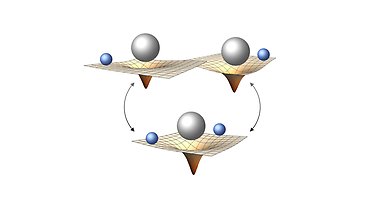
  • Illustration of two different interpretations of the same physical scenario, viewed from different perspectives.

    A new theoretical framework to identify what quantum gravity would look like

    Quantum mechanics and gravity are two fundamental theories in physics that govern the natural world. However, uniting these two principles into the single theory of “quantum gravity” has yet to be done. Researchers at Stockholm University, Kyushu University and the University of Waterloo have now developed a theoretical framework that outlines what observations can distinguish between classical and quantum descriptions of gravity. This framework provides a roadmap for designing experiments to find answers to one of the most sought-after theories in modern science.

  • Scientists warn: Systemic failures allow hazardous pesticides to be approved – stricter oversight urgently needed

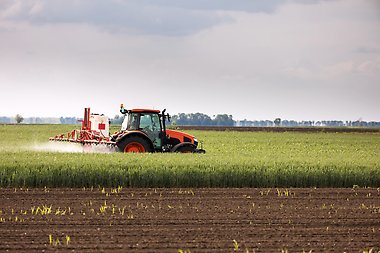
    Laboratory tests revealed potential harmful health effects of the pesticide fluazinam, yet the results were withheld by industry and the substance was approved for use. Researchers at Stockholm University warn that systemic failures in the EU's chemical regulatory system are putting both the environment and human health at risk – and that the deregulation currently under discussion risks making the situation worse.

    Stockholm University Baltic Sea Centre
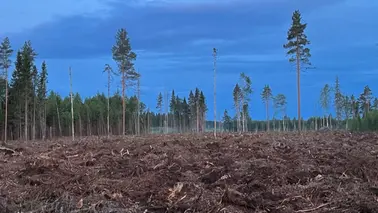
  • Clear-cutted forest that was part of the sites investigated in this study.

    Species recover slowly after forest harvesting – some may disappear

    The rate at which species recover after clear-cutting varies considerably. Some groups, such as lichens and mosses, are unable to re-establish before the next harvesting cycle, according to a major international study involving researchers from the Swedish University of Agricultural Sciences (SLU) and the Department of Ecology, Environment and Plant Sciences (DEEP) at Stockholm Unviersity.

    Department of Ecology, Environment and Plant Sciences
  • Nicole Pamme, Professor of Analytical Chemistry at the Department of Chemistry. Photo: Rickard Kilström.

    Nicole Pamme awarded the SKR Chemical Engineering Prize 2025

    Professor Nicole Pamme at the Department of Chemistry, Stockholm University, has been awarded the 2025 Chemical Engineering Prize by the Swedish National Association of Chemical Engineers (SKR). She receives the award in recognition of her outstanding research in microfluidics, lab-on-a-chip technology and point-of-care diagnostics, as well as her efforts to highlight the potential of chemistry and inspire the next generation of researchers and engineers.

    Department of Chemistry
  • Tom van der Valk receives ERC Proof of Concept Grant

    The European Research Council (ERC) has awarded Tom van der Valk, researcher at the Centre for Palaeogenetics (a collaboration between Stockholm University and the Swedish Museum of Natural History), a grant of €150,000 to develop his research findings into commercial applications.

  • From eclipse to meaningful AI

    Experiencing a solar eclipse 2006 in Thessaloniki sparked Aliki Litsa’s interest in astrophysics. She earned her bachelor’s degree there and went on to complete her master’s degree at the University of Amsterdam. “I began my PhD at Fysikum in 2019, and after attending Career Fair I got in touch with Savantic. I have now worked there for two years with meaningful AI—developing solutions that drive sustainable growth, measurable impact, and long-term value.”

    Department of Physics