


AI has the potential to create greener IoT
The growing number of devices in manufacturing, health care and agriculture are helpful in many ways. But they also consume huge amounts of energy. Praveen Kumar Donta tries to solve this energy problem.

Clean water is a crucial resource.
The Internet of Things (IoT) has the potential to support a massive connectivity of low-power, small devices for smart manufacturing (Industrial IoT, IIoT), healthcare, and precision agriculture. Each small device does not consume a lot of energy, but the huge collective of devices will. And the increase in devices brings significant challenges in energy demand and sustainability.
In parallel, energy harvesting technologies are developed that can enable greener IoT. Machine learning can be used to help devices harvest energy, and utilise it to improve device and overall application performance.
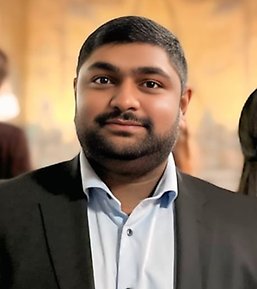
Praveen Kumar Donta, DSV.
Associate professor Praveen Kumar Donta, Department of Computer and Systems Sciences, is part of the EU financed Marie Skłodowska-Curie Actions (MSCA) Staff Exchange project called “TALENTS: Towards Artificial Intelligence Empowered Green Internet of Things (IoT)”. We had a brief chat with him about the project.
Hello Praveen, what is this project about?
“In this project, we aim to enhance battery capacity: we design efficient, robust and low-cost energy harvesters, collect external energy from the sun, heat, kinetic energy and various other sources. We are also aiming to develop energy-aware task scheduling, predictive energy models, and optimising algorithms. The enhanced application performance will lead to reduced maintenance costs and minimise negative environmental impact,” says Praveen Kumar Donta.
How will you do this?
“We will use various short and long range wireless technologies and implement resource-friendly machine learning algorithms – both locally on IoT devices and in the cloud – to support decision-making processes.”
Our object of research is water quality monitoring using IoT
He explains that the project is targeting the UN Sustainable Development Goal (SDG) number 6 – Clean water and sanitation.
“Our object of research is water quality monitoring using IoT. The IoT devices will sense different types of water quality parameters, for example pH and chemical concentrations, in real-time. The accumulated information of previous conditions will then be used to predict likely water quality of the near future,” explains Praveen Kumar Donta.
The TALENTS project also contributes to several other SDGs, such as:
- Goal 3: Good health and well-being
- Goal 7: Affordable and clean energy
- Goal 11: Sustainable cities and communities
- Goal 13: Climate Action
Who are your partners, and what’s in it for them?
“The team is interdisciplinary with both academic and non-academic participants from EU and non-EU countries. This will lead to a more balanced geographical and cross-sectoral talent circulation, as well as a boosted research and innovation (R&I) support capacity in academic and non-academic organisations. It also aims to increase research, entrepreneurial and other transferable skills for the R&I talents in the action.”
What is your driving force?
“It is nice to be able to contribute to this research area. This project will, among other things, give me an opportunity to learn more about the technical aspects of batteries for IoT devices,” says Praveen Kumar Donta.
Glossary and more info
Internet of things (IoT) is a network of devices that connect and communicate to detect and exchange information with each other and the cloud, enabling real-time visibility, automation and data-driven decision making. Examples of IoT systems include smart homes, factory automation and remote monitoring devices like health monitors.
Industrial IoT (IIoT) uses real time data from a network of machines and sensors all through the supply chain to predict disturbances and side barred problems and to optimise production.
Some relevant figures: If the existing development continues, by 2030 an estimated 24 billion (24 000 000 000) IoT devices will exist globally, and market size is likely to rise to 1.5 trillion (1 500 000 000 000) US dollars.
Agenda 2030 and the UN Sustainability Goals (SDGs) recognise that ending poverty and other deprivations must go hand in hand with strategies that improve health and education, reduce inequality, and spur economic growth – all while tackling climate change and working to preserve our oceans and forests. At its heart are the 17 SDGs, which are an urgent call for action by all countries – developed and developing – in a global partnership.
Read about the 17 SDGs
Marie Skłodowska-Curie Actions (MSCA) projects are research and innovation programs funded by the European Commission to boost top researchers’ careers through mobility and innovative doctoral and postdoctoral training.
Read about MSCA
Machine learning algorithms: An algorithm is a list of rules for a computer to follow in order to complete a task or solve a problem. Machine learning algorithms learn from data, identify patterns and use them to make predictions or adjustments over time.
Praveen Kumar Donta is a senior lecturer and associate professor at the Department of Computer and Systems Sciences (DSV), Stockholm University.
Contact Praveen
Learn more about research and education at DSV
Last updated: 2026-08-28
Source: Department of Computer and Systems Sciences