


Homogeneity fosters good neighbours
Greeting neighbours is commonplace in Sweden, but higher levels of neighbour interaction are more unusual. This according to research by geography professor Karen Haandrikman, that also shows that homogeneity fosters the extent of neighbourly interaction.
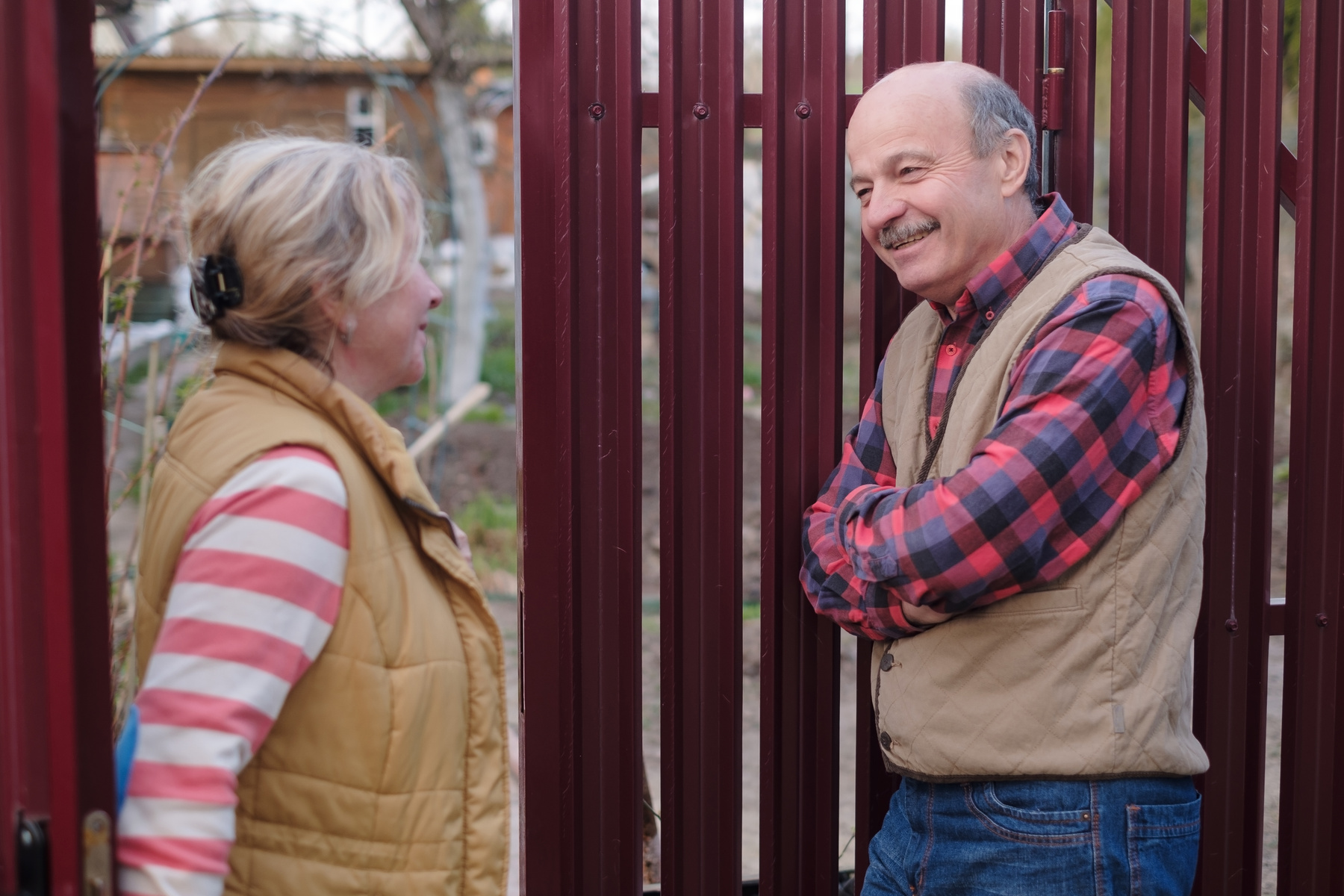
Greeting neighbours is commonplace in Sweden, according to the study. Photo: Anna Koldunova/Mostphotos
How do neighbours in Sweden interact and how does this vary across rural and urban areas? These kinds of questions are in focus for Karen Haandrikman, professor in geography with a focus on human geography at Stockholm University. She is part of several research projects on migration, integration, segregation, and neighbourhoods.
In a study published in the journal Population, Space and Place in March 2026 she looks at the phenomenon of neighbouring, or the extent to which neighbours interact, in Sweden today. The study shows that greeting neighbours is commonplace in Sweden, but higher levels of neighbouring, such as helping neighbours, are more unusual. Another result is that neighbouring is most prevalent in homogeneous neighbourhoods in rural and urban areas, while neighbourhood interaction is low in diverse urban areas.
“This means that homogeneity, and not diversity, fosters neighbouring,” says Karen Haandrikman.
In the study, she measured neighbourhood types as clusters of people with similar demographic, socioeconomic and ethnic characteristics. The underlying idea is that people in more homogeneous areas may also share similar attitudes and norms, such as perceptions on neighbours, which is examined in several studies in the larger project The Neighbourhood Revisited.
The study found that neighbouring was quite common in rural homogeneous areas, and especially so the form of neighbouring where one asks neighbours for help and exchanges favours with them. On the other hand, more superficial forms of neighbouring, such as greeting, was found to be rather uncommon in deprived areas. However, in such areas, helping neighbours is widespread among migrants.
Residents of small towns least likely to contact neighbours
Another finding was that neighbouring is not inherently more common in rural areas, which contradicts previous research that was mostly done for specific case studies. Residents of small towns were among the least likely to have contact with their neighbours, particularly in terms of greeting and talking to neighbours, compared to those in metropolitan areas.

Karen Haandrikman Photo: Rickard Kilström
“One explanation is that it is mostly those living in deprived areas within small towns that hardly interact with their neighbours. Another is that residents of small towns may choose such settings with the intention of maintaining privacy and limited social interaction, though further research is needed to explore this hypothesis,” says Karen Haandrikman.
Personality plays a role
Two other new findings are on the role that housing type and personality play in neighbourly relations. First, there is much anecdotal evidence that people living in apartments in Sweden tend to avoid awkward small talk with their neighbours.
“Using these nationally representative survey data, I show that apartment dwellers are indeed reluctant to interacting with neighbours, but even those in detached houses (“villor” in Swedish) are less sociable, particularly to newcomers. Second, there is little attention in human geographical studies for the role of personality. Here, I found that especially extroversion is associated with increased neighbourly interaction, while scoring high on neuroticism generally means less contact with neighbours.”
Asking for help is rather uncommon

Photo: Liubomyr Vorona/Mostphotos
The study shows that greeting neighbours is commonplace in Sweden. This is the most common form of neighbourly interaction: nodding or saying hello, which 76 percent of respondents said they always do. The intensity of contact decreases for higher stages of neighbouring, with only a quarter saying they always talk to neighbours, and thirteen percent seldom or never does so.
“We cannot conclude that Swedish people do not interact with their neighbours. This is also in line with the other Nordic countries,” says Karen Haandrikman.
However, greeting a new neighbour is slightly more uncommon, but more than 70 percent does that sometimes. Asking for help and for instance trusting neighbours with keys is rather uncommon.
“This is perhaps a Scandinavian phenomenon, based on anecdotal evidence, although there is no comparative research on this matter,” says Karen Haandrikman.
Even low-key relations are vital
Contact with neighbours is important for strengthening localized communities and for social cohesion overall. Even low-key relations with neighbours are vital as they may be converted into help when needed. Although many people nowadays do not work in their residential neighbourhoods and have social contacts elsewhere or online, neighbouring is very much alive, in Sweden and in other countries.
Communities of like-minded people
The study shows that contacts with neighbours is most common in homogeneous neighbourhoods. According to Karen Haandrikman, the spatial clustering of people based on backgrounds and interests are generally linked to communities of like-minded people. Residents of a such neighbourhoods may share similar attitudes and values, such as ideas on neighbouring, as was the premise of the larger project and a hypothesis in this study.
On the other hand, vulnerable populations in disadvantaged neighbourhoods, that tend to be heterogeneous in several aspects, might help their neighbours more. In such areas, greeting neighbours might be expected to be less common, as there can be shortages of local amenities and facilities that enable social interaction.
“What the study showed is support for the first hypothesis: similarity among neighbours, rather than diversity, is associated with the highest levels of neighbouring, says Karen Haandrikman.
Increase in socioeconomic segregation
When neighbourhoods are homogenous in sociodemographic composition, housing type and access to resources, residents’ views and attitudes may also be similar. The study shows that this is the case for attitudes and practices of neighbouring. While residents within homogenous neighbourhoods may share strong norms, values and mutual trust, differences between areas may increase. A society composed of different sets of neighbourhoods with residents with diverging worldviews may undermine social cohesion.
“In Sweden, we are seeing an increase in socioeconomic segregation over time, especially in terms of segregation of the most affluent residents. We have also seen an increase in migrant flows, who tend to live in more deprived areas. Such ethnic and socioeconomic segregation seems to be increasingly associated with polarized attitudes and norms, and to differing opportunities and resources.”
Karen Haandrikman has not studied the effects of neighbourly relations on health.
“But we know from previous research that poor relations between neighbours are associated with lower social cohesion. In the areas with the lowest levels of neighbouring, residents experience the lowest levels of well-being, as found in another study using the same data.”
She adds that a healthy level of neighbour relations is associated with increased social cohesion, which may form a good basis for collaboration between neighbours in times of crises.
How are you yourself as a neighbour?
“I live in a tenant cooperative and I really appreciate the joint efforts residents in such associations need to take to keep up the maintenance of the properties but such a tenure form also stimulates social interaction in the form of joint cleaning days or other activities. I live in a street with a diversity of household types, ages and backgrounds, which I really appreciate. I like to help neighbours with small favours and love if they help me as well, like taking care of my rabbits in holidays.”
Large scale survey
Karen Haandrikman and her colleagues have conducted a large-scale survey, entitled the Neighbourhood Survey 2020, in collaboration with Statistics Sweden. The survey is representative for residents of all neighbourhoods in Sweden. They constructed ten distinct neighbourhood types using register data on demographic, socioeconomic and ethnic characteristics. These neighbourhood types represent all neighbourhoods in Sweden and are spread across the country. This gave a unique opportunity to study neighbouring relations using a nationwide survey, considering the role that both individual and neighbourhood-level factors may play in contacts with neighbours.
In the research project, the Neighbourhood Revisited (Lyckliga Gatan in Swedish), the scholars also used register data and interviews to study different aspects of neighbourhood sorting, neighbourly relations, neighbourhood effects and segregation.
Read about Karen Haandrikman´s research
Read about the project Neighbourhood Revisited (Lyckliga Gatan)
Read the article ”Lyckliga gatan – där det finns goda grannar?” (In Swedish)
Article in Population, Space and Place from March 2026 “Neighbouring in Present‐Day Sweden: The Role of Neighbourhood Type, Housing and Personality”
Last updated: 2026-09-09
Source: Communications Office