


Expedition Arctic Ocean 2026, blog post 12: Greasy
There has been a fascinating transition happening in the past two days. The open, ocean water in between ice floes has started to freeze. This process begins with the formation of grease ice. It is clearly some sort of “solid” interface sitting on top of the water, although it is still quite flexible allowing waves to propagate through.
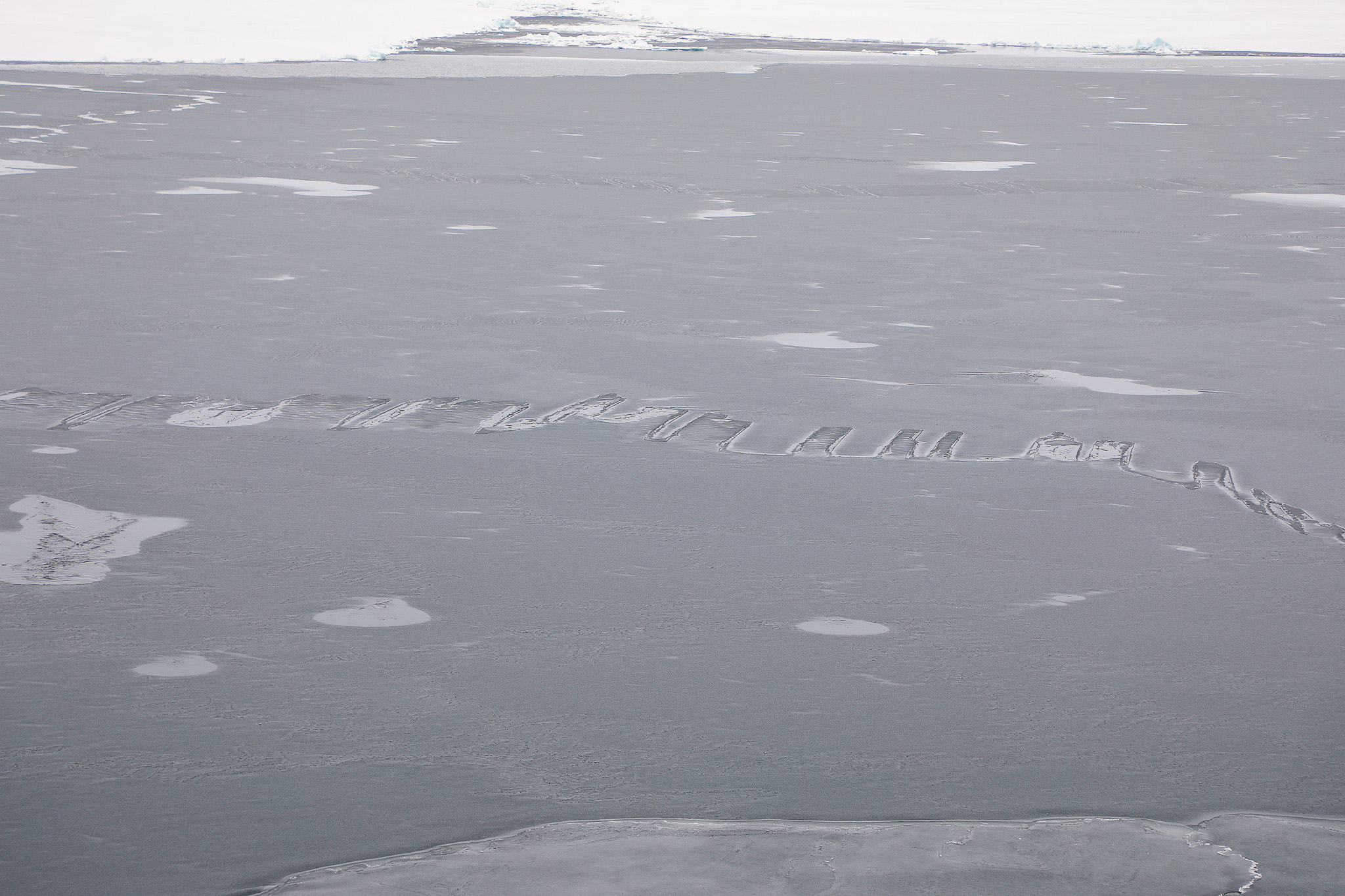
Caption: Grease ice forming on open water areas, pictured here with finger rafting.
At times, two pieces of this grease ice push together in an interesting, interleaved way that’s called finger rafting. Very fascinating and visually appealing. But these formations are also an important indicator that the upper ocean has lost enough heat to start the process of freezing.
Perhaps this “cold enough” water is just at the very top; the fresh water remaining on the top of the ocean from the melting adjacent ice. But clearly this is a sign of the progressing season, the waning summer and the shift towards freeze up.
How these processes play out determines the annual sea ice minimum timing and amount. Typically, the sea ice reaches its minimum extent in mid-September each year.
On August 1st, the sea ice extent was equal to August 1st, 2012, which was the year with the record September sea ice extent minimum to date. However, since that time the relatively cold air, and the snow on the sea ice, has limited the surface melting. And now the new ice formation will slow the declining sea ice extent further, although there will likely still be some more contraction of sea ice extent around the edges of the sea ice domain.
Will the minimum come early this year? Where will that minimum fall compared to past years? We are excited to see from our position out here in the middle of the sea ice.
/Matthew Shupe, August 30
Last updated: 2026-09-04
Source: MISU