


Preschool plays an important role in the work for animals and biodiversity, a new study shows.
How children encounter and learn about animals in preschool can affect their view on sustainability and biodiversity. This is shown in a new systematic research review by Isabelle Letellier and Emilie Moberg, who examined 35 international studies on teaching about, with, and for animals in preschool.
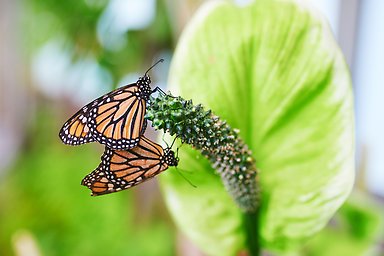
Letellier and Moberg point out that teaching sometimes risks being based on a human-centered perspective, where animals are primarily understood in terms of human needs and interests. To promote sustainable development, education needs to make animals more visible as individuals with needs and living conditions that deserve consideration.
The overview also shows that children's interactions with animals can help develop curiosity, empathy, and care for nature. At the same time, the researchers emphasize that teaching needs to allow space for a broader range of emotions, including worry and grief related to environmental and biodiversity crises.
According to Letellier and Moberg, more transformative approaches are needed in preschool, where the relationship between humans, animals, and nature is examined and discussed. In this way, education can help strengthen children's understanding of sustainability issues and their opportunities to engage for a more sustainable future.
To the publication: Teaching about, with and for animals – a systematic review in early childhood education. Environmental Education Research, 1–30. Letellier, I., & Moberg, E. (2026).
Last updated: 2026-09-09
Source: Communications Office