


Public Health Sciences Gave Clare a New Way of Understanding the World
When Clare Levine discovered and applied to the Master’s Programme in Public Health Sciences at Stockholm University in 2016, her reaction was: “How did I not know about this field before?” With a background in sociology and psychology, she saw how the programme brought together her previous interests and skills while opening the door to something much bigger. Today, Clare Levine works as a statistician at the Swedish government agency, National Board of Health and Welfare.
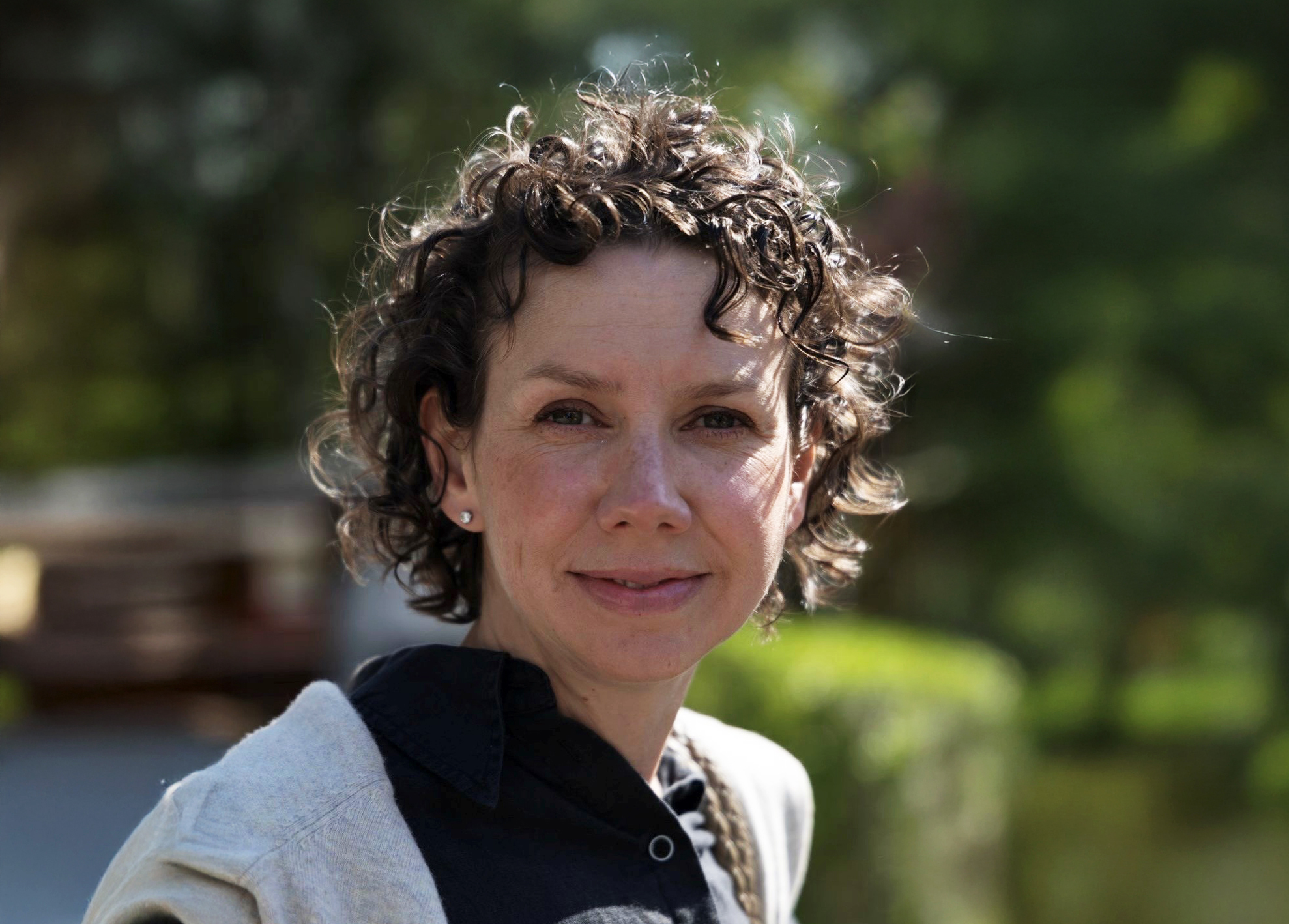
Clare Levine. Photo: Private
“The programme covered the subjects I already liked, and so much more,” says Clare Levine.
She moved to Sweden from Australia in 2011 to take two freestanding courses in neuroscience and neuropsychology at Karolinska Institutet. Her plan was to to return to Australia afterwards, but she met a man in Sweden and decided to stay.
As a highly educated migrant and native English speaker, Clare wanted to find a better way into the Swedish labour market. But she realised that the Swedish Council for Higher Education (UHR) had difficulty assessing her qualifications in sociology and psychology.
She faced a choice. Should she continue working in schools, where she was employed as a teaching assistant, or pursue a new career in research? She chose the Master’s Programme in Public Health Sciences at Stockholm University.
As a statistician at the National Board of Health and Welfare, Clare helps researchers gain access to register data for research into areas including disease, medicines and health. Her work involves assessing which data can legally be released and preparing datasets for research projects. It is a job where an understanding of both research and public health is essential.
“The Master’s Programme in Public Health Sciences provides an incredibly strong foundation for understanding many different areas of research and the value of register-based research.”
A subject that changed more than her career
Her studies gave her not only new knowledge, but also a new way of looking at society.
“The programme has given me a broad understanding of society, the challenges we face today, but also what we can do and what we should invest in to make things better for everyone. I really wish studying public health was a requirement before becoming a politician.”
She describes how concepts from the programme now help her make sense of the news, how her interest in statistics was rekindled, and how what she learned has also influenced her life outside work.
During her studies, she was juggling life with young children, studying Swedish as a second language and renovating an apartment, all while writing her master’s thesis. Two courses proved particularly valuable – one on children’s health and one on stress.
“Those courses saved me. I still recommend Region Skåne’s ‘Checklist for an Equal Everyday Life’ to friends and acquaintances because it changed and improved our family dynamics. And I take sleep and recovery from stress seriously.”
Fascinated by what shapes our health
What fascinates her most is how health is shaped throughout our lives – and even across generations.
“I find the life-course perspective and epigenetics (the study of how genes are regulated and expressed without changing the underlying DNA sequence, editor’s note) incredibly fascinating. The fact that experiences from previous generations can affect our health, and that the environment we live in can influence which genes are switched on or off, is fascinating.”
After graduating, Clare first worked at Karolinska Institutet on the Youth Aware of Mental health (YAM) study, which aims to promote mental health and prevent suicide among young people.
Before joining the National Board of Health and Welfare, she was project manager for the Stockholm Survey, a survey of students in Year 9 and Year 2 of upper secondary school. It covers topics including alcohol and drug use, crime and safety, school and leisure activities, mental health and relationships with parents.
“I’d like to do a PhD at some point, or study statistics or mathematics.”
To anyone considering studying public health sciences, she has a short and clear piece of advice:
“Stop thinking about it. Apply!”
Håkan Soold
Clare Levine
Age: 43
Occupation: Statistician at the National Board of Health and Welfare
Education: Master’s Programme in Public Health Sciences, Stockholm University
Lives: Vällingby, Stockholm
Family: Two children, two dogs and a husband who makes everyday life possible.
Interests: Planning the next project.
Motivation: “I want to understand everything. I know that’s impossible, but I’m constantly curious. And, of course, who doesn’t like knowing things?”
Master’s Programme in Public Health Sciences
Would you like to work in a field similar to Clare Levine’s? Would you like to learn more about what shapes people’s health? Then our Master’s Programme in Public Health Sciences could be for you.
Applications for autumn 2027 open in October.
Master’s Programme in Public Health Sciences: Societal and Individual Perspectives
We also offer freestanding courses starting in the spring and autumn.
More information on our page Courses and Programmes
Last updated: 2026-09-01
Source: Department of Public Health Sciences