


Ideas of exclusion go beyond far-right movements
Beliefs about who belongs in the society and who can be excluded are well established in mainstream political ideas of liberal democracy, according to recent studies by Vanessa Barker, professor of sociology. Additionally, the results suggest that tools of repression within criminal justice to punish and deter migrants have destabilising effects on the society.
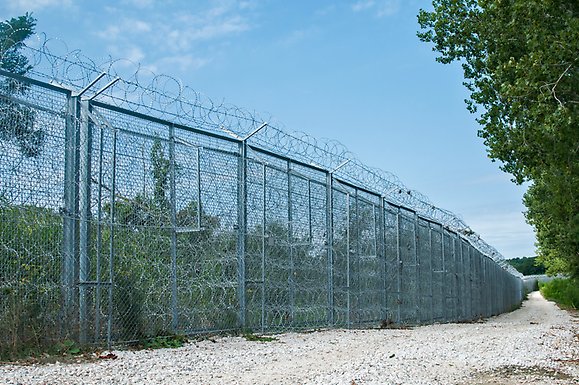
During the past few years, Swedish politics has experienced a significant shift to the right. Recent reforms of the current coalition government have been deeply influenced by the far-right Swedish Democrats. In the study The Right Against Rights in Sweden, Vanessa Barker and Ryan Switzer show that the established far-right movement in Sweden differs from those in central Europe, in the way they use law and legal institutions to enforce its agendas.
Instead of appealing to the patriarchal, misogynistic and anti-gay views, the Swedish far-right is using the democratic values like free speech to exclude minorities who might be seen as challenging those values.
One example analysed by the study is the Quran burnings conducted by Rasmus Paludan. When the actions provoked response from some Muslim communities, the far-right representatives sought to protect the right to burn the Quran. This illustrates how the burnings raised conflicts over freedom of expression and freedom of religion.
Could this conflict mean that the freedom of speech trumps the freedom of religion in Sweden?
”I think the freedom of religion is a complex idea as well. Freedom of expression and freedom of religion is curtailed by who gets to enjoy that universal right. We’ve been writing a lot about this tension between what is presented as a universal, but is often constricted to who’s considered a member. If you went out on the street and asked people, they would support freedom of religion, but I think what they have in mind is their own religion”, says Vanessa Barker.
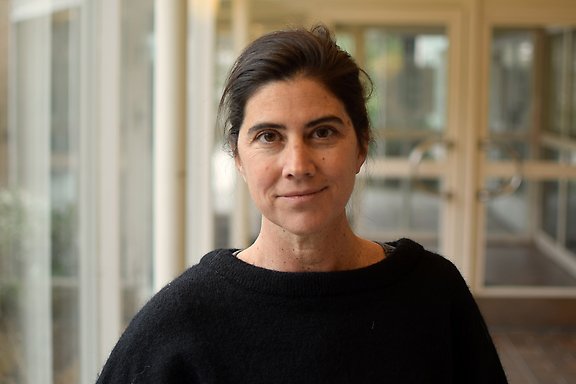
Vanessa Barker, Professor of Sociology at Stockholm University. Photo: Leila Zoubir/Stockholm University
The study shows that the fundamental rights like freedom of expression and freedom of religion are viewed as conditional. They can therefore be used to repress the rights of minorities, noncitizens and immigrants.
”We espouse equality views. Everybody should be treated the same. And that’s the ideal if you are inside that place. But for many democracies, like the EU, the US right now, the UK, Australia, these kind of models of democracy have tightened borders and made migration more restrictive.”
Vanessa Barker emphasises that these patterns were prevalent in Sweden before the current right wing government. But there is a difference in the nature of exclusion between the two political sides.
”There is a very strong view about who gets to be a member of the society or not, and you can have different kinds of membership. One can be a civil membership, where everybody who follows the rules is considered a member, or there can be a more ethnic kind. Right now, you have a really strong idea about an ethnic view of who gets to be in the society or not. And there is a duality here, because you can see representatives of the right saying the both things.”
Would it be correct to say that the welfare state is nationalistic?
”There has been this idea for a long time that if you have a strong welfare state, you must have high barriers of entry. And this was one of the arguments for welfare state solvency. How are we going to protect this society for everybody if the institutions start to fail, if we can’t integrate? I think that was a very strong argument, this kind of welfare nationalism, from the red-green government for closing the border.”
According to Vanessa Barker, public views on immigration are complex and shifting today. But because of the influence from Sweden Democrats on the moderate right, there is an acceleration of much stricter laws about who gets to enjoy democracy or not and intensifying consequences for those left out.
In another paper, Nationalism and Criminal Justice in Europe, Vanessa Barker gives an account for how tools of repression and criminal justice are used to deter and punish people who are not citizens. The current right-wing government has proposed penal reforms that risk undermining rights and altering criminal justice. These reforms include plans to export foreign offenders to prisons in their respective countries of origin. Vanessa Barker calls this use of penal power to serve and constitute national aims ”penal nationalism”.
”Some would say that this is a double penalty, that someone’s being punished twice for the same offence”, says Vanessa Barker.
How would you reply to those who say that the offenders in question are just going ”home”?
”Why wouldn’t you use the system of law that we have here, because this is where the offense took place? If you start to remove people and use foreign prisons, it is not clear where the accountability is for the conditions. Who’s responsible if that person gets beat up in prison, or is released?”, says Vanessa Barker and continues:
”And how do we know that someone is going ‘home’? Do they have a family here in Sweden? These were the criteria, like ties to the country, that they would conventionally take into account before removing somebody. So the idea that you would just send somebody away cuts those ties.”
One of the foundations of democracy, as Vanessa Barker explains, is that criminal justice should be treating likes alike. Two persons who commit the same crime, given the same conditions, should be sanctioned by the same kind of punishment. This principle of our criminal justice system has contributed to its stability over time. When the principle no longer stands, that has a destabilising effect on our society.
Another consequence of the penal nationalism is that criminal justice tools are adopted and used by other government agencies, according to Vanessa Barker’s study.
”We have a sense that there’s an authority of criminal justice that should be taking care of crime and punishment. That’s where its legitimacy lays. But when you start to use those tools and instruments on an area that’s not a crime, like migration, that undermines and can weaken that authority, trust and even solidarity.”
Text: Alma Kirlic
Last updated: 2026-08-31
Source: Department of Sociology