


Big nets, tiny larvae – Follow along as researchers map herring in the Stockholm Archipelago
To be or not to be: the future of herring in the Stockholm Archipelago has been a hot topic in recent years, with coastal fishermen warning that large industrial trawlers have emptied the archipelago of fish that were once abundant. Scientifically, however, the archipelago's herring stocks have been poorly studied. To address this, researchers at Stockholm University are now conducting their fourth annual trawling expedition, using meter-long nets to catch tiny, newly hatched herring larvae.
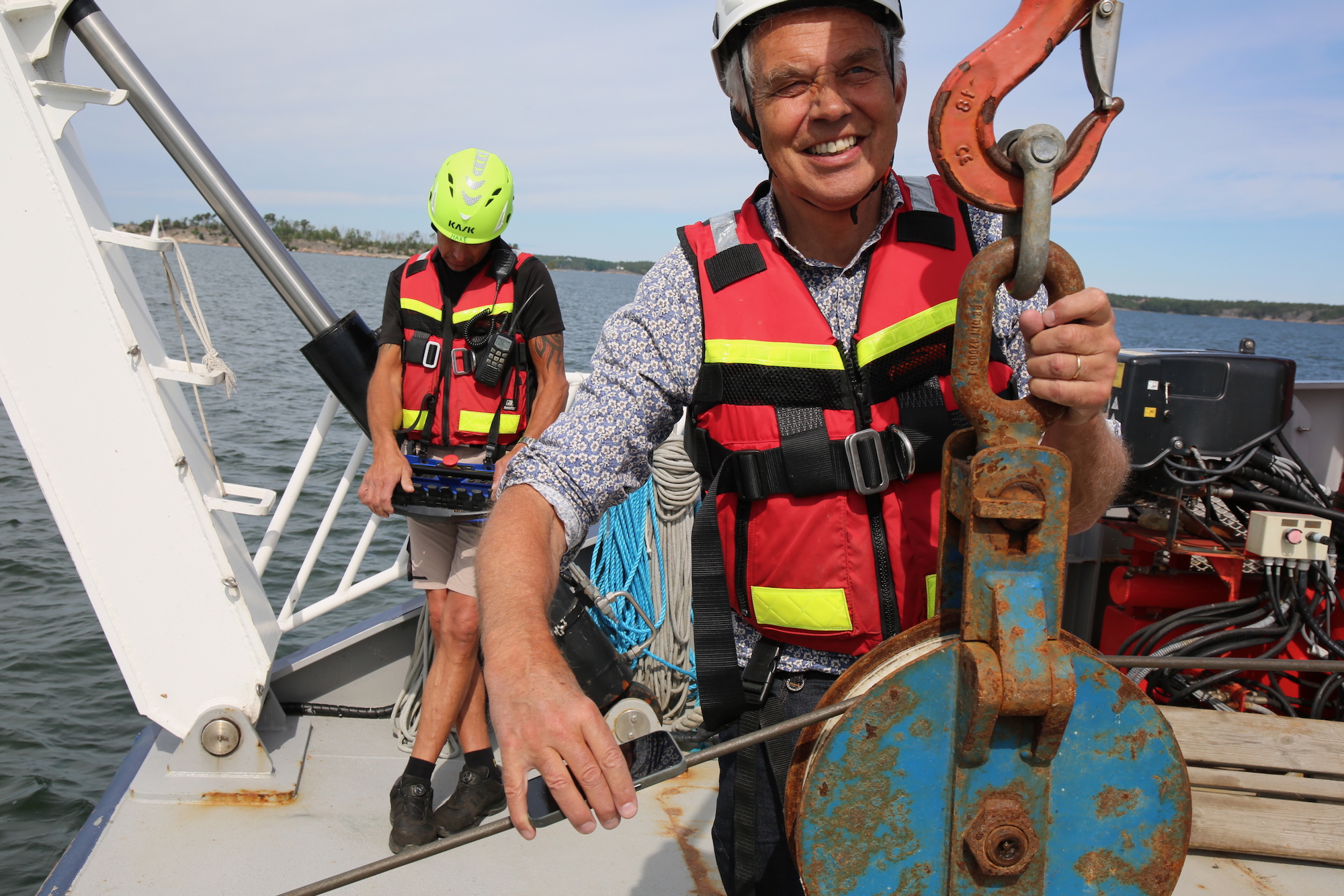
By measuring the angle of the cable holding the trawl, Henrik Svedäng can calculate how deep the trawl is in the water and how much more cable can be paid out. Photo: Lisa Bergqvist
The sea is completely calm and the sun is already warm over the marina as the research vessel R/V Electra sets out from Saltsjöbaden on an early summer morning. Inside the ship's lab, Lauren Aylward, a postdoctoral researcher at the Department of Ecology, Environment and Plant Sciences, has already begun arranging petri dishes, beakers, microscopes, and the liquid nitrogen tank. This is the second day of this year's second trawling expedition, and the route, as on several previous occasions, goes all the way around Värmdö and in to Djurgården in central Stockholm. With the many planned sampling stops, it's a journey that takes the whole day.
Soon, marine ecologist Henrik Svedäng and master's student Zirui Wang put on helmets and life jackets and begin preparing the so-called bongo trawl for the day's first tow. The trawl consists of two nets with different mesh sizes, each fitted at the bottom with a container – this is where the herring larvae in the water are collected.

Watch a film about the sampling above. English captions can be turned on via the CC button in the player.
"Herring lay their eggs on the seabed, so it's hard to detect where they spawn unless you dive down. But when the eggs hatch, the larvae rise up into the open water column and become possible to catch. If you find them when they're very small, they're newly hatched and can't have drifted far with the currents," says Henrik Svedäng.
So if the researchers find small larvae, they can conclude that herring have spawned in that area.
"The population structure in the Stockholm Archipelago is very poorly studied – how many stocks there are and when and where they spawn. We're also looking into whether there are genetic differences between the herring in different parts of the archipelago and outside it," says Henrik Svedäng.
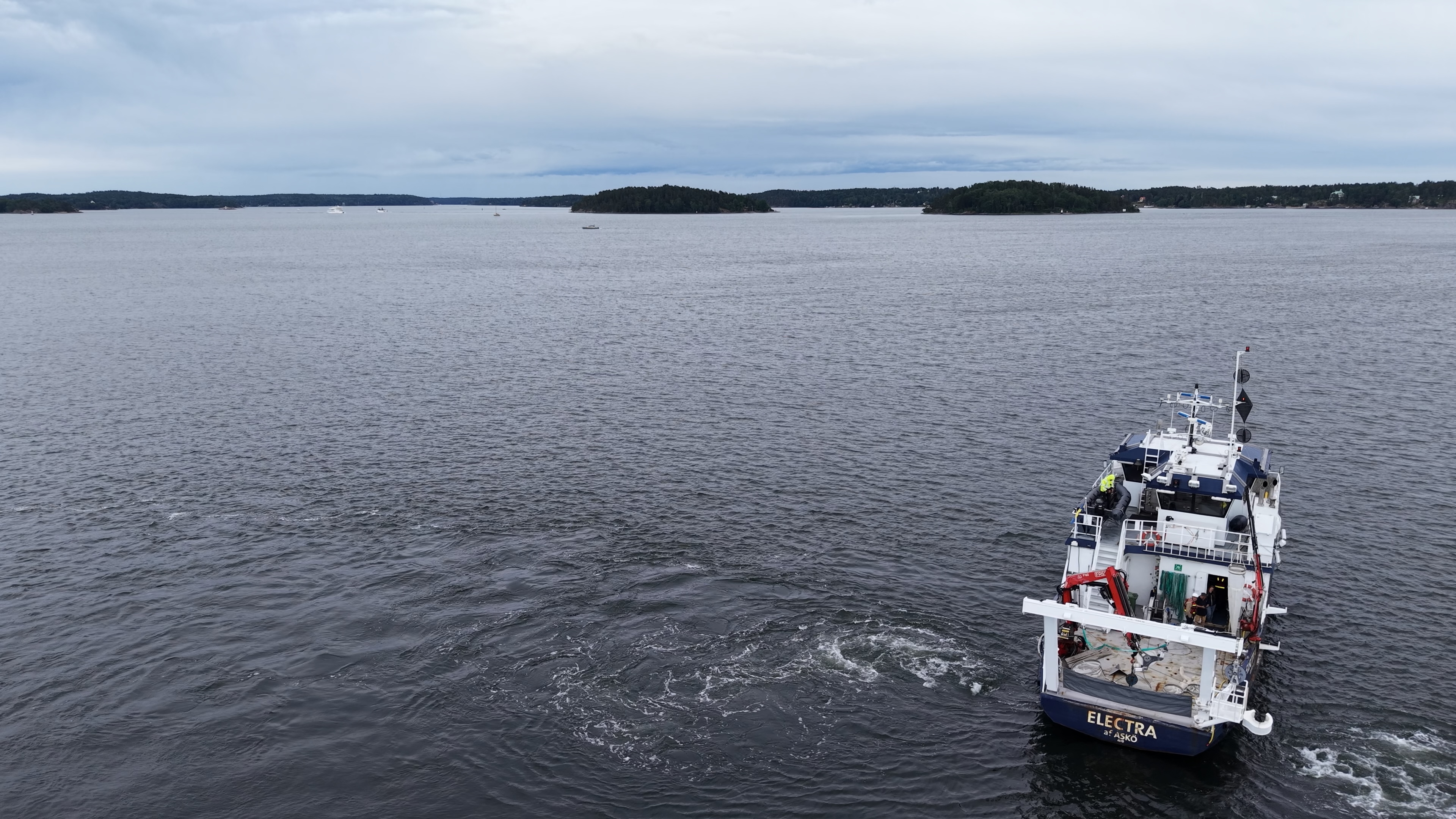
Sampling for herring larvae takes place across large parts of the Stockholm Archipelago, with one route running between Saltsjöbaden and Slussen. Photo: Mattias Murphy
Facts about the project
The trawling for herring larvae is carried out as part of the project Exploring the herring spawning mosaic in the Stockholm Archipelago for biodiversity conservation which is mainly funded by the BalticWaters foundation.
The project is led by Professor Monika Winder at the Department of Ecology, Environment and Plant Sciences, in collaboration with Associate Professor Henrik Svedäng at the Baltic Sea Centre. Other project members are Lauren Aylward and Ryan Daniels at the Department of Ecology, Environment and Plant Sciences. Several master's students are also involved in the project.
The aim of the project is to generate knowledge about where and when herring spawn and how the stock is structured in the Stockholm archipelago.
Sampling for herring larvae in the Stockholm archipelago is carried out one week at a time during spring, summer and autumn. By mapping both spawning grounds and genetic variation, the project aims to provide a better picture of the herring's local diversity, as well as knowledge of which populations are most vulnerable.
Professor Monika Winder.
"Diversity is a cornerstone of an ecosystem's stability and resilience. Understanding how different populations grow and cope with environmental change helps us identify the groups that are most sensitive and that need protection in order for the stock as a whole to remain strong and productive," says Monika Winder about the project.
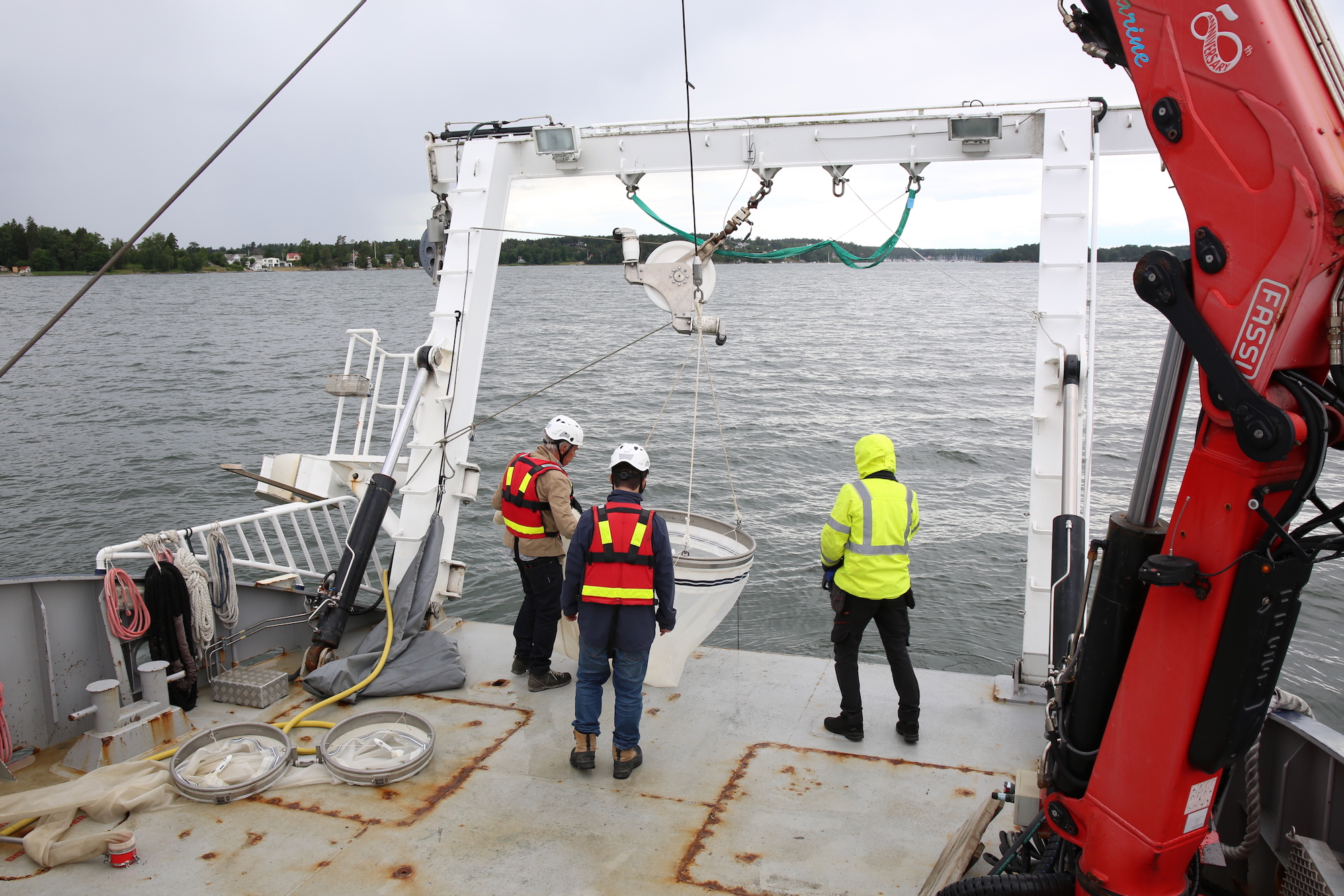
Sampling of herring larvae is carried out by researchers from Stockholm University Baltic Sea Centre and the Department of Ecology, Environment and Plant Sciences. Pictured: researcher Henrik Svedäng, master's student Zirui Wang, and technician Markus Maxe. Photo: Lisa Bergqvist
The first tow
A little way out in Ingaröfjärden, it's time for the first tow. Henrik Svedäng and Zirui Wang lift the trawl into the water, after which technician Markus Maxe begins winching out the cable it's attached to, while Mattias Murphy at the helm steers Electra slowly forward.
Markus Maxe holds the control unit with both hands, ready at the levers to adjust the winching to compensate for wind or currents. Each tow needs to be carried out in the same place and in the same way every time so that results can be compared over time. To ensure the trawl is lowered at the same rate on each tow, the winch speed is measured by timing how long it takes to release ten meters of cable. Every so often, Henrik Svedäng holds a mobile phone against the cable to measure its angle, using this to determine how far down the trawl has gone. Before the trawl risks being torn apart against the seabed, it's time to turn it back up.
"This way, every depth at each individual trawl station is represented equally in the sampling," Henrik Svedäng explains.
Once the nets are hauled up, they're rinsed with water so that all the larvae are washed down into the small container, which is then detached and brought up to the aft deck by Lauren Aylward.
A small stickleback came along this time. Henrik Svedäng notes it and releases it back into the sea as soon as it's confirmed to be in good condition. Lauren Aylward asks him to rinse his hand over the container to minimize the risk of losing any tiny larva.
"Just in case," she says.
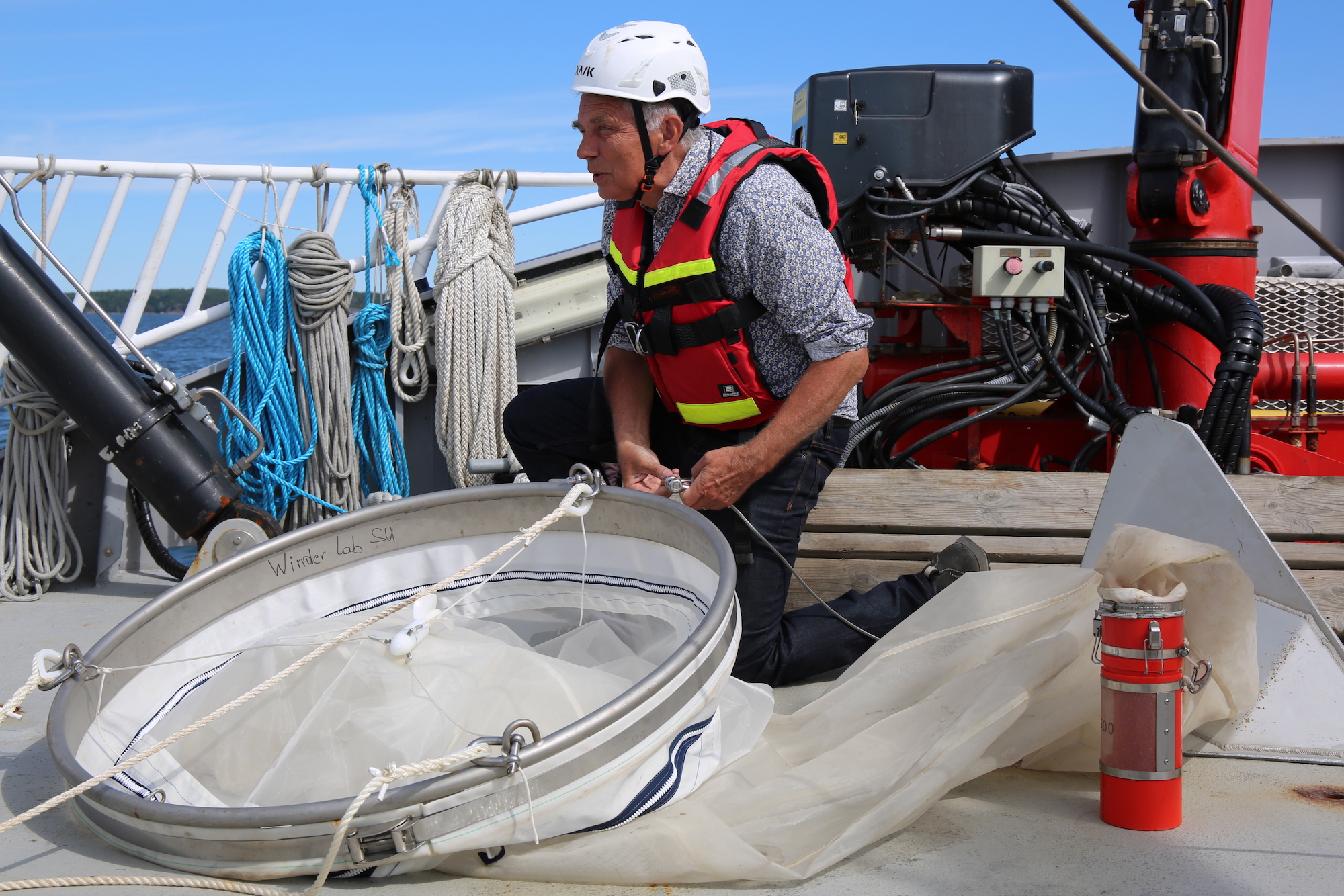
To make sure they catch herring larvae of different sizes, Henrik Svedäng and his colleagues use trawls with different mesh sizes. Photo: Lisa Bergqvist
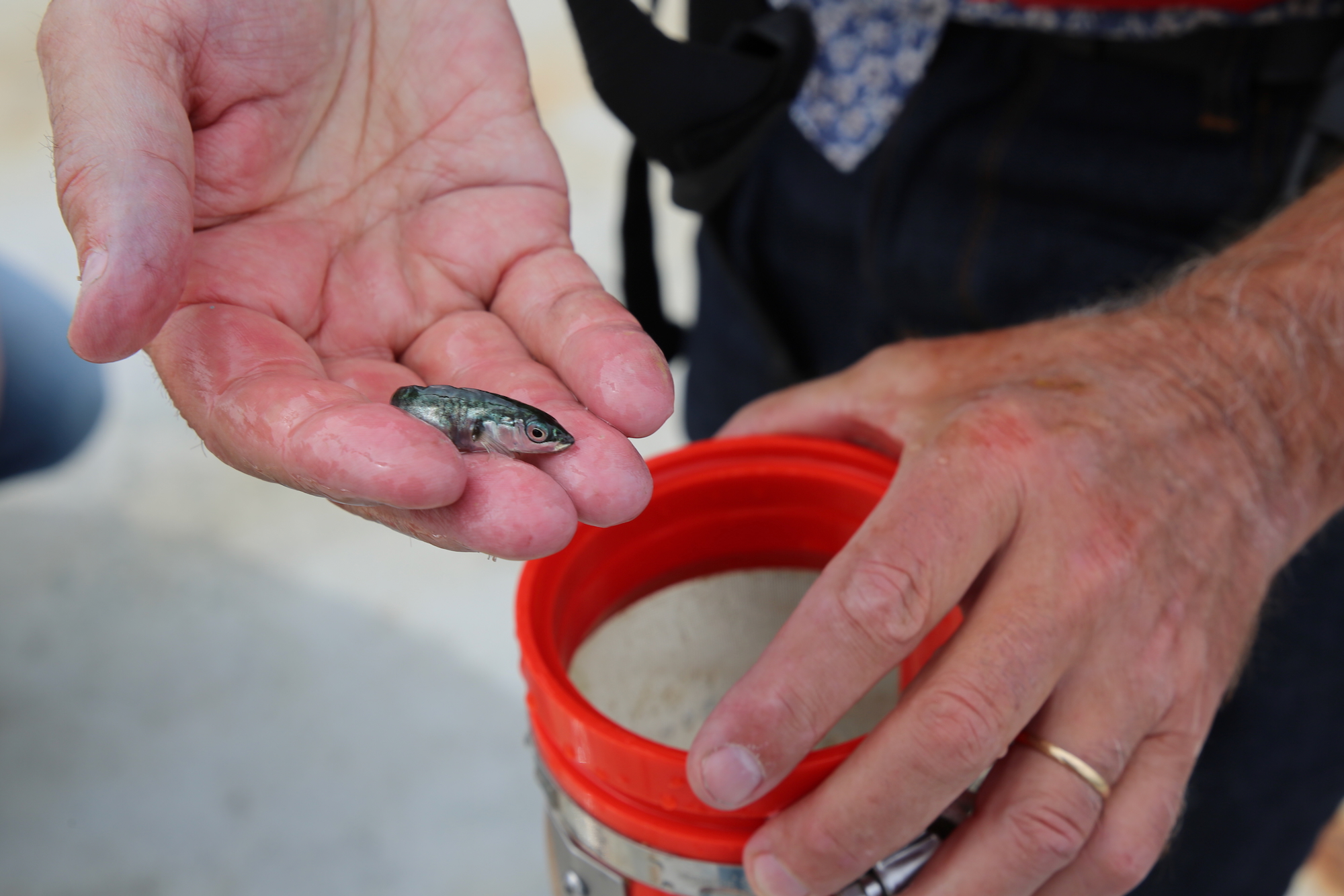
The occasional smaller fish – usually a stickleback – comes up with the trawl, but is released back into the water. Photo: Lisa Bergqvist
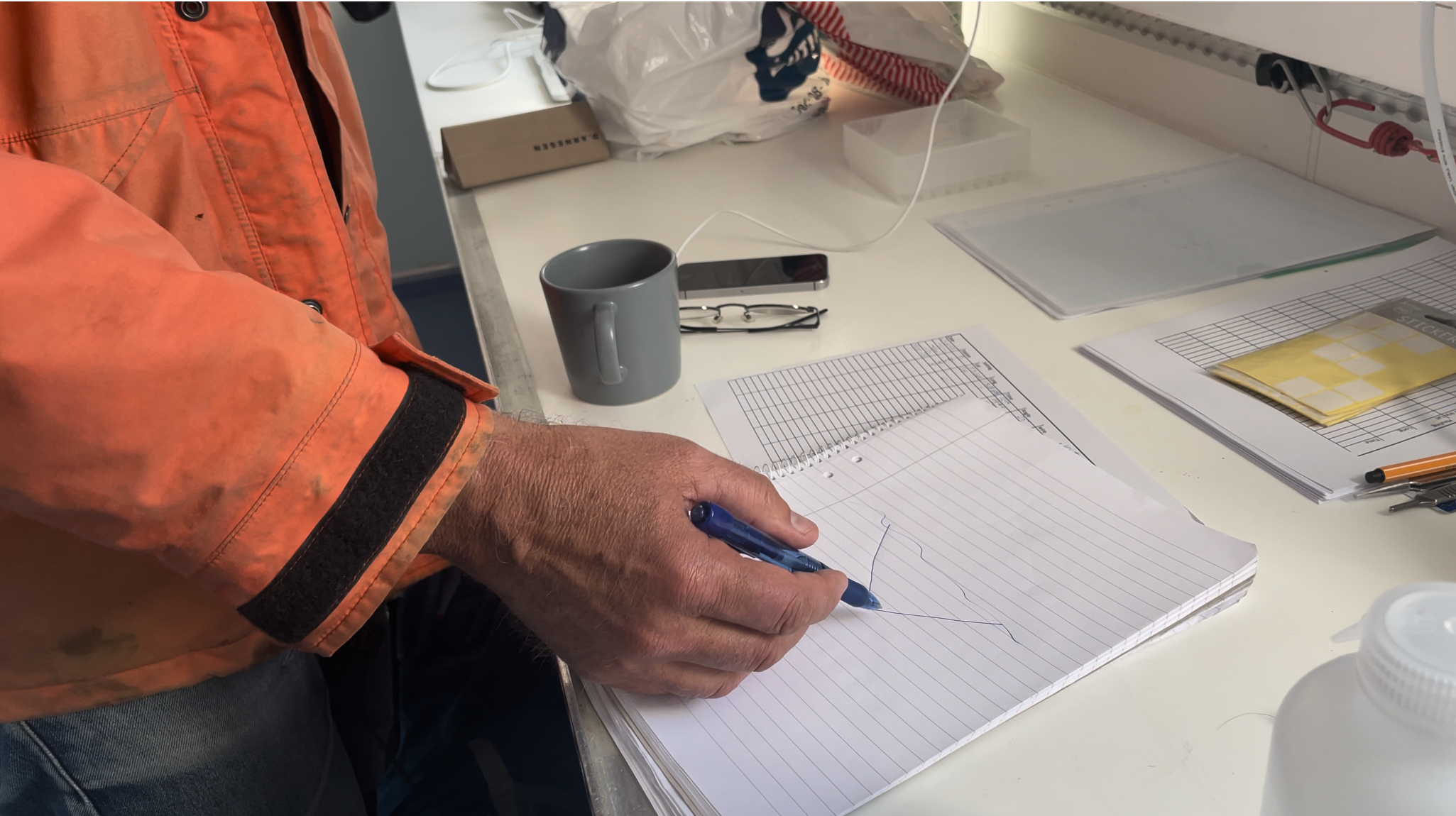
Henrik Svedäng shows how the trawl's position in the water changes during the tow. Photo: Lisa Bergqvist
Under the microscope
Then begins meticulous lab work, requiring both a sharp eye and focus. Lauren Aylward transfers the contents of the container, a little at a time, into a petri dish to identify what's there. In what looks to an untrained eye like just a bit of algae, she soon spots both a few very small, thin herring larvae – newly hatched, she notes – and a few slightly older ones, where the eyes can be clearly made out. The larvae are counted and measured, then transferred into labeled test tubes.
The work is made harder by the fact that there are also larvae of several other species in the water, such as various pipefish and gobies.
"You learn to recognize them by their shape," she says.
While the intensive counting is underway in the lab, Henrik Svedäng, Zirui Wang, and Markus Maxe are already busy hauling the larger CalCOFI trawl into the water, and skipper Mattias Murphy steers Electra back across the bay.
It might look as though the trawling is being carried out in the middle of nowhere, but the stations' locations are carefully planned, and on more than one occasion Mattias Murphy has to sound the horn at smaller boats that haven't noticed the vessel's signals indicating restricted maneuverability.
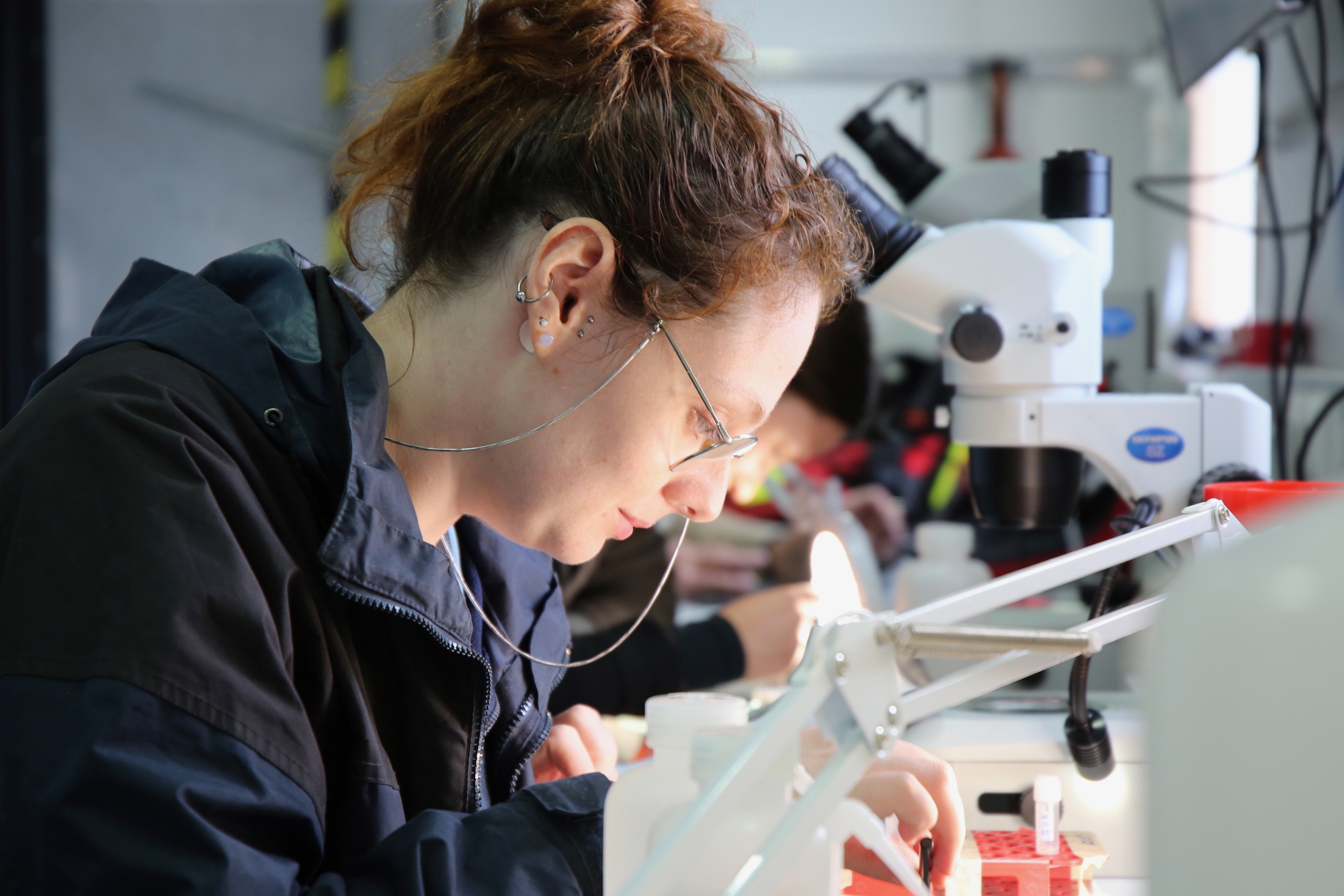
Lauren Aylward is a postdoctoral researcher at the Department of Ecology, Environment and Plant Sciences and a member of Monika Winder's research group, which runs the herring larvae project together with Henrik Svedäng. Photo: Lisa Bergqvist
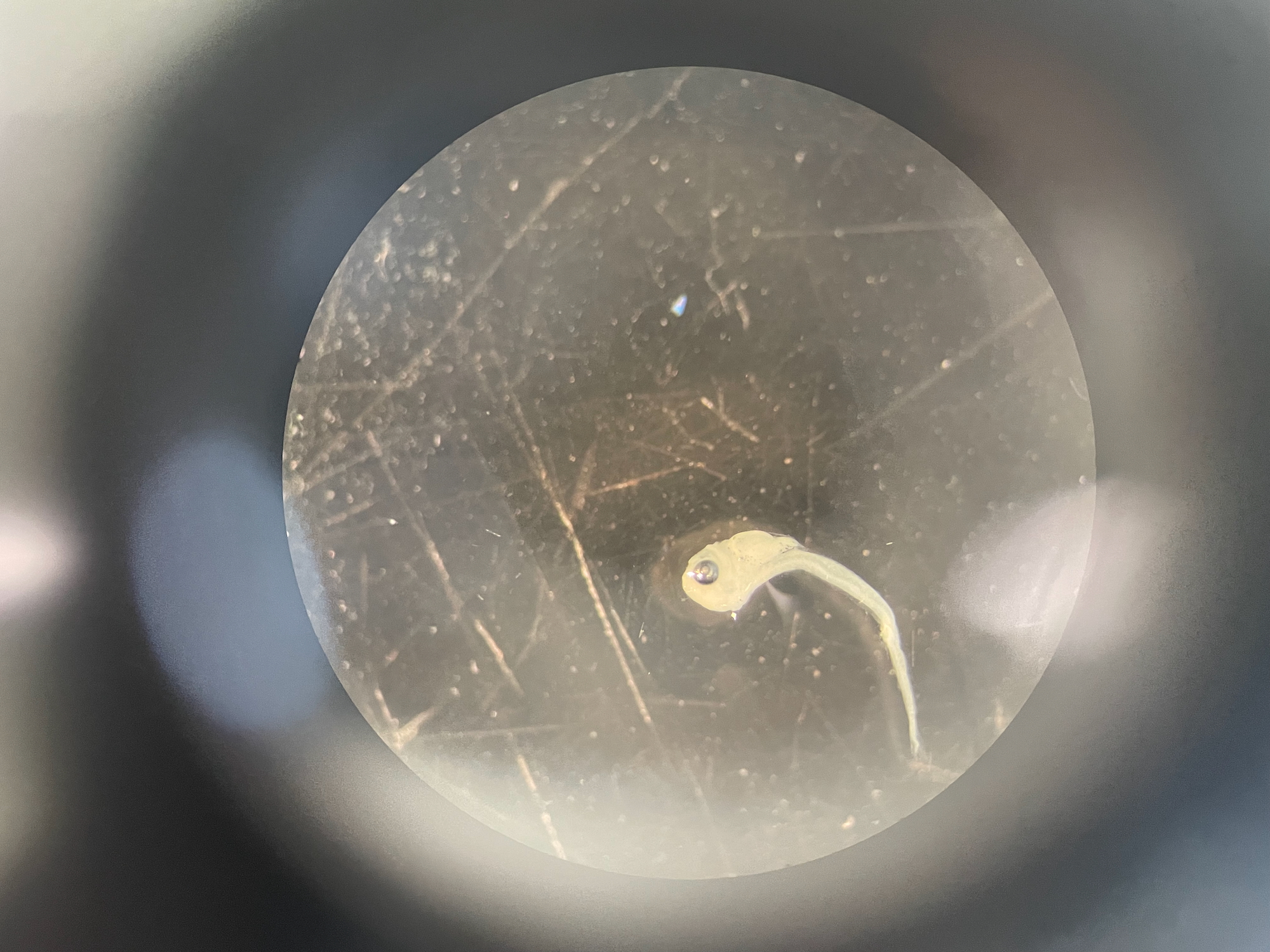
After hatching from their eggs, herring go through a stage in which they are called larvae. They don't yet look much like fish, but have distinctive eyes. Photo: Lisa Bergqvist
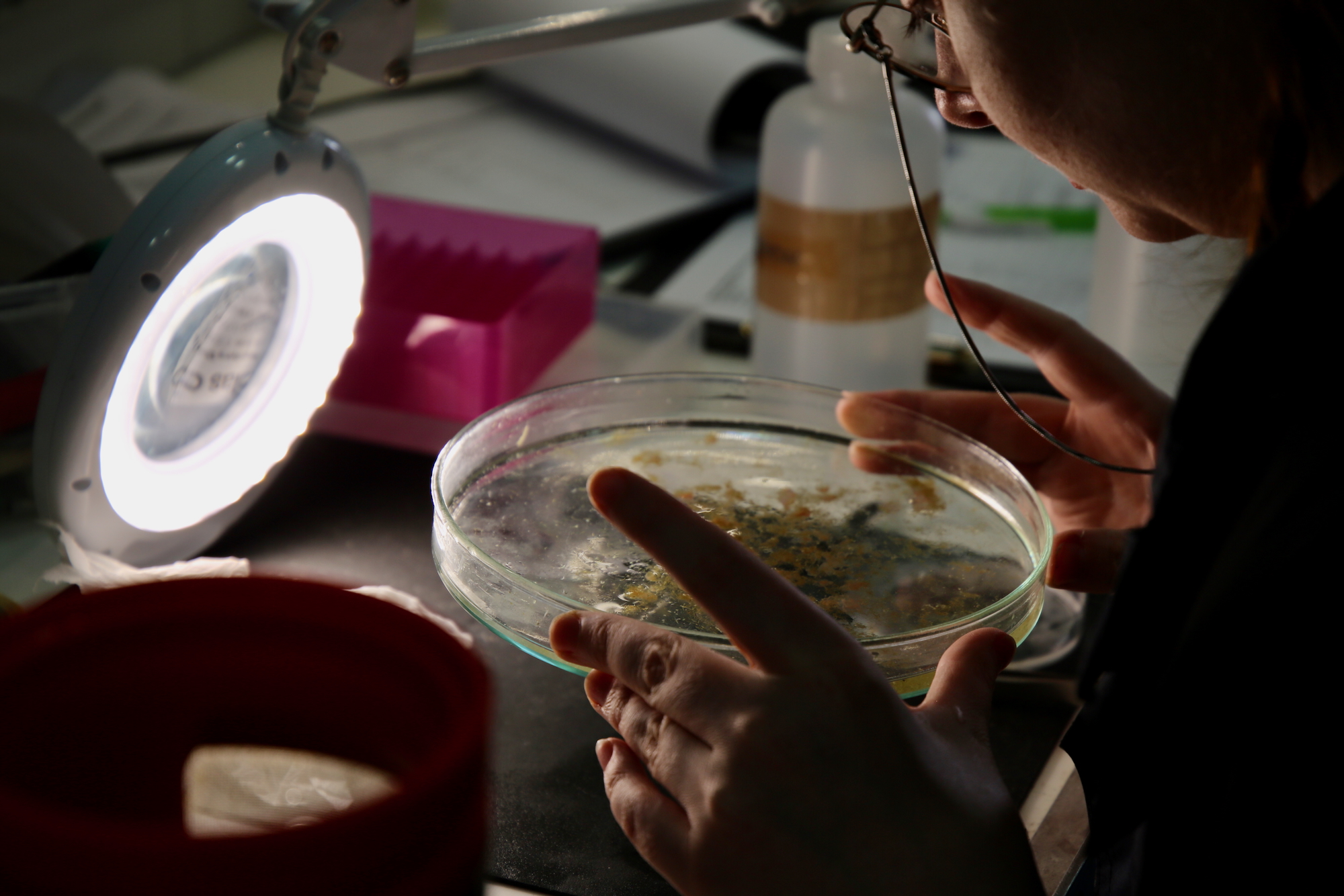
Lauren Aylward from the Department of Ecology, Environment and Plant Sciences counts, measures, and identifies the fish larvae. Photo: Lisa Bergqvist
Signs of an increase
Henrik Svedäng carried out the first larval trawling surveys in 2023. At that time, coastal fishermen had for several years been reporting declining herring catches, sparking intense debate about the state of the stocks in the Stockholm Archipelago, which were scientifically poorly studied.
A collaboration then developed between the Baltic Sea Centre and Professor Monika Winder's research group at the Department of Ecology, Environment and Plant Sciences to continue the sampling, and the equipment and sampling methods were updated.
Over the years, the researchers have been able to see signs of improvement for herring, Henrik Svedäng says.
"It's too early to say anything about this year's results, but we saw an increase in the number of larvae between 2024 and 2025. That's consistent with what other sources suggest: that there's been some kind of recovery after the major decline in the stock that occurred in the late 2010s," he says.
In February 2025, a trial relocation of the trawling boundary – from 4 to 12 nautical miles – began in a defined test area along the the Swedish coast of the central Baltic Sea, a move that has been the subject of debate. Henrik Svedäng doesn't believe the relocation itself explains the herring stock's recovery – it's too early for it to have had an effect. Fishing activity in the area had, however, already declined earlier.
"A look at the logbooks shows that large-scale trawling near the Stockholm Archipelago decreased sharply already around four years ago. It's possible that plays a role, and quotas in the Baltic Sea have also generally been reduced in recent years," he says.
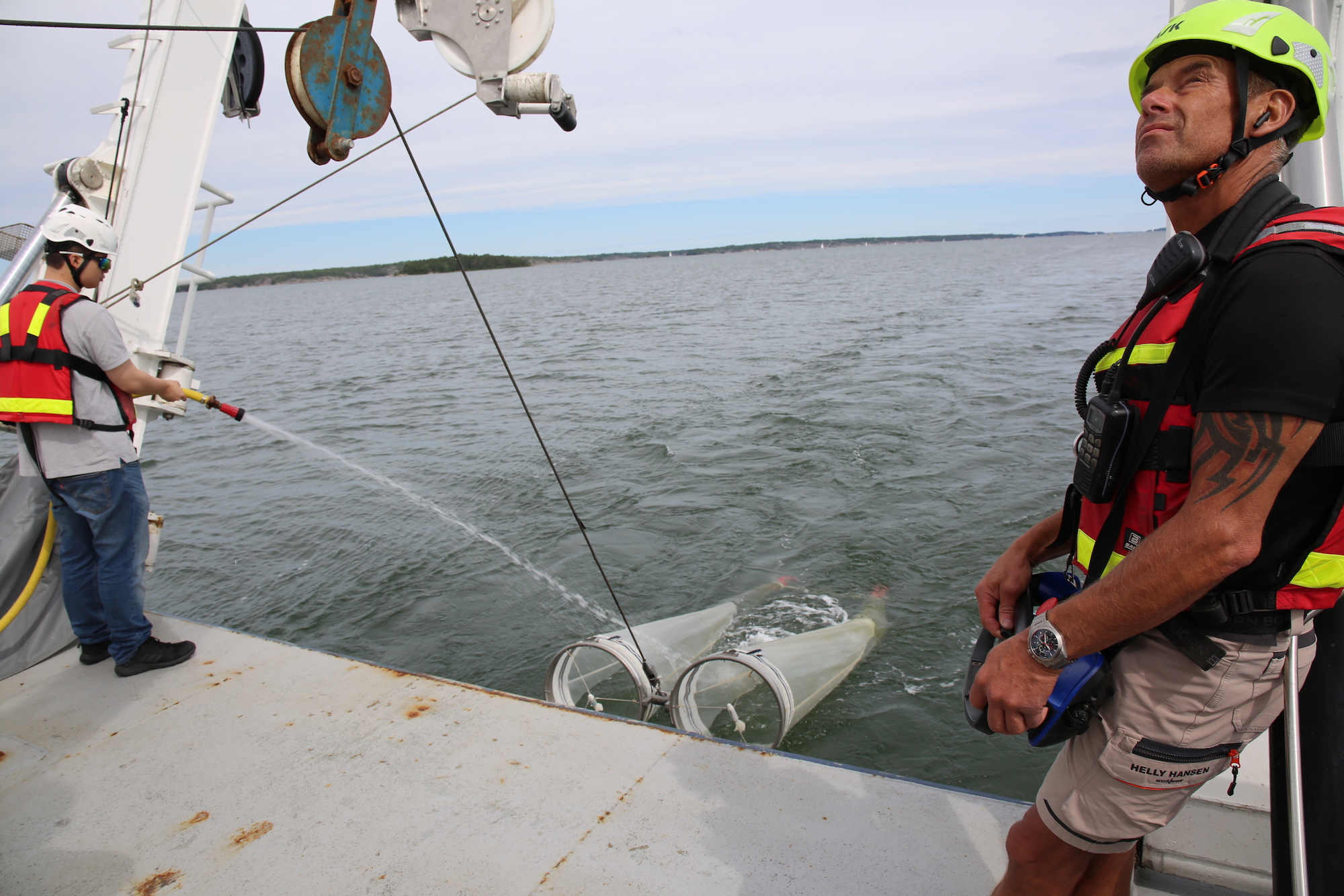
Zirui Wang rinses the bongo trawl so that the herring larvae collect in the container at the bottom, while technician Markus Maxe operates the winch. Photo: Lisa Bergqvist
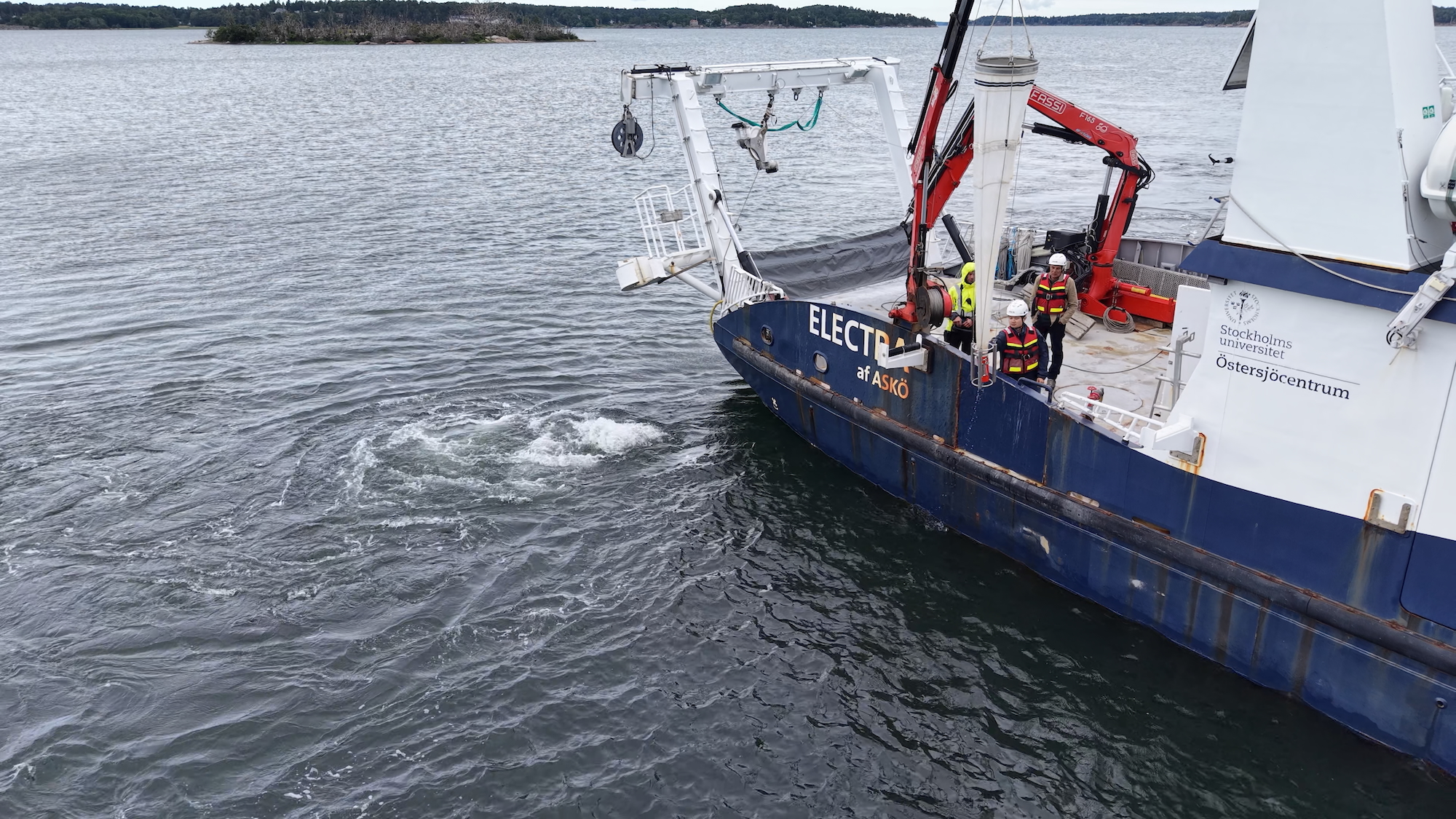
As a complement to the larval trawling, plankton samples are taken, which can be compared with the stomach contents of the herring larvae to investigate which plankton herring prefer. Photo: Mattias Murphy
Several stations
Electra's journey toward Stockholm continues, and the sampling routine runs like a well-oiled machine. Henrik Svedäng, Zirui Wang, Lauren Aylward and the crew on board barely need to exchange a word for trawl after trawl to be fitted, deployed, hauled in, and rinsed, and the catch taken care of.
Further north (at what Henrik Svedäng calls the "hot stations"), there are so many larvae that Lauren Aylward doesn't have time to count them all, so some samples are chilled and saved to be dealt with once they're back at the university.
The sampling attracts the curiosity of a local fisherman, who, after circling the research vessel for a while, comes over to ask how it's going: are there any herring larvae? The researchers' observations – that numbers have increased in recent years – please him and align with what he himself has noticed.
"It's great that the work to influence politicians is paying off. That's what we're seeing too, that there's more herring now," he says.
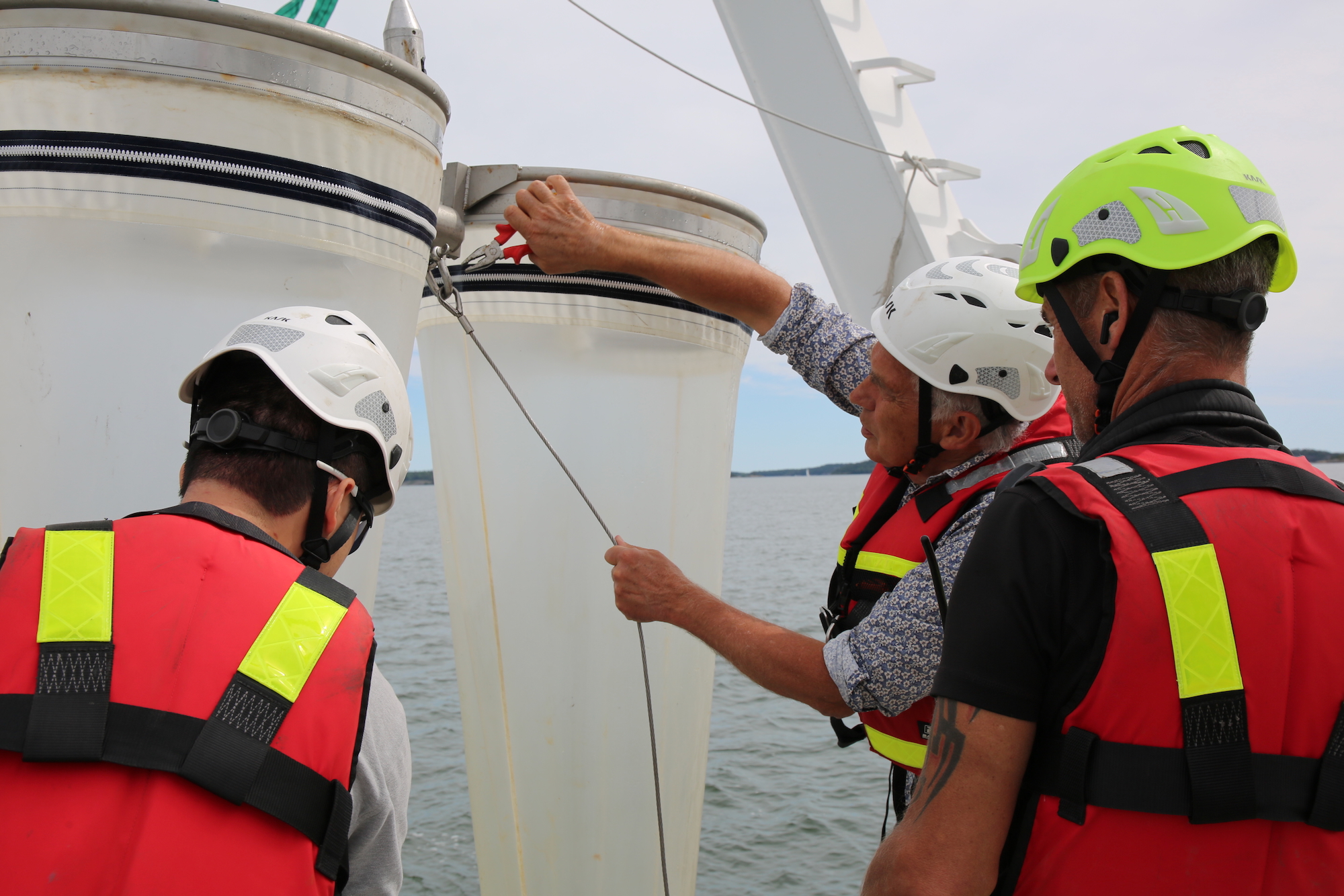
Zirui Wang, Henrik Svedäng, and Markus Maxe. Photo: Lisa Bergqvist
One population, or several?
In addition to mapping the presence of herring larvae, the researchers carry out stomach analyses on the larvae to find out what they eat. Among other things, these have shown differences in food choice between herring that spawn in spring and those that spawn in autumn, Henrik Svedäng says. Until the 1950s, the Baltic Sea was dominated by autumn-spawning herring, but since then there has been a shift toward dominance by spring spawners, he explains.
"Why that shift happened is a difficult question. It's probably a combination of environmental changes and heavy fishing."
After several years of larval trawling at different locations in the Stockholm Archipelago, the research group has amassed a unique set of genetic material, which could also shed light on the question of sub-populations.
Current EU fisheries management assumes that herring in the central Baltic Sea form a single large stock, but some researchers argue it may consist of several distinct sub-populations that return to specific locations in the archipelago to spawn. If it turns out there are genetic differences between larvae caught in different areas – differences that remain constant over time – this could support the sub-population theory. But it's also possible that any differences are due to genetic selection during growth in the different locations.
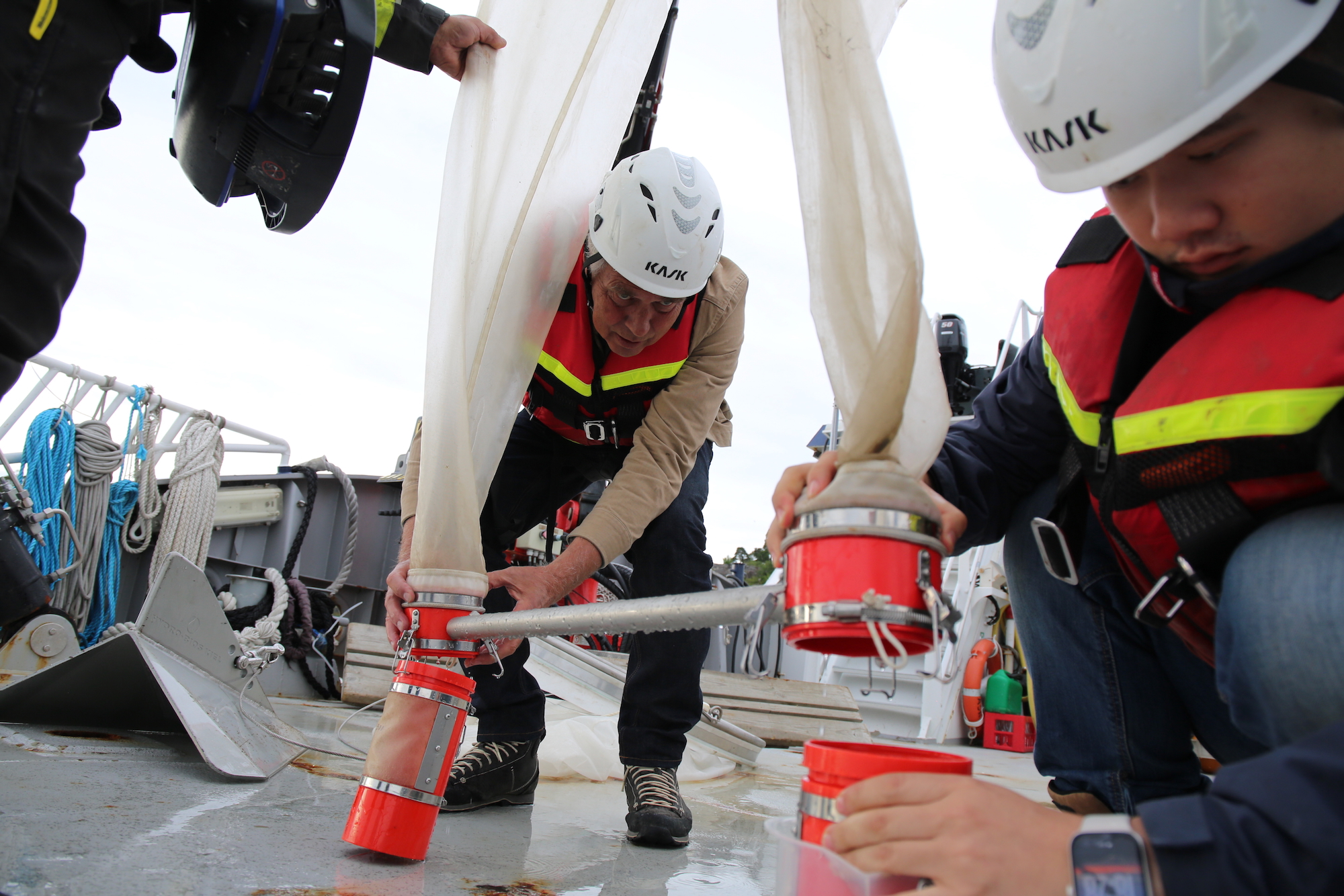
Henrik Svedäng and Zirui Wang detach the containers from the bongo trawl. Photo: Lisa Bergqvist
"What we've seen so far are large genetic differences, but the question isn't simple, and the analyses are still ongoing," says Henrik Svedäng.
What difference does it make whether there are sub-populations or not?
"If there are different sub-populations and some of them are fished down, they won't be replenished in the same way as if there's a single pool of herring that can spawn more or less anywhere in the archipelago. In that case, it's a system that's more affected by targeted, extensive fishing, where recovery is also affected by the fact that stocks at individual spawning sites can disappear entirely," Henrik Svedäng explains.
After the final tow of the day is completed off Fjäderholmarna, Electra finally glides in along Strömmen towards central Stockholm. The working day on board is drawing to a close, except for Lauren Aylward, who still has larvae left to count.
The next day the expedition will continue north to Kapellskär, where Henrik Svedäng will disembark and hand over the reins to Monika Winder, who will continue this week's leg of the herring stock survey.
Even though the number of herring larvae in the samples has increased, they're not particularly numerous compared with, for example, the southern Baltic Sea, Henrik Svedäng points out, as Electra ties up at Slussen.
"Even though you could say the stock has improved, it's still at a low level. And now fishing quotas are increasing again, so we'll have to see where that leaves the stock."
Text: Lisa Bergqvist
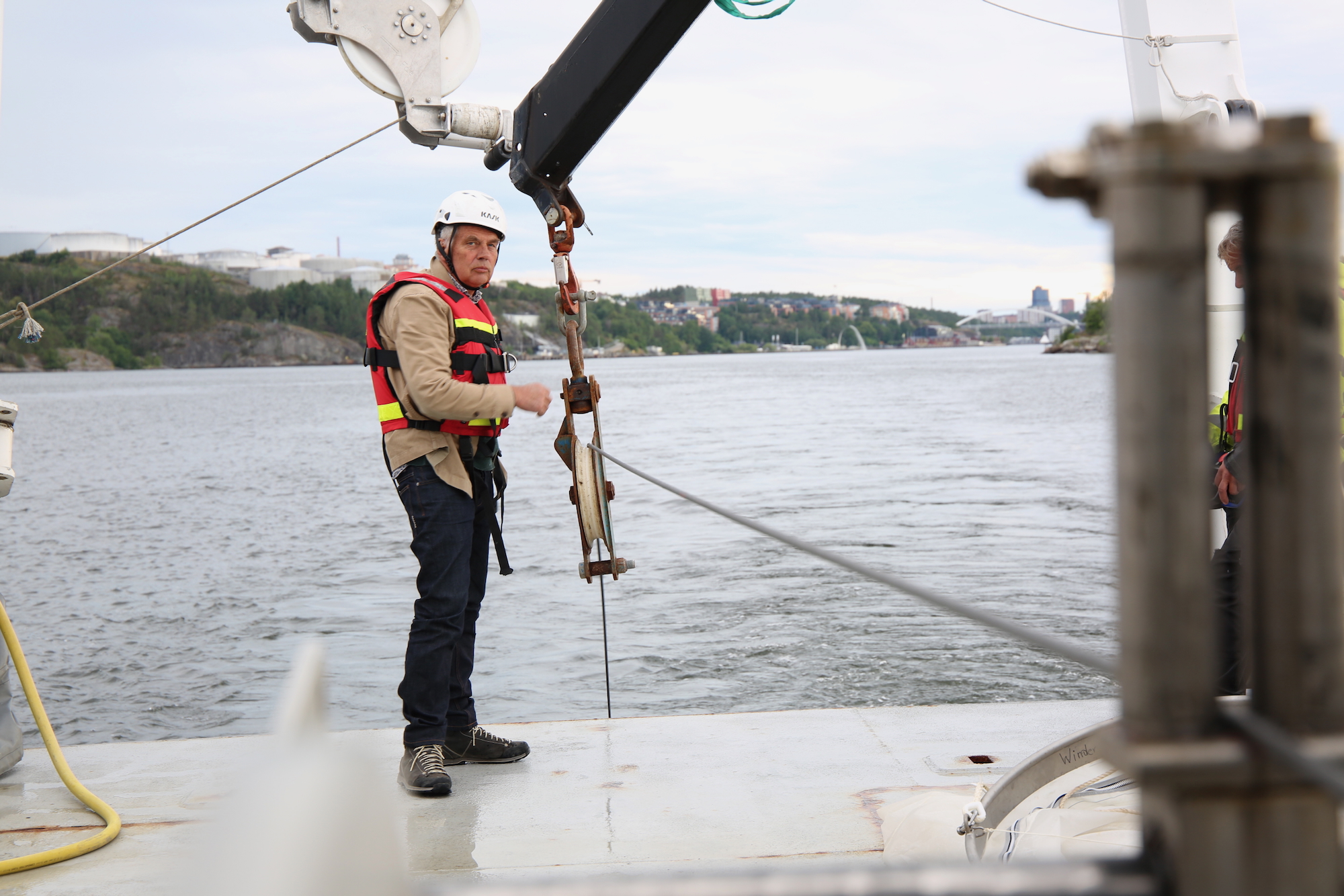
Henrik Svedäng. Photo: Lisa Bergqvist
Last updated: 2026-09-24
Source: Stockholm University Baltic Sea Centre