


Participants in UN climate meetings want greater focus on implementation
UN climate negotiations are often criticized for moving too slowly. A new study published in Nature Climate Change examines what changes government delegates and other participants at the COP29 climate conference would like to see. Among other findings, the results indicate strong support for better monitoring of countries’ climate commitments.
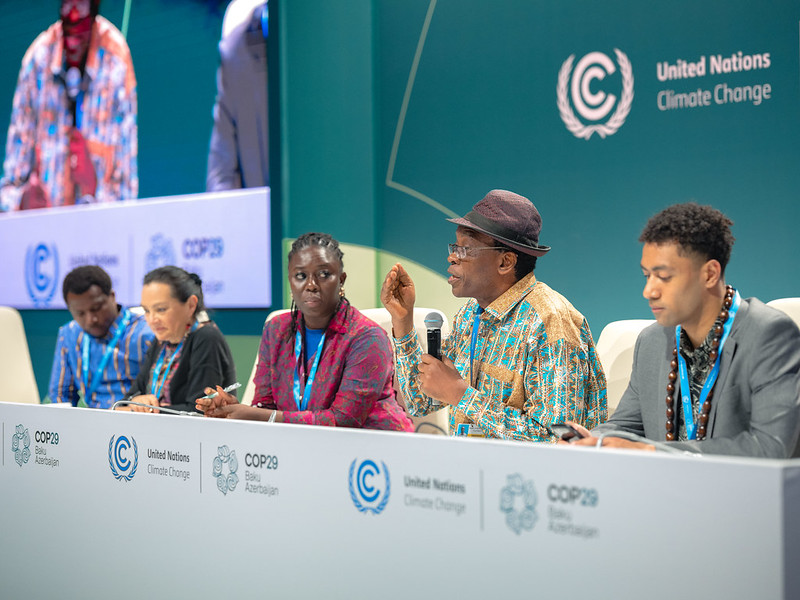
Participants at the COP29 climate conference in Baku, Azerbaijan, 2024. Photo: COP 29
Debate about UN climate conferences has intensified in recent years. The negotiations have been criticized for being slow, overly dependent on consensus, and open to excessive influence from various special interests.
“There are many proposals for how the process could be changed. However, there has been a lack of systematic knowledge about what the people who actually take part in the negotiations think,” says Faradj Koliev, Associate Professor at the Department of Political Science at Stockholm University.
In a new study, conducted together with researchers from Linköping University and the Swedish Institute of International Affairs, he examines what changes government delegates and observers would like to see in international climate cooperation.
COP29 participants responded
The study is based on a survey experiment involving government delegates and observers who attended COP29 in Baku in November 2024. The observers represented different types of non-state actors.
“This is the first study to systematically examine attitudes towards different reforms among people who themselves participate in UN climate negotiations,” says Faradj Koliev.
Greater focus on implementation
One of the clearest findings is that participants want less focus on new climate agreements and greater focus on implementing commitments that have already been agreed upon.
The study also shows strong support for increased transparency and better monitoring of countries’ climate commitments.
“This could involve more clearly tracking how countries are fulfilling their pledges and making information about implementation more accessible,” says Faradj Koliev.
Many participants are also open to changing how decisions are made during climate conferences.
According to the study, one option supported by participants is to retain consensus for the most important issues while using majority voting for other matters. Such a model could make it easier to reach decisions without completely abandoning the principle of consensus.
Different views on representation and influence
At the same time, the study reveals clear differences between government delegates and non-state actors.
These differences mainly concern which groups should be represented and how much influence different actors should have in the negotiations. The results therefore show broad support for certain reforms, but also identify issues on which participants’ interests and perspectives diverge.
More about the study
The study, “Reform Preferences of Key Actors in the UNFCCC Process”, is published in the scientific journal Nature Climate Change. DOI: 10.1038/s41558-026-02723-9.
Last updated: 2026-07-21
Source: Communications Office