


From eclipse to meaningful AI
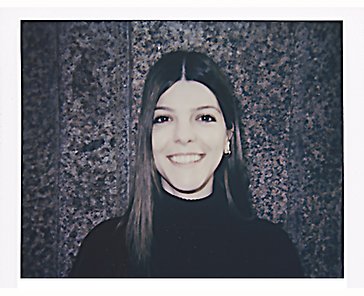
Aliki Litsa, Data Scientist at Savantic and Alumni at Fysikum
Experiencing a solar eclipse 2006 in Thessaloniki sparked Aliki Litsa’s interest in astrophysics. She earned her bachelor’s degree there and went on to complete her master’s degree at the University of Amsterdam. “I began my PhD at Fysikum in 2019, and after attending Career Fair I got in touch with Savantic. I have now worked there for two years with meaningful AI—developing solutions that drive sustainable growth, measurable impact, and long-term value.”
During her PhD at Fysikum, she was part of the CoPS division (cosmology, astroparticle physics, and string theory), where her supervisor was Professor Emerita Katie Freese. Five months into her PhD, the pandemic began, but the PhD students kept each other company throughout the restrictions.
“I was also involved in FysikShow, where we visited many schools, demonstrated experiments, and presented ourselves and our research. After my PhD, I met some people from Savantic at Career Fair 2024 and have now been working there for two years.”
She works with large language models and helps companies with their software development.
“It’s a mixture of research and projects. Many of my colleagues have a PhD in physics. I’ve worked on software development for the construction sector and for municipalities such as Järfälla and Nacka in Stockholm. Some projects have involved quality control of products in supermarkets.”
Aliki's advice to physics students
“When studying complex physics concepts, it is very easy to get lost in the technical details without really understanding the core of the problem—why you should care about it, and how it fits into the bigger picture. It is good to remember that you should always aim to understand a concept deeply enough to explain it to someone completely outside the field, while also being able to discuss it with an expert. Richard Feynman famously said, ‘If you can’t explain something to a first-year student, then you haven’t really understood it,’ and who can argue with him?” says Aliki Litsa.
How to use the Feynman Technique
Richard Feynman, American theoretical physicist.
Shared the 1965 Nobel Prize in Physics with Julian Schwinger and Shin'ichirō Tomonaga "for their fundamental work in quantum electrodynamics".
- Step 1: Teach it to a child. Choose a topic you want to understand and try explaining it as if you're talking to a child or someone who knows nothing about it.
- Step 2: Identify knowledge gaps.
- Step 3: Simplify & clarify.
- Step 4: Review & repeat.
Publications
Gravitational wave spectrum of chain inflation
Large density perturbations from reheating to standard model particles due to the dynamics of the Higgs boson during inflation
Natural Chain Inflation
Primordial non-Gaussianity from the effects of the Standard Model Higgs during reheating after inflation
More information
Aliki Litsa
Bachelor in Physics at Fysikum, 180 credits
Master's Programme in Physics at Fysikum, 120 credits
FysikShow (in Swedish)
Aristotle University of Thessaloniki
University of Amsterdam
Career Fair arranged by the Mathematics-Physics Section, Stockholm University
Claes completed his PhD at Fysikum and then founded Savantic
Savantic
Last updated: 2026-06-30
Source: Department of Physics