News

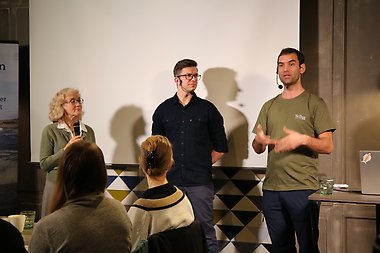
  • Baltic Breakfast: The ocean is warming – and the Baltic Sea is changing even faster

    Stratification in the Baltic Sea is increasing at a much faster rate than the global average, and marine heatwaves are becoming more frequent and intense. At Baltic Breakfast, oceanographer Fabien Roquet and marine researcher Norman Göbeler explained how warming is reshaping the sea, and how the change is outpacing science.

    Stockholm University Baltic Sea Centre
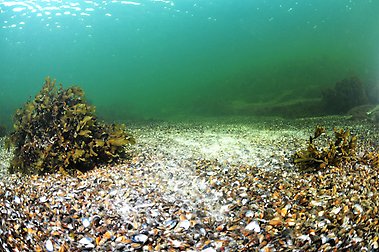
  • New policy brief calls for action to mitigate the impacts of Baltic heatwaves

    Marine heatwaves are becoming more frequent and more intense in the Baltic Sea. This affects some organisms directly, but also the ecosystem as a whole, for example by amplifying the effects of eutrophication. In a new policy brief, researchers within the collaboration CoastClim call for societal measures to increase ecosystem resilience to heatwaves.

    Stockholm University Baltic Sea Centre
  • Analysis: HELCOM Ministerial Meeting an opportunity to address the implementation debt

    On 4 November, the environment ministers of the Baltic Sea countries will meet within the framework of HELCOM cooperation to adopt a new ministerial declaration. For the sake of both the sea and humans, it must be ambitious and require member states to allocate resources to achieve the goals and implement the activities that have already been decided, the Baltic Sea Centre’s policy analysts write in a new analysis. Even though many measures have been taken to reduce eutrophication, strengthen biodiversity, and prevent environmental toxins from reaching the sea, there is a significant implementation debt to address.

    Stockholm University Baltic Sea Centre
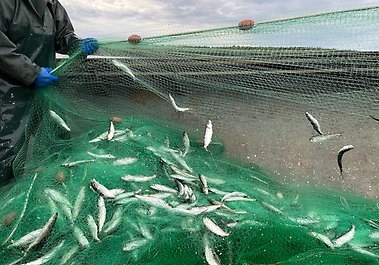
  • Small-scale herring fishery in Norrsundet, Baltic Sea

    Researchers: “Wait before increasing quotas until stocks show a sustained increase over time”

    Scientific assessments that herring and sprat stocks are growing prompted EU fisheries ministers to agree on substantial quota increases for next year. If the ministers are serious about the EU’s policy objectives for fish stocks, they should have opted for lower quotas and taken greater account of scientific uncertainties, argue researchers and a policy officer at the Baltic Sea Centre.

    Stockholm University Baltic Sea Centre
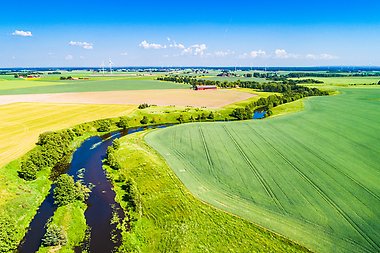
  • New report: Nitrogen loads from many Swedish rivers rose in the 2010s

    Nitrogen loads from many Swedish rivers to the Baltic Proper and Öresund increased between 2010 and 2020, and the increase is not just an effect of dry years, a new report indicates. The rise coincides with growing use of mineral fertilisers.

    Stockholm University Baltic Sea Centre
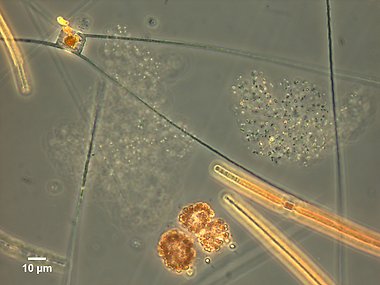
  • Tiny organisms play a big role in transporting carbon to the depths of the Baltic Sea

    Tiny photosynthetic organisms in the Baltic Sea can contribute substantially to the transport of carbon from surface waters to deeper parts of the sea. A new study from the Department of Ecology, Environment and Plant Sciences (DEEP) at Stockholm University shows that their ability to form colonies and aggregates is an important factor determining how much of their biomass sinks.

    Department of Ecology, Environment and Plant Sciences
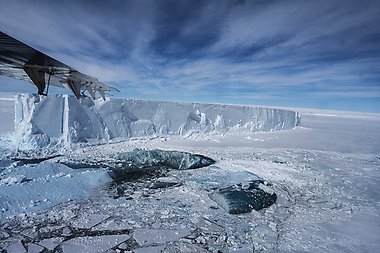
  • The edge of a large ice shelf in Antarctica. The photo is taken from a small airplane

    To predict Antarctica’s future, scientists need to see beneath the ice

    Professor Arjen P. Stroeven from Stockholm University and the Bolin Centre for Climate Research is one of 80 scientists behind a new international review highlighting major gaps in our knowledge of Antarctica’s coastal zone. The researchers warn that what we do not yet know about the landscape beneath and around the Antarctic ice could be limiting our ability to predict future sea-level rise.

    Bolin Centre for Climate Research
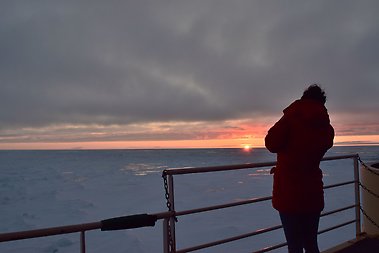
  • Caption: Faustine taking pictures of the beautiful sunset.

    Expedition Arctic Ocean 2026, blog post 17: Goodbye Arctic!

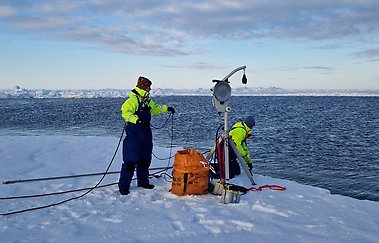
    A few of days ago, on our way south, we saw the first real sunset of the cruise. Shortly before midnight the sun touched the horizon and rose back up from the ice. It was a stunning view, but even more interesting was the atmosphere up on the bridge. People gathering and waiting for the sunset to come. It was really heartwarming to see how many people were eager to admire nature doing its course.

    Department of Meteorology
  • Carbon price on fisheries – EU rules and Nordic approaches

    Sweden and Denmark have both decided to impose a price for carbon dioxide emissions from commercial fisheries. Within a couple of years, those decisions should be implemented. That would reduce or phase out a subsidy that is harmful both to the marine environment and for the climate. It would also increase incentives to decarbonise the fishing fleet.

    Stockholm University Baltic Sea Centre
  • Major international research expedition underway at Tvären

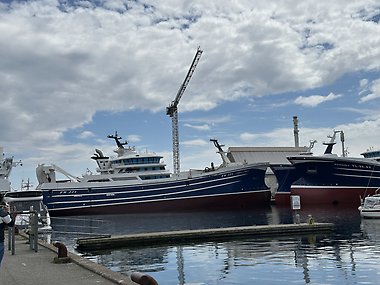
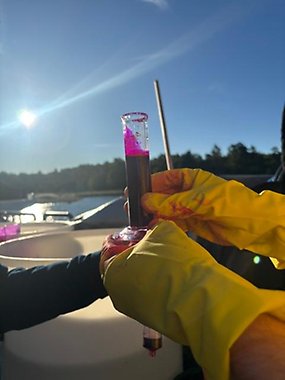
    A large-scale, international and multidisciplinary research expedition is currently taking place at Tvären, a circular bay in the Baltic Sea near Studsvik in Södermanland, roughly 100 km south of Stockholm.

    Stockholm University Baltic Sea Centre
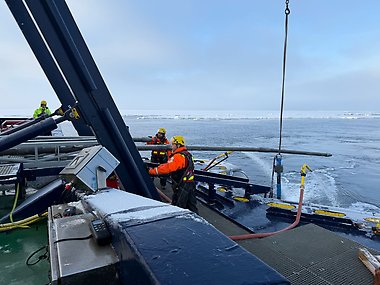
  • Richard Gyllencreutz and Matt O’Regan guiding the 12 m long piston corer (used for collecting sediment cores from the seafloor) into the sea.

    Expedition Arctic Ocean 2026, blog post 15: Inside the Research School

    Five weeks into the expedition, the routines of life aboard Oden are well established, but there is still something new to learn every day. In these three diary entries, Linnea shares lessons from working alongside other research teams, insights into scientific collaboration, and a closer look at the instruments helping us observe the Arctic atmosphere in one of the world's most challenging environments.

    Department of Meteorology