


Carbon price on fisheries – EU rules and Nordic approaches
Sweden and Denmark have both decided to impose a price for carbon dioxide emissions from commercial fisheries. Within a couple of years, those decisions should be implemented. That would reduce or phase out a subsidy that is harmful both to the marine environment and for the climate. It would also increase incentives to decarbonise the fishing fleet.
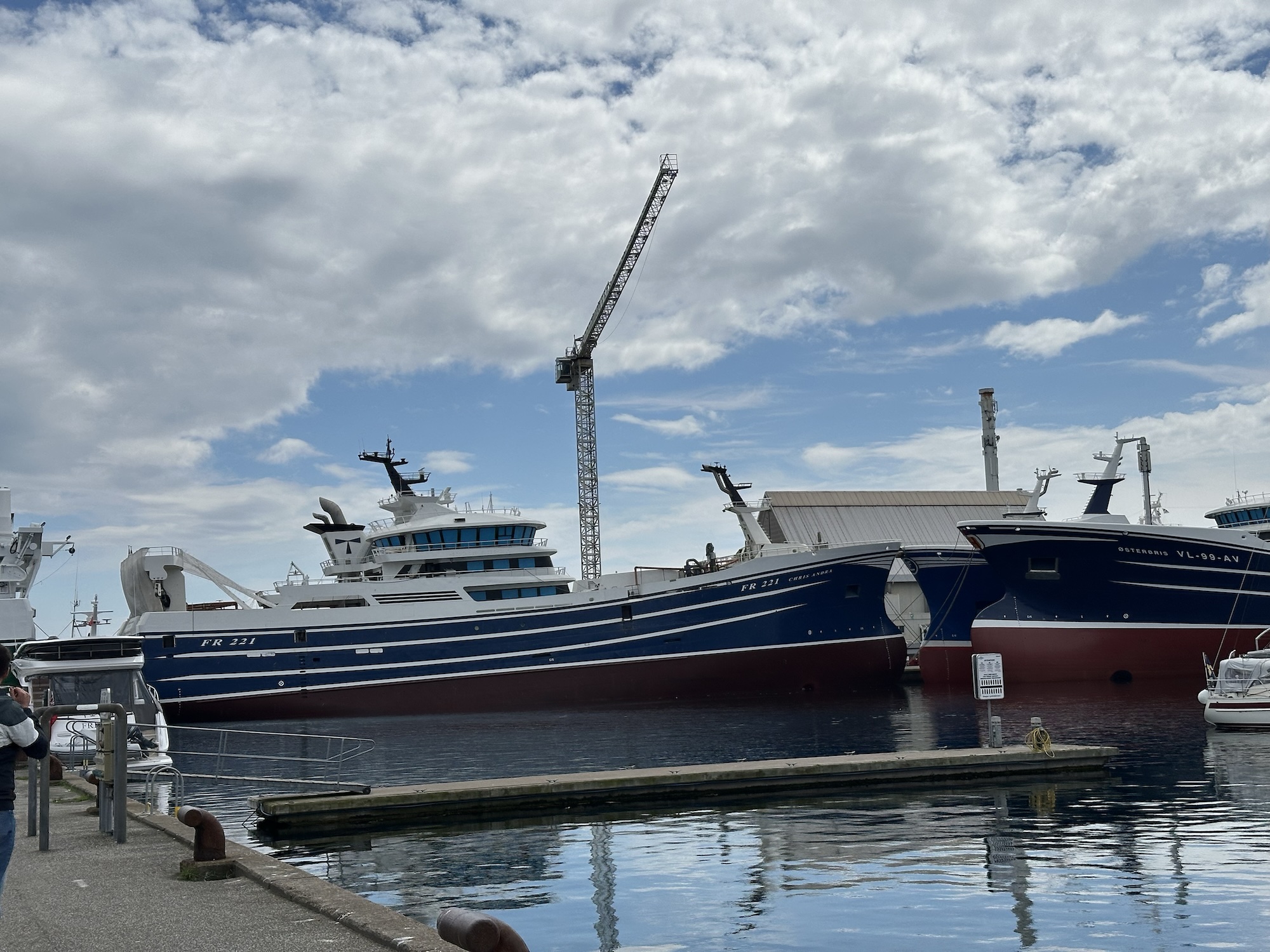
Within a couple of years, Sweden and Denmark could have implemented a price for carbon dioxide emissions from commercial fisheries. Photo: Ulrika Brenner
It has long been recognised that subsidies to commercial fisheries can be harmful to the marine environment. Subsidies to fuel use can take place either directly such as government funds to cover some fuel costs, or indirectly such as in the form of tax exemptions. Fuel subsidies have been classified as harmful to the marine environment, as they enhance fishing activities and contribute to overfishing. As fossil fuels predominate in fishing, subsidies to fuel use also undermine climate policy.
Globally, subsidies to fuel use are estimated to be the largest subsidies to fisheries. In 2001 the WTO initiated negotiations on an agreement to phase out harmful subsidies to fisheries. The agreement that entered into force in 2025 does not cover fuel subsidies, although negotiations continue.
Carbon pricing in the European Union
Fisheries were exempted from energy taxes in the EEC directive on taxes of fossil fuels from 1992. However, in the Energy Tax Directive adopted in 2003 Member States were permitted to limit the scope of the exemption and put taxes on part of the fisheries sector.
Fisheries were also not one of the sectors covered by the Emissions Trading System (ETS) launched in 2005.
What is the ETS?
The EU’s Emissions Trading System (EU ETS) is a main climate policy tool in the EU. It has been mandatory for power generation and energy-intensive industries since 2005, some aviation since 2012 and some maritime transport since 2024. It is also possible for Member States to choose to include other sectors in the system, so-called “opt-in”.
Companies in sectors covered by the system must pay for their greenhouse gas emissions. The EU sets a limit on how much carbon dioxide companies can emit. Some companies have been granted emission allowances. Those that they do not need can be sold. If they need more, or have not been granted allowances, they must buy allowances. This is intended to provide incentives to reduce emissions.
In the 2023 revision of the ETS as part of the EU’s updated Fit for 55 climate policy package, fisheries were again exempted from the sectors that are obligatory to be covered by the ETS. The possibility for Member States to allow an exemption for fisheries is still included in the Energy Tax Directive. However, fisheries are included in the sectors covered by Effort Sharing Regulation (ESR).
Under the effort sharing regulation, Member States are to achieve specific targets for reducing carbon dioxide emissions from a group of sectors including road traffic, buildings, agriculture, forestry and fisheries by 2030. There are provisions in the ESR to encourage countries to voluntarily include more sectors in the ETS.
Sweden the only country to include fishing
Subsidies to fishing fuel use in the form of tax exemptions have also long been recognised as problematic in Sweden. In 2008 a report from the Swedish National Audit Office noted that the fuel tax exemption was by far the largest subsidy to fisheries, amounting to over SEK 200 million in 2006, that most of it went to the large-scale fishers in contrast to official policy to promote small-scale fishers and that it led to increased fishing effort, which was inconsistent with other fisheries policy goals.
That report resulted in a number of submissions to the Swedish parliament proposing a fuel tax also on commercial fishers. Those proposals were rejected; it was argued that it would be better to incorporate fisheries into the next revision of the Emissions Trading System – ETS2.
In its 2023 climate communication, the government announced as its position that all burning of fossil fuels in all sectors should be included in ETS2. It also stated that it would later propose measures to fully compensate consumers and businesses for the effect of the increased fuel costs. The government tasked the Swedish Environmental Protection Agency with producing a more detailed proposal to include the sectors, such as agriculture and fisheries, in ETS2. The Agency confirmed that Swedish commercial fisheries should be included in the Swedish sectors covered by the ETS, so-called “opt in” in ETS2. One reason was administrative. Machines used in agriculture and forestry were also to be covered by ETS2, the fuel suppliers were to obtain the emission trading rights, and the same suppliers also supply diesel for fisheries. It would therefore involve too much red tape to separate fisheries.
When the proposal was circulated for consultation, the Federation of Swedish Farmers opposed including farm machinery in ETS2, at least until the issue of compensation was clear. The Swedish Board of Agriculture had a similar position. The Swedish Fishers’ Producer Organisation (organising primarily demersal fishers) opposed including commercial fisheries, pointing out that Sweden had not included support for decarbonisation in the national plan for the use of European funds available to support fisheries. The Swedish Pelagic Federation (SPF) also opposed including commercial fisheries. explained that as their largest members land their fish in Danish harbours, they would simply avoid the extra cost from the ETS by bunkering their fuel in Denmark. A Swedish opt-in for fisheries would therefore only affect the smaller fishers, which would be inconsistent with the official government policy of promoting small-scale fishers. An opt-in would also undermine the government aim of increasing landings in Sweden.
Nonetheless, in its climate bill in May 2024, the government proposed an opt-in for commercial fishing in ETS2. It also proposed that the households and commercial sectors impacted by the proposals be compensated. A government commission was to be appointed to work out the details on compensation.
In 2024 Parliament ultimately decided to include commercial fishing in ETS2. Under this decision, commercial fishing will have to pay for emission rights as of 2028. However, in their approval of the government bill, three of the four opposition parties expressed regret that the government had not presented the impact analysis that was necessary to assess compensatory measures. Concerns were raised about competitiveness and “leakage” of production and thereby emissions to other countries.
The government commission on measures for climate goals, tasked with developing a proposal for compensation, presented its report in May, 2026. The report noted that compensation measures should on the one hand not undercut the intention of climate measures, that is, they should not reduce incentives to cut fossil fuel use or lead to leakage, and on the other hand they must be compatible with the EU’s rules on state aid. The Commission therefore proposed that a reduction on energy taxes for agriculture should be extended. But the commission did not find any suitable measures to compensate commercial fishing.
Few countries have extended ETS2 to other sectors. The Swedish commission on climate measures from May 2026 identified Finland, the Netherlands and Austria, and in the future possibly Germany. The Netherlands has decided to opt in emissions from stationary fisheries activities (e.g. when unloading fish in port), but not fishing activity at sea. Sweden’s eastern neighbour, Finland, has done the same as the Netherlands. Denmark, as mentioned above, has gone a different route.
Denmark imposed a tax on fishing fuel
As mentioned above, in 2024 the SPF warned that if Sweden actually included fishing in the ETS2 so that fishers would have to pay, at least indirectly, for emission rights, that would simply result in the larger vessels bunkering when they land their fish in Denmark.
Denmark had decided in 2022 to impose a tax on fishing. This was part of an ambitious Danish climate package that included a carbon tax on emissions from agriculture. As there was concern that this could lead to a reduction in production or fishers bunkering their fuel in other countries, there was also to be targeted support to fishers. According to industry reports, by 2024 that had led to vessels refuelling outside Denmark, including in Sweden. Some of the most modern vessels had also been sold to other countries to avoid increased operational costs. Fishing representatives and mayors in coastal communities warned of impending doom before the tax increase entered into effect in 2025. They also complained about the lack of clarity about compensation. As some of the larger Swedish industrial pelagic fishers that land their fish in Denmark also have affiliates or subsidiaries in Denmark, they might have been aware of the tax on fuel for fishing when the federation commented on the Swedish ETS2 proposal in 2024 and warned that they would just refuel in Denmark if it was implemented, although the Danish tax decision was not mentioned in their submission to the government.
In mid-2025, a political agreement was reached in Denmark on a broad program for fisheries, including protected areas and restrictions on some fuel-intensive fishing methods. Included in the package was a decision to refund the fuel tax in 2025 and to suspend the tax from 2026 to 2028. In 2029 the tax will be reinstated, but fishers can apply to get 50 per cent of the tax refunded; this possibility will cease by 2030. This agreement also included compensation, for example in the form of support for a green transition in fishing.
The fish meal industry, however, is still lobbying for the tax to be abolished completely.
A condition for decarbonisation support?
Imposition of a price on carbon dioxide emissions is generally considered a cost-effective measure in climate policy. Due to the mobile nature and fossil fuel intensity of larger fishing vessels using active gear, however, there are concerns that these will simply refuel elsewhere.
The inherently mobile nature of larger fishing vessels is a good reason for coordinated action for a carbon price on fishing on the EU and the international level. So far, neither the EU nor the WTO have managed to agree on a carbon price, such as reduced subsidies in the form of fuel price exemptions.
In the Nordic countries, Denmark has imposed a tax on fishing fuel and is set to reimpose it in 2029. Sweden will include fishing fuel in ETS2 as of 2028. Finland will include stationary emissions only in ETS2. Norway has a tax on fishing fuel, although the tax rate was reduced in the beginning of 2026.
The EU could, however, encourage a more level playing field within the EU by making any aid in its program for decarbonisation of the fishing fleet dependent on the Member State putting a meaningful price on carbon dioxide emissions. This would not only be sensible climate policy, but would be beneficial for the marine environment, and in the longer term for the fishing sector.
Text: Charles Berkow
Last updated: 2026-09-24
Source: Stockholm University Baltic Sea Centre