News

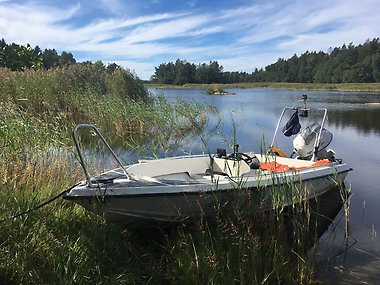
  • Enclosed bays are most sensitive to disturbance from motorboats

    Researchers working on the ‘Thriving Bays’ project have investigated which environments in shallow coastal areas of the Baltic Sea are most sensitive to disturbance from motorboats. The results show that the risk for boat-related impact is highest in the most enclosed bays, where extensive sediment resuspension from boat propellers can cause adverse effects on the aquatic environment and vegetation. In these bays, measures to mitigate disturbance from motor boats could be one way of protecting sensitive bottom vegetation.

    Stockholm University Baltic Sea Centre
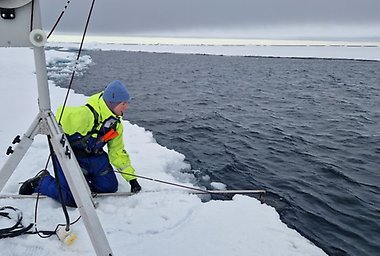
  • Expedition Arctic Ocean 2026, blog post 5: Life on Oden

    Today we publish a collection of stories written by our researchers on Oden, August 15, 2026. Hanna Winge becomes stranded on an ice floe as the mist rolls in, Irene Bellagente has to repair a broken aerosol research instrument, Linnea Huusko explores the on-board gym and Matthew Shupe shares his thoughts on the mood of the crew.

    Department of Meteorology
  • Baltic Sea Prize award to fisheries researcher Henrik Svedäng

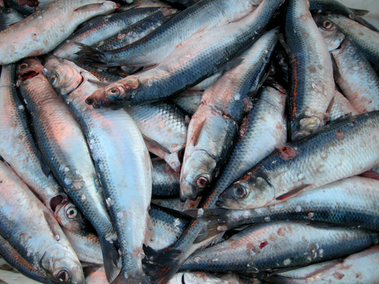
    Cheers erupted at the Baltic Sea Centre upon hearing the news that our long-standing colleague Henrik Svedäng has been awarded the Björn Carlson Östersjöpris 2026. “This was truly wonderful and well-deserved,” says Tina Elfwing, director of the centre. “I have always held Henrik Svedäng in high regard for his independent and courageous thinking.”

    Stockholm University Baltic Sea Centre
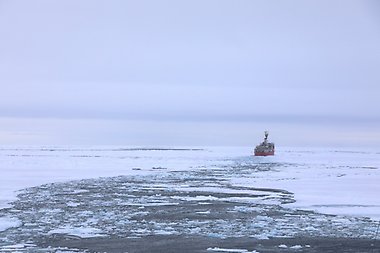
  • Image: The Icebreaker Louis S. St. Laurent can be seen from Oden as they move northward in the Arctic sea ice.

    Expedition Arctic Ocean 2026, blog post 3: Melt On Hold?

    Surely it must be melting? As we are moving northward in our journey I’m surprised to find almost no active melt ponds on the sea ice. Instead, in the middle of August, the ice floes are the bright white of fresh snow; The surface reflecting as many photons as it can to preserve the ice from its potential future demise.

    Department of Meteorology
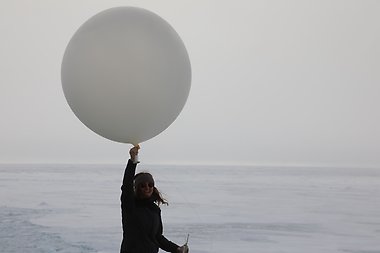
  • Woman holding a large gray-white balloon over her head, ready to release.

    Expedition Arctic Ocean 2026, blog post 2: Balloons!

    One of the things we in the met team do is launch radiosondes (weather balloons). A radiosonde is a small instrument that is attached to a helium-filled balloon. The balloon is released and allowed to rise through the atmosphere. As it rises, the instrument measures the temperature, wind speed and direction, and relative humidity. On Oden, we release radiosondes four times a day, every day, at 00:00, 06:00, 12:00, and 18:00.

    Department of Meteorology
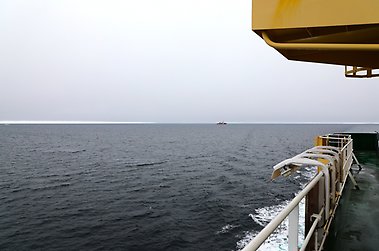
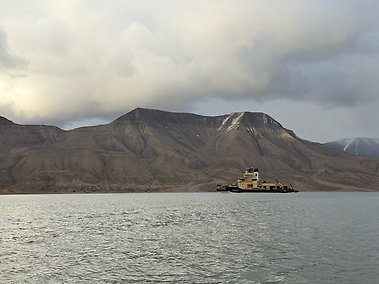
  • Image 1: I/B Oden, anchored outside Longyearbyen, Svalbard.

    Expedition Arctic Ocean 2026, blog post 1: Boarding Oden

    On Monday evening, we arrived in Longyearbyen and boarded I/B Oden to start our six-week journey into the Arctic. We got to the ship in the evening, around 21:00, tired after travelling all the way to Svalbard (some of us from Sweden, some all the way from Canada), but you probably couldn’t tell. The energy in the group was bubbling; I was giddy with excitement about finally getting to start the expedition!

    Department of Meteorology
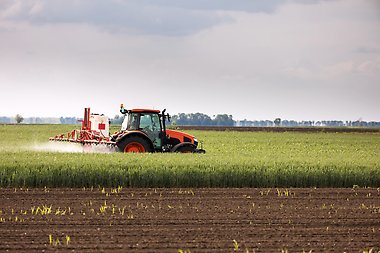
  • Scientists warn: Systemic failures allow hazardous pesticides to be approved – stricter oversight urgently needed

    Laboratory tests revealed potential harmful health effects of the pesticide fluazinam, yet the results were withheld by industry and the substance was approved for use. Researchers at Stockholm University warn that systemic failures in the EU's chemical regulatory system are putting both the environment and human health at risk – and that the deregulation currently under discussion risks making the situation worse.

    Stockholm University Baltic Sea Centre
  • Mistra funds broad research collaboration on coastal restoration

    The research foundation Mistra is funding the research programme Mistra Back2Future, which will lay the foundation for a National Centre for Restoration. "I am very happy that we will have the opportunity to carry out Back2Future and contribute to improving the conditions for successful coastal restoration," says Linda Kumblad, Stockholm University Baltic Sea Centre, who will become programme director for the broad collaboration between researchers from three universities, and several authorities and organisations.

    Stockholm University Baltic Sea Centre