


Analysis: HELCOM Ministerial Meeting an opportunity to address the implementation debt
On 4 November, the environment ministers of the Baltic Sea countries will meet within the framework of HELCOM cooperation to adopt a new ministerial declaration. For the sake of both the sea and humans, it must be ambitious and require member states to allocate resources to achieve the goals and implement the activities that have already been decided, the Baltic Sea Centre’s policy analysts write in a new analysis. Even though many measures have been taken to reduce eutrophication, strengthen biodiversity, and prevent environmental toxins from reaching the sea, there is a significant implementation debt to address.
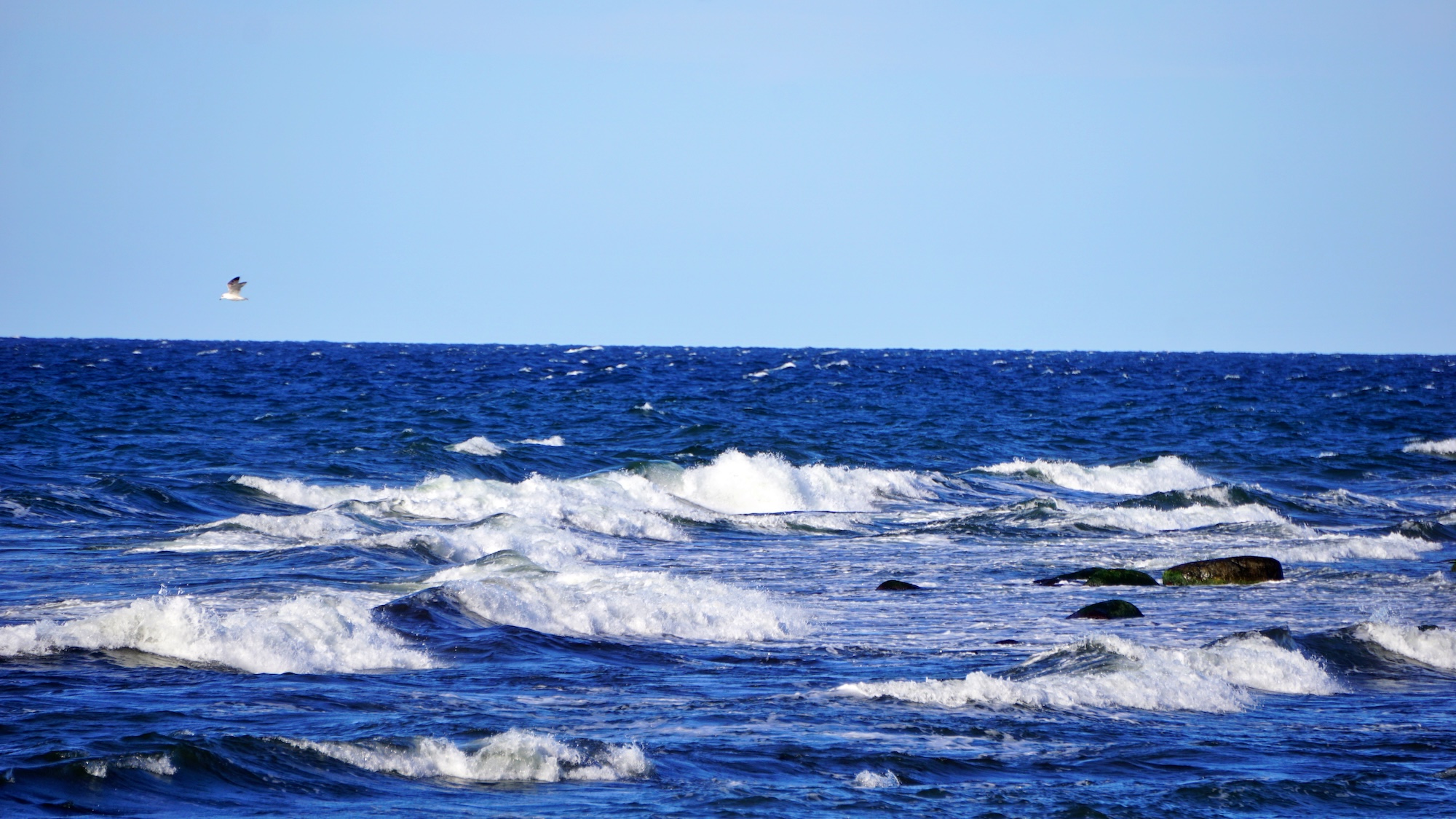
The Baltic Sea is under pressure from eutrophication, biodiversity loss and environmental toxins. The ministers’ meeting on 4 November is a chance to turn decisions into action.
The Baltic Marine Environment Protection Commission – also known as the Helsinki Commission (HELCOM) – is a cooperative organisation for the Baltic Sea countries and the European Commission, with the shared goal of a healthy Baltic Sea. It was established as early as 1974, and the work began with issues related to eutrophication. Early on, an agreement was reached on the extent to which each country must reduce its land-based emissions of phosphorus and nitrogen into the sea, and this work is still crucial for the well-being of the Baltic Sea.
Gradually, the organisation began addressing additional environmental problems, such as biodiversity loss, chemicals. noise and fish. A large number of working groups, comprising both researchers and government representatives, are driving these issues forward.
A long way to go to meet the goals
The actions to be taken within the framework of this cooperation were outlined in 2007 in an action plan, the Baltic Sea Action Plan. It was updated in 2021 and remains in effect through 2030, with the goal of achieving good ecological status for the Baltic Sea. Priorities, targets and actions are also added with ministerial declarations every third year. HELCOME has no legal status; rather, it relies on all member countries doing their homework. However, the commitments still become legally binding in practice because virtually all members (except Russia) are members of the EU, and much of what needs to be done is linked to EU legislation.
There is however still a long way to go to meet the 2030 goals. Of the 270 activities listed on HELCOM’s website, only 25 are currently considered fully implemented. During the update of the Baltic Sea Action Plan in 2021 HELCOM itself stated that there was still a long way to go before the goals would be achieved and pointed to the need for member states to do more, and faster. The fact that the Baltic Sea’s ecosystem is not functioning as it should also costs society money. Eutrophication problems alone cost up to 4 billion euros annually, when all affected sectors are taken into account.[1] It is therefore urgent that the upcoming ministerial meeting adopt a strong declaration that not only sets targets but also requires countries to allocate funds and human resources to close the implementation debt.
Cooperation is key
Many of the Baltic Sea’s environmental problems cannot be solved at the national level—this is particularly true of eutrophication, shipping, and overfishing. Therefore, the HELCOM Baltic Sea Action Plan and the ministerial declarations remain important tools for the countries around the Baltic Sea to move forward in unison, take the lead among other EU countries, and help one another.
In many cases, there is also a significant communicative and educational benefit to having the same rules apply in all Baltic Sea countries. For example, it would be beneficial if copper in anti-fouling paints were banned on small boats throughout the entire Baltic Sea, rather than, as is currently the case, only in Finland.
Through HELCOM, even limited national resources can also be pooled to form a larger regional resource. For example, there is a proposal from HELCOM’s experts on environmental toxins to establish a centre of expertise to develop rules and recommendations for green public procurement in the member states around the Baltic Sea. Public procurement is a key area for reducing the overall load of environmental pollution entering the Baltic Sea, and in this regard, several member states lack both expertise and specific authorities.
The research community is strongly committed to contributing with knowledge about which environmental problems need to be addressed, which measures are considered most effective, and what effects various measures have. For this reason, Stockholm University Baltic Sea Centre also welcomes the new HELCOM Science Agenda, which is intended to guide national authorities participating in HELCOM’s work, national and international research funding bodies, and the research community regarding the knowledge needed to achieve HELCOM’s goals and carry out its activities.
Text: Gun Rudquist and Ellen Bruno, policy analysts at Stockholm University Baltic Sea Centre
[1] HELCOM Explorer
Last updated: 2026-10-29
Source: Stockholm University Baltic Sea Centre