


Surprising discovery of cable bacteria in oxygen-free seabed
Remarkable so-called cable bacteria have for the first time been found decimetres down in completely oxygen-free sediments. The discovery raises new questions: how can they survive there – and what impact does their presence have on oxygen-depleted marine environments?
It was from sediment sampling in Koljö Fjord on the Swedish west coast that the spectacular discovery was made: cable bacteria deep down in the seabed, where no one would ever have expected to find them.
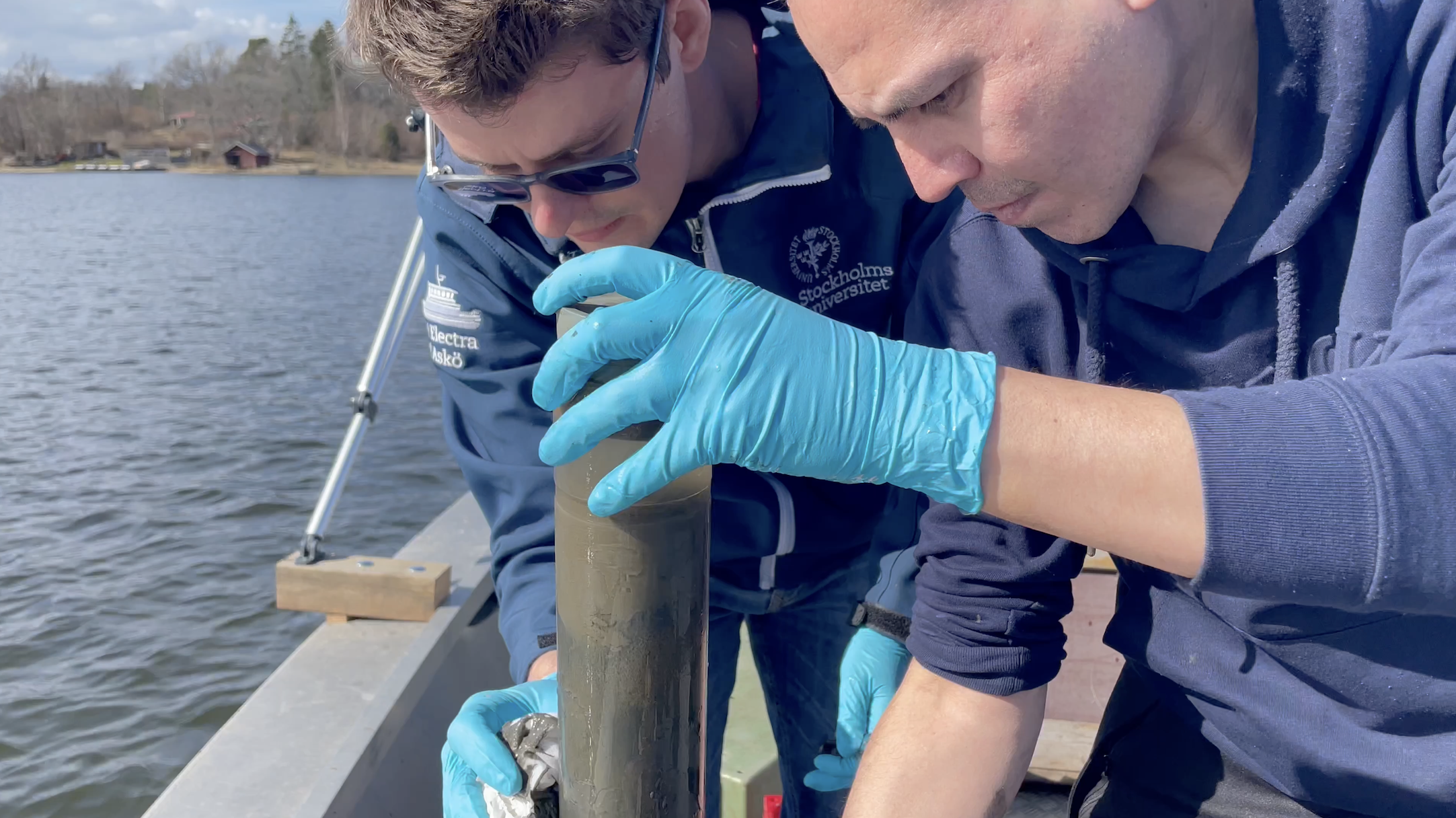
Cable bacteria, remarkable microorganisms capable of conducting electric current, have been found in oxygen-free bottom sediments. The photo shows the study's joint first authors Martijn Hermans (left) and Alexis Fonseca (right) during a similar sediment sampling in another bay. Photo: Lisa Bergqvist
Conducting electric current
Cable bacteria are a remarkable type of organism, first identified as recently as 2012. They form long chains that can reach centimetre lengths – gigantic by bacterial standards – and have the ability to conduct electrons from one end to the other through nickel-rich protein fibres. This ability gives them a major influence on the biochemistry of their surroundings.
As they have been described so far, they live stretched out vertically at the very top of the seabed sediment. There, they "eat" hydrogen sulphide (from which they pick up electrons) with their lower end, and breathe oxygen (to which they donate electrons) with their upper end, facing the water. The electrons are sent through the fibres along the slender bacterial chain up through the mud, just like current through a cable.
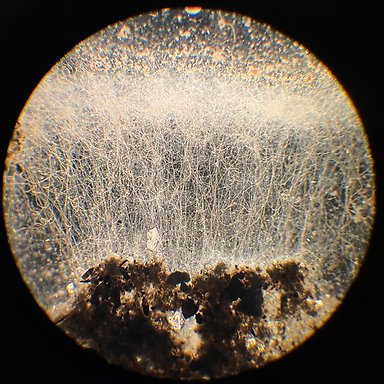
Cable bacteria filaments under optical microscope. Image courtesy of Leonid Digel (University of Cambridge).
Alexis Fonseca, postdoctoral researcher at the Baltic Sea Centre and the Department of Ecology, Environment and Plant Sciences, who studies bacteria and viruses in coastal waters, was curious about cable bacteria and wanted to investigate whether he could find any in the sediment cores his colleagues had collected from Koljö Fjord and three other sites in Swedish and Finnish coastal waters.
The samples had primarily been taken to study methane-consuming bacteria, which are an entirely different type of organism. But the sediment cores had already been retrieved, so the opportunity to conduct additional analyses was there.
"I had no expectations, least of all from Koljö Fjord, which like much of the Baltic Sea is known for its enclosed water and oxygen-free bottoms – but I was curious about what we might find," says Alexis Fonseca.
Surprising findings
When the results of the analyses came in, they were not just unexpected – they were completely upside down. Not only were cable bacteria abundant in the samples, they were also most common well down in the sediments, at a depth of 20–22 centimetres, where no one had previously found cable bacteria.
"In the beginning I thought it was a mistake," recalls Alexis Fonseca.
But no – the samples had been handled correctly, and the other data from geochemical and genetic analyses matched the expected patterns of substances and microorganisms.
So how can cable bacteria survive in completely oxygen-free bottom sediments?
"There's an alternative electron acceptor for the cable bacteria to breathe with – not as good, but functional – and that is nitrate," explains Alexis Fonseca.
Pockets of locally produced nitrate
The geochemical analyses of the sediment cores revealed pockets rich in nitrate at the same depth where the cable bacteria were thriving. But how is nitrate formed there? Normally, nitrate is produced through nitrification by specialised bacteria that convert ammonia into nitrite and then nitrate. But even that process requires oxygen. However, nitrate can also be produced in anoxic or low oxygen environments through alternative pathways.
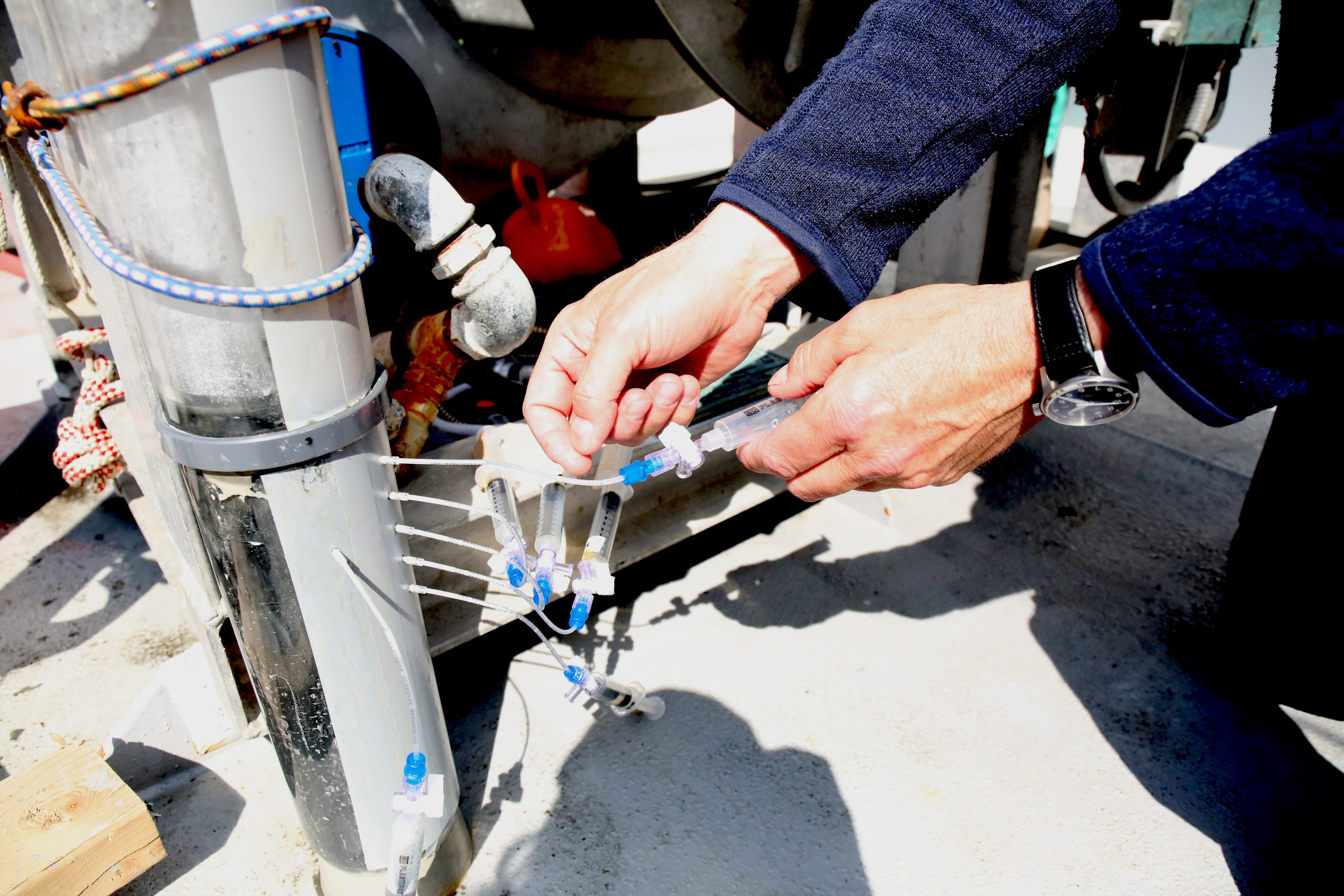
Porewater is extracted from a sediment core at multiple depths. The thin white tubes, known as rhizons, contain filters through which liquid is drawn from the sediment and collected in syringes for further geochemical analysis. Photo: Michaela Lundell
The researchers began examining different possibilities. Could it be oxygen-rich groundwater seeping into the sediments? No – salinity measurements ruled that out. Could it be iron oxides oxidising the ammonia? No – iron oxides are dissolved by hydrogen sulphide, which is abundant at the bottom of Koljö Fjord, before they can reach that depth in the sediments. Could it be manganese oxides? No – far too little manganese was found in the samples. Other possibilities were also ruled out using the geochemical and genetic analyses. The only process that could not be excluded in this oxygen-free environment was sulfammox – a process in which ammonia is oxidised using sulphate as an electron acceptor instead of oxygen, producing nitrate.
"Sulfammox is the most plausible explanation, but it's a process that is not yet well described and is poorly documented in natural environments, so it's just a hypothesis," says Alexis Fonseca.
Combination of methods points to unknown ecological niche
"We have several layers of evidence here that we have pieced together, allowing us to propose this novel ecological niche for cable bacteria: first, we have demonstrated cable bacteria at depth in oxygen-free sediments; second, we have high nitrate concentrations at exactly the same depth as the cable bacteria; and third, both sulphur and ammonia are available there."
"It is possible that what is going on is some form of syntrophy – a tight chemical collaboration between different microorganisms, where one organism's waste product is another's fuel," says Alexis Fonseca.
"It may give us insights into what life might have looked like during the early development of Earth, during the first two billion years when there was barely any oxygen."
Short-lived RNA
But how can they be certain that the cable bacteria they have identified are actually alive? Could they not be remnants of old cable bacteria filaments that have simply been buried in the sediments?
"We are certain that they are alive and active because we used the method of metatranscriptomics, which looks at RNA, which is very short-lived," says Alexis Fonseca.
Metatranscriptomics is a modern, molecular biological method that has revolutionised our ability to study microbial communities. It involves analysing RNA, which is produced when genes are active, read, and the cell builds proteins. RNA breaks down within just minutes to hours, so finding it tells you that you are dealing with living, active organisms. Dead cells leave no RNA traces.
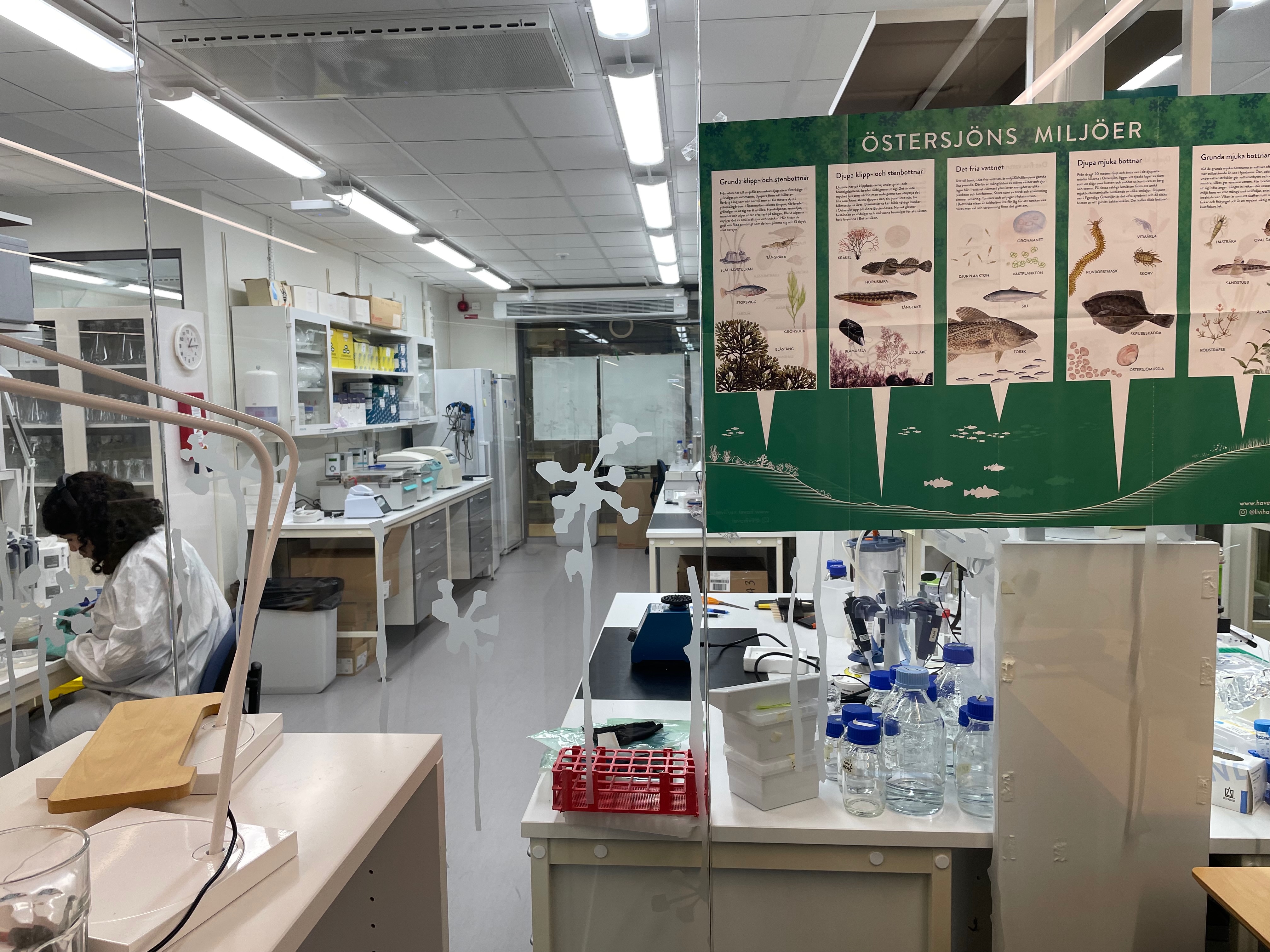
Using RNA analyses (known as metatranscriptomics), the researchers were able to show that active cable bacteria were present in the sediments from Koljö Fjord. Drawing on hundreds of millions of RNA sequences, they were also able to trace the evolutionary relationships (phylogeny) of the bacteria and identify several previously undescribed species in the sediments. The sequencing was carried out at SciLifeLab in Solna. Photo: Michaela Lundell
Several new, unknown species
The researchers also carried out a phylogenetic analysis – examining a large number of genetic signatures to see how the bacteria are related to one another and to already known species. The analysis shows that the cable bacteria in Koljö Fjord belong to several different evolutionary lineages, and that several of them are likely entirely new, as yet undescribed species.
Taken together, this is a study that, through an elegant combination of geochemical and transcriptomic methods, indicates that cable bacteria have the potential to play a larger role in marine ecosystems than we have previously imagined. We now know that they can live and be active in oxygen-free environments where no one thought they could survive. What impact their electron transport down there in the sediments has for the Baltic Sea and other oxygen-depleted marine environments remains to be investigated.
Text: Michaela Lundell
Read the scientific article in Environmental Microbiome:
Evidence for cable bacteria inhabiting deep in anoxic sediment reveals a novel ecological niche.
Last updated: 2026-05-11
Source: Stockholm University Baltic Sea Centre