


1.2-million-year-old ice is now being analysed in Europe
Researchers have drilled all the way down to the base of the Antarctic ice sheet, 2.8 kilometres beneath the surface. For the first time, by analysing the information contained within an ice core, scientists will obtain a continuous record of the Earth’s climate dating back 1.2 million years, and possibly even further.
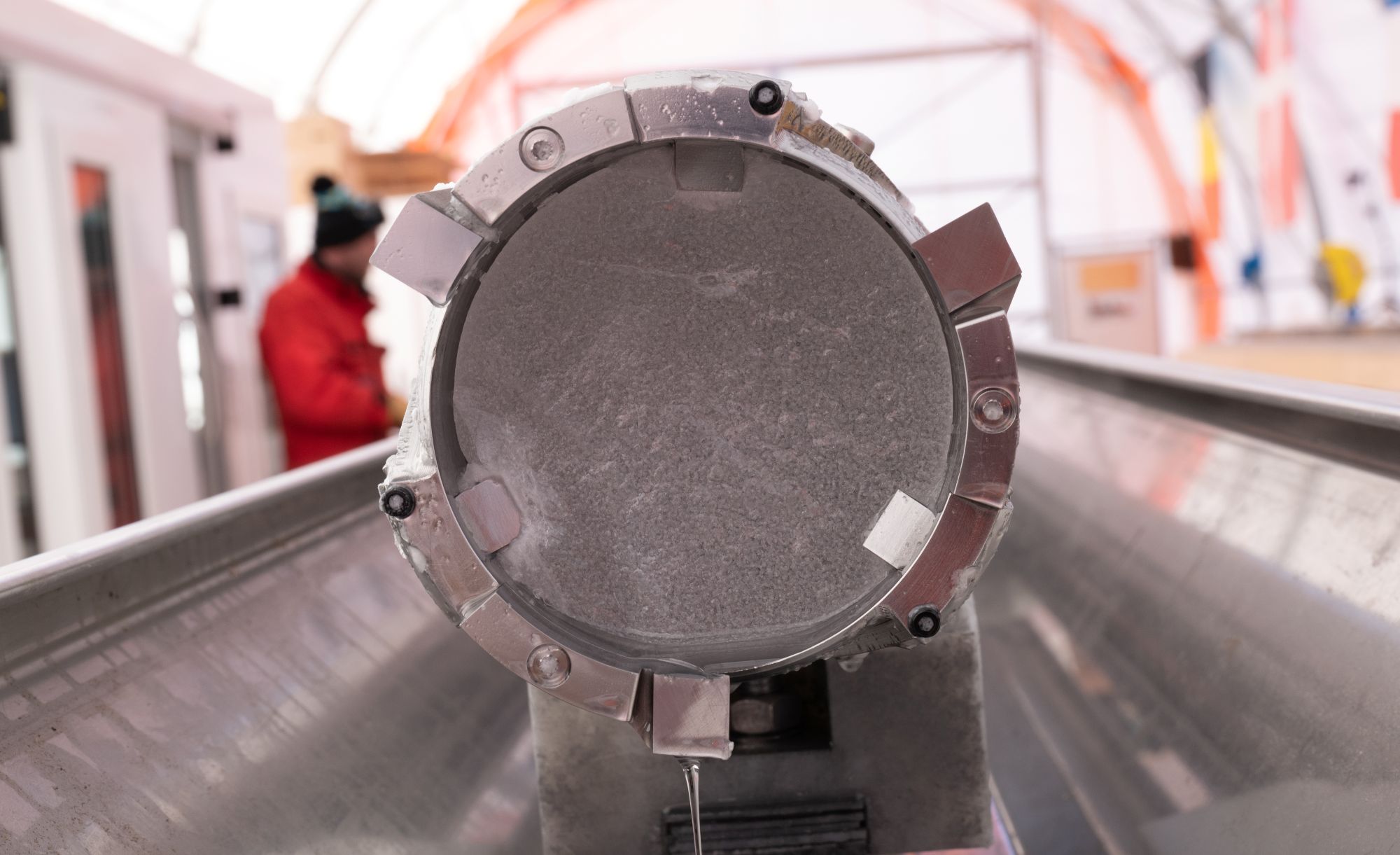
Ice core. Credit: Scoto©PNRA/IPEV
“The Antarctic ice sheet is a unique archive of the Earth’s climate history. Ice cores allow us to trace past variations in temperature and precipitation, while also showing how concentrations of greenhouse gases such as carbon dioxide and methane, as well as atmospheric particles, have changed,” says Margareta Hansson, Professor in Environmental Science specialising in Physical Geography and Quaternary Geology at Stockholm University, and Sweden’s coordinator in the project.
At the remote Little Dome C field station in Antarctica – one of the most extreme places on Earth – an international research team from ten nations has reached the oldest ice at the bottom of the ice sheet, at a depth of 2,800 metres. The final field season, which has just ended, also included drilling into the bedrock beneath the ice. The drilling has produced a complete 2.8-kilometre ice core, offering new insights into how the climate has varied over very long timescales. The results will contribute to more accurate projections of future climate change.
“We have achieved a historic result: enabling science to leaf through the oldest history book – namely, analysing ice formed over the past 1.2 million years,” says Carlo Barbante, Full Professor at Ca’ Foscari University of Venice, affiliated with CNR-ISP and coordinator of Beyond EPICA – Oldest Ice.
The collected ice cores are now being analysed in laboratories across Europe, where researchers are examining, among other things, the air trapped in bubbles and various natural contaminants preserved in the ice. The findings are expected to provide new knowledge about the climate and greenhouse gas concentrations in the atmosphere between 900,000 and 1.2 million years ago – a period during which the Earth’s climate system underwent fundamental change. During this time, climate cycles shifted from roughly 41,000 years to about 100,000 years.
Stockholm University is contributing analyses of isotopes in sulphur impurities in the ice.
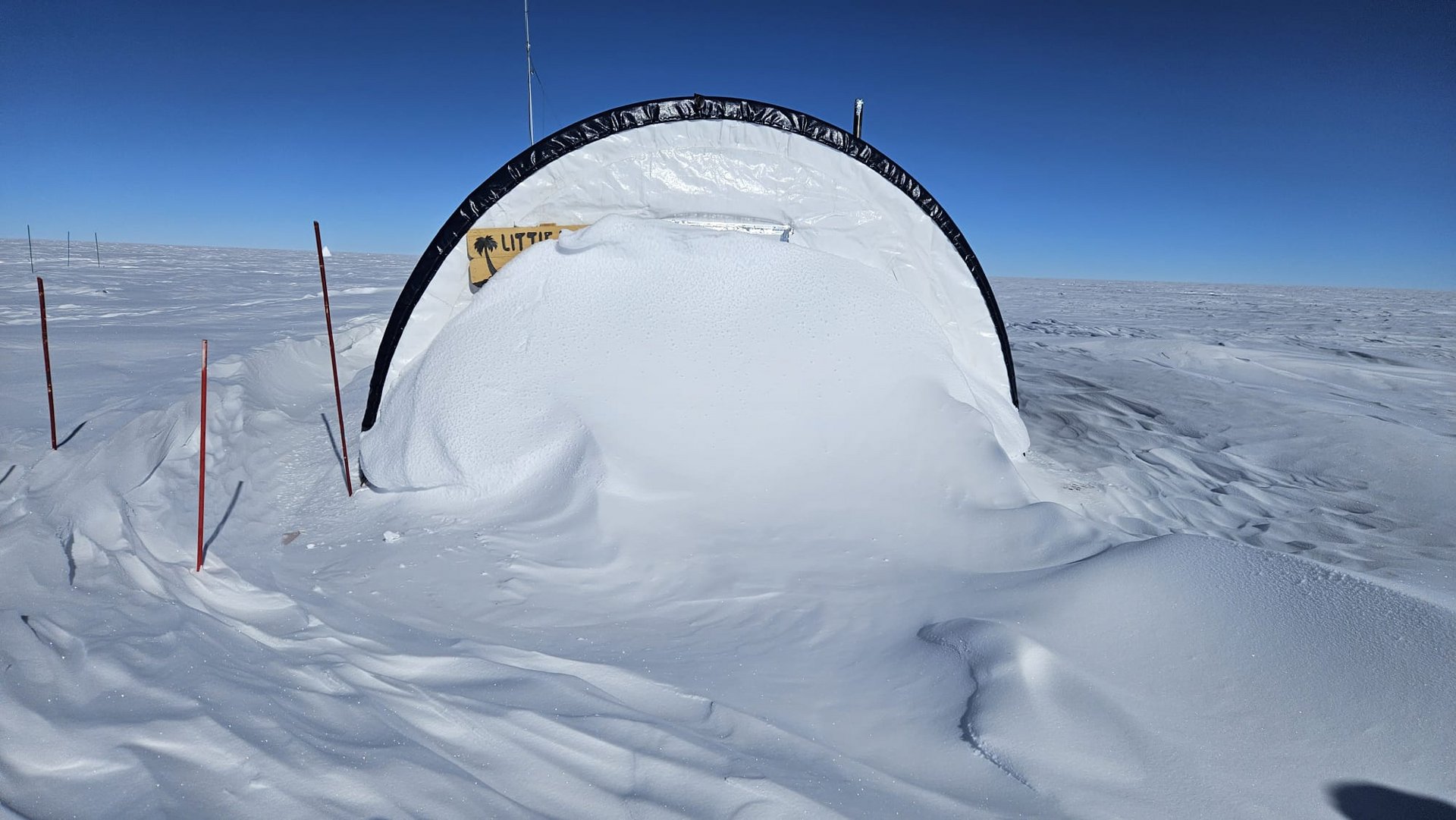
Little Dome C field camp. Credit: Scipinotti©PNRA/IPEV
Beyond EPICA – Oldest Ice
Beyond EPICA (European Project for Ice Coring in Antarctica) – Oldest Ice has been running since 2019 and involves numerous laboratories across Europe.
The project is funded by the European Commission with €11 million, along with contributions from the ten participating nations, and is coordinated by the Institute of Polar Sciences of the National Research Council of Italy (CNR). Stockholm University coordinates the Swedish contribution.
Last updated: 2026-04-28
Source: Communications Office