


Three million SEK for research on AI, health data and law
A new research project at the Department of Law has received SEK 3 million in funding from Region Stockholm. The project will explore how healthcare systems can derive greater benefit from data used in the development of artificial intelligence.

When health data is used to develop AI-based tools, questions arise about who benefits from the value created – and how it should be regulated in legal terms. Photo: Mostphotos
In total, seven researchers at Stockholm University have been awarded funding amounting to SEK 13.5 million in the 2026 call by Region Stockholm. One of these is Professor Frantzeska Papadopoulou Skarp, who has received funding for the project From Data to Shared Value – Legal Frameworks and Contract Models for AI Partnerships in Healthcare.
The project aims to develop legally robust and practically applicable models for collaboration between healthcare, academia and industry. The ambition is to contribute to more equitable and transparent frameworks for data sharing and innovation, ensuring that the value generated from health data benefits patients and society to a greater extent.
When data generates value, new questions arise
Health data has become a key resource in the development of artificial intelligence in medicine and healthcare. Large datasets enable the development of new tools for diagnostics, treatment and more efficient care processes, creating significant opportunities for improved and more precise medical decision-making.
At the same time, current systems often mean that hospitals and regions derive only limited benefit from innovations developed using data from their own operations. Questions relating to ownership, access, compensation and responsibility are complex and not always clearly regulated.
“Health data is a highly valuable resource for AI innovation. At the same time, we currently see an imbalance where publicly funded data does not fully benefit patients and healthcare systems. This is something we aim to help address,” says Frantzeska Papadopoulou Skarp.
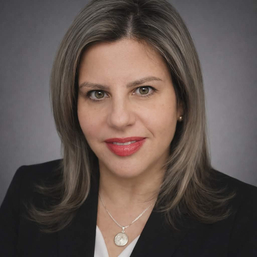
Professor Frantzeska Papadopolou Skarp
Developing new models for collaboration
The project combines legal analysis with empirical studies of how collaborations function in practice. The researchers will analyse EU and Swedish legal frameworks, including the GDPR, the AI Act, the forthcoming European Health Data Space (EHDS), as well as intellectual property law.
The project also includes analysis of existing agreements and interviews with key stakeholders in healthcare, academia and industry. The aim is to develop concrete models for future collaborations, for example regarding:
- co-ownership of results
- access to innovations
- revenue sharing
- clearer allocation of responsibilities
- long-term partnerships
Strengthening healthcare innovation
In the longer term, the project aims to strengthen healthcare systems’ ability to participate in and benefit from data-driven innovation.
This may include faster access to AI solutions developed using healthcare data, improved conditions in collaborations with external partners, and greater transparency regarding how patient data is used.
“If healthcare providers are given stronger legal tools and improved contractual models, this can support more sustainable collaborations and generate greater benefits for both patients and society,” says Frantzeska Papadopoulou Skarp.
Implementation in collaboration
A PhD candidate will be recruited as part of the project and will play a central role in its implementation. The doctoral research will be closely integrated into the project and will include both legal analysis and empirical studies, in close collaboration with Region Stockholm, Karolinska University Hospital and Karolinska Institutet, as well as actors in medical AI and life sciences.
The research findings are expected to contribute new legal perspectives, policy recommendations and practical tools that can be used both in Region Stockholm and beyond. In this way, the project may have an impact well beyond the immediate research environment, contributing to more sustainable and equitable use of health data in healthcare and innovation.
Read more about Frantzeska Papadopolou Skarp
Read more about the collaboration between Stockholm University and Region Stockholm
Text: Natalie Oliwsson
Last updated: 2026-04-24
Source: Department of Law