News

  • Baltic Breakfast: The ocean is warming – and the Baltic Sea is changing even faster

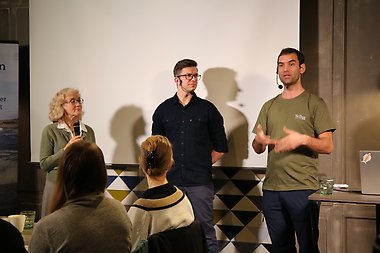
    Stratification in the Baltic Sea is increasing at a much faster rate than the global average, and marine heatwaves are becoming more frequent and intense. At Baltic Breakfast, oceanographer Fabien Roquet and marine researcher Norman Göbeler explained how warming is reshaping the sea, and how the change is outpacing science.

    Stockholm University Baltic Sea Centre
  • DEEP researchers awarded more than SEK 18 million in research funding

    Four researchers affiliated with the Department of Ecology, Environment and Plant Sciences (DEEP) have secured funding from the Swedish Research Council and Formas for projects spanning marine ecology, biodiversity and microbial interactions. Together, the four projects represent more than SEK 18 million in external research funding to DEEP.

    Department of Ecology, Environment and Plant Sciences
  • Ancient fish bones reveal how Arctic cod species survived the last ice age

    The glacial Arctic Ocean was not a barren ice desert but a breeding ground for the evolution of cold adaptation in marine fish. This is the main conclusion of a new scientific publication from Stockholm University that examines small fish bones found in deep-sea sediments during an expedition aboard the Swedish Icebreaker Oden.

    Department of Ecology, Environment and Plant Sciences
  • Tiny organisms play a big role in transporting carbon to the depths of the Baltic Sea

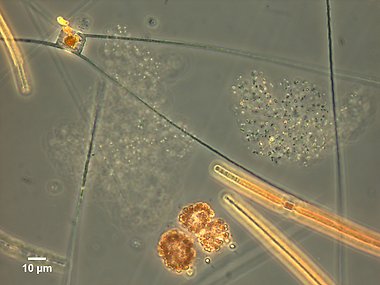
    Tiny photosynthetic organisms in the Baltic Sea can contribute substantially to the transport of carbon from surface waters to deeper parts of the sea. A new study from the Department of Ecology, Environment and Plant Sciences (DEEP) at Stockholm University shows that their ability to form colonies and aggregates is an important factor determining how much of their biomass sinks.

    Department of Ecology, Environment and Plant Sciences
  • New CircuLab to make sustainable materials development more efficient

    By bringing together automated experiments, advanced chemical analysis and artificial intelligence, the new CircuLab research infrastructure aims to make the development of sustainable materials more integrated and efficient. The platform was inaugurated at Stockholm University on 30 September.

  • DEEP seeks PhD student in Ecology and Evolution – apply by 24 October

    The Department of Ecology, Environment and Plant Sciences (DEEP) at Stockholm University is looking for a PhD student in Ecology and Evolution. The position is part of a research project investigating the evolutionary drivers and genomic consequences of pollen evolution during shifts in pollination mode.

    Department of Ecology, Environment and Plant Sciences
  • How cyanobacterial cells communicate reveals the importance of cellular architecture

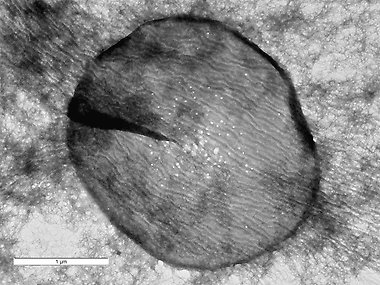
    How cells are arranged within cyanobacterial filaments affects how they communicate with one another. New research from the Department of Ecology, Environment and Plant Sciences (DEEP) at Stockholm University provides new insights into how cellular architecture shapes communication in multicellular bacteria.

    Department of Ecology, Environment and Plant Sciences
  • Major international research expedition underway at Tvären

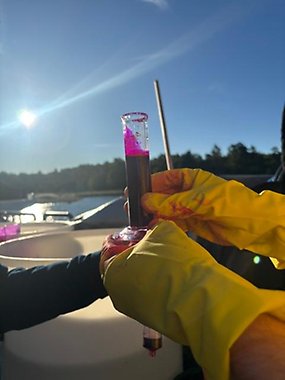
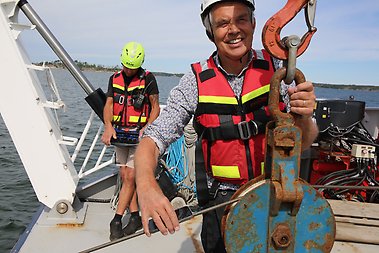
    A large-scale, international and multidisciplinary research expedition is currently taking place at Tvären, a circular bay in the Baltic Sea near Studsvik in Södermanland, roughly 100 km south of Stockholm.

    Stockholm University Baltic Sea Centre
  • DEEP seeks PhD student in wetland ecology – apply by 31 October

    The Department of Ecology, Environment and Plant Sciences (DEEP) at Stockholm University is looking for a PhD student in wetland ecology. The position is part of the interdisciplinary research project BALANCE wetlands, funded by Formas.

    Department of Ecology, Environment and Plant Sciences
  • In search of Madagascar’s plants: Fieldwork from rainforest to fire-prone highlands

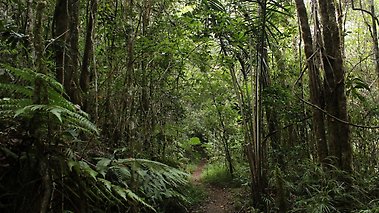
    From fire-prone highlands to lush rainforest and coastal forests, PhD student Friederike Wölke spent part of the summer searching for plants across Madagascar. The specimens she brought back will now help researchers explore how some of the island’s distinctive vegetation evolved, but finding them required flexibility, local expertise and plenty of time in the field.

    Department of Ecology, Environment and Plant Sciences
  • In Memory of Marianne Hielm Pedersén

    Professor Emerita Marianne Hielm Pedersén has passed away at the age of 90. She began her scientific career at Uppsala University and was for many years active in the research environment that today forms part of the Department of Ecology, Environment and Plant Sciences (DEEP). Through her research, mentorship, and international collaborations, she left a lasting impact on the fields of algal biology and marine botany.

    Department of Ecology, Environment and Plant Sciences
  • Big nets, tiny larvae – Follow along as researchers map herring in the Stockholm Archipelago

    To be or not to be: the future of herring in the Stockholm Archipelago has been a hot topic in recent years, with coastal fishermen warning that large industrial trawlers have emptied the archipelago of fish that were once abundant. Scientifically, however, the archipelago's herring stocks have been poorly studied. To address this, researchers at Stockholm University are now conducting their fourth annual trawling expedition, using meter-long nets to catch tiny, newly hatched herring larvae.

    Stockholm University Baltic Sea Centre