News

  • Mistra funds broad research collaboration on coastal restoration

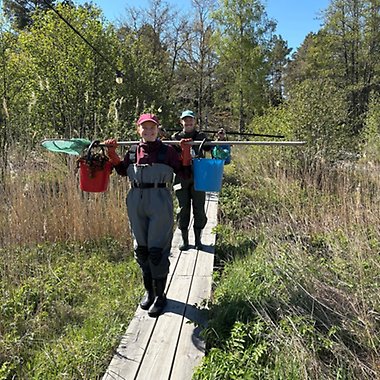
    The research foundation Mistra is funding the research programme Mistra Back2Future, which will lay the foundation for a National Centre for Restoration. "I am very happy that we will have the opportunity to carry out Back2Future and contribute to improving the conditions for successful coastal restoration," says Linda Kumblad, Stockholm University Baltic Sea Centre, who will become programme director for the broad collaboration between researchers from three universities, and several authorities and organisations.

    Stockholm University Baltic Sea Centre
  • Pollenless dandelions may affect the future of insects

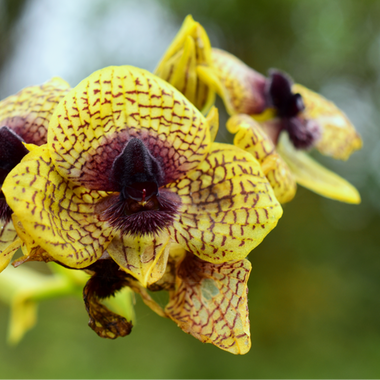
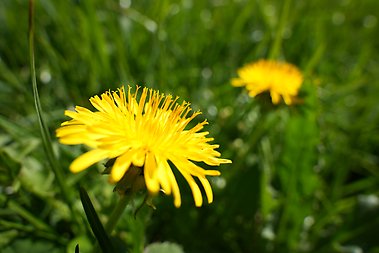
    Dandelions in Sweden reproduce without pollination, and their seeds are genetic copies of the plants they grow on. Yet most dandelions still produce pollen. Recently, however, more and more pollenless dandelions have been discovered, a development that could reduce the availability of food for many insects.

  • What's happening at DEEP?

    Ecology is about understanding complex relationships in nature. But how do you teach that in practice? In this instalment of BIG’s interview series on research underpinning teaching, we meet Peter Hambäck, Professor at the Department of Ecology, Environment and Plant Sciences.

    Department of Biology Education
  • VR grant brings soil–atmosphere research to DEEP

    Daniela Guasconi has been awarded a prestigious grant from the Swedish Research Council (VR) through the autumn call for International postdoc within natural and engineering sciences. The project receives a total of SEK 3.9 million over three years, with a preliminary start date of 1 June 2026. Daniela, currently based at the Department of Physical Geography, will join the Department of Ecology, Environment an Plant Sciences (DEEP) this spring, with DEEP serving as her home base during the project.

    Department of Ecology, Environment and Plant Sciences
  • Long-term SNSA funding secures Sweden’s role in global satellite validation and climate research

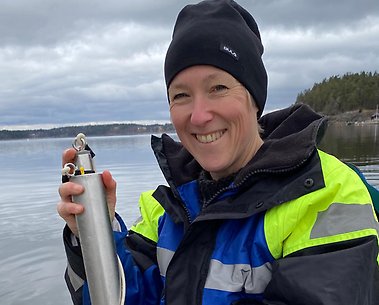
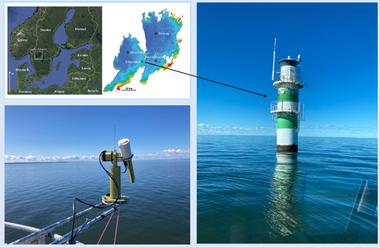
    Stockholm University has been awarded continued funding from the Swedish National Space Agency (SNSA) to operate the AERONET-OC station at Pålgrunden in Lake Vänern (Figure 1) through 2029. The project is led by Associate Professor Susanne Kratzer (DEEP) and secures the long-term operation of a key reference stations for satellite-based remote sensing in optically-complex waters. The station is part of the global AERONET-OC network coordinated by NASAand the Joint Research Centre, and provides highly standardised reference measurements used to validate ocean-colour data from all major space agencies operating aquatic Earth-observation missions, including ESA, EUMETSAT, JAXA, KIOST and CNSA (See Table 1 at the end of this article).

    Department of Ecology, Environment and Plant Sciences
  • 2-year postdoc in phylogenomics and evolution of fire adaptations in Malagasy Erica

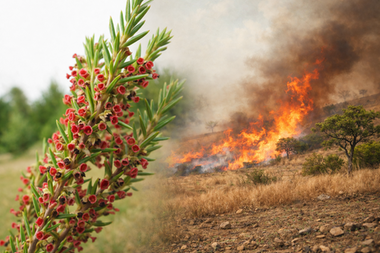
    [This position has already been filled.] The Department of Ecology, Environment and Plant Sciences (DEEP) at Stockholm University is inviting applications for a postdoctoral researcher in phylogenomics and evolution of fire adaptations in Malagasy Erica . Situated in Sweden’s dynamic capital, the university offers a world-class research environment where education and research thrive together.
    Department of Ecology, Environment and Plant Sciences
  • DEEP seeks Researcher in genome evolution in the ascomycete fungal family Chaetomiaceae – apply now!

    The Department of Ecology, Environment and Plant Sciences (DEEP) at Stockholm University is inviting applications for a researcher in genome evolution in the ascomycete fungal family Chaetomiaceae. Situated in Sweden’s dynamic capital, the university offers a world-class research environment where education and research thrive together.
    Department of Ecology, Environment and Plant Sciences
  • DEEP seeks Researcher in Marine Ecology – apply by 21 December!

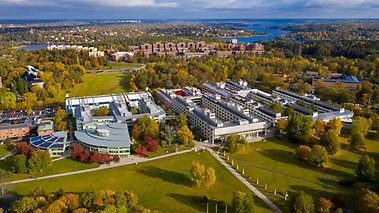
    The Department of Ecology, Environment and Plant Sciences (DEEP) at Stockholm University is inviting applications for a researcher in Marine Ecology. Situated in Sweden’s dynamic capital, the university offers a world-class research environment where education and research thrive together.
    Department of Ecology, Environment and Plant Sciences
  • Lignins – not so random after all

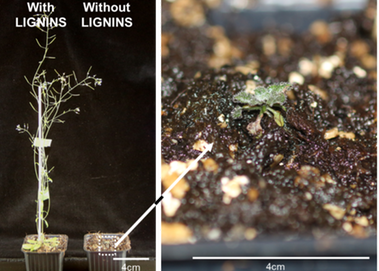
    Lignins – the complex molecules that make plants sturdy and allow them to grow tall – are not as random as once thought. A new international study led by Prof. Edouard Pesquet at Stockholm University uncovers how lignins’ chemistry and structure vary between cell types to meet plants’ physiological needs. The paper, published as a Tansley Review in the journal New Phytologist, highlights how this molecular diversity has been key to plants’ success on land.

    Department of Ecology, Environment and Plant Sciences
  • Mesocosm experiments can reveal how warming and animal communities affect greenhouse gas emissions

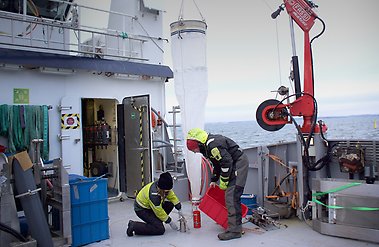
    Creating controlled mini-ecosystems, called mesocosms, is one way for researchers to study factors that influence processes in the sea. This summer, a large experiment of this kind was conducted at the Askö Laboratory, to investigate how emissions of greenhouse gases from shallow coastal bays are affected by global warming and by animal communities in the water and sediment. Understanding the connection between coasts and climate is a key question for researchers in CoastClim . This summer, Sara Westerström and Moritz Nusser from the Research School Perspectives on Climate Change in Coastal Seas took a new approach to investigating how small animals in the water and in the seafloor can affect greenhouse gas emissions, both now and in a warmer future.

    Stockholm University Baltic Sea Centre