


In search of Madagascar’s plants: Fieldwork from rainforest to fire-prone highlands
From fire-prone highlands to lush rainforest and coastal forests, PhD student Friederike Wölke spent part of the summer searching for plants across Madagascar. The specimens she brought back will now help researchers explore how some of the island’s distinctive vegetation evolved, but finding them required flexibility, local expertise and plenty of time in the field.
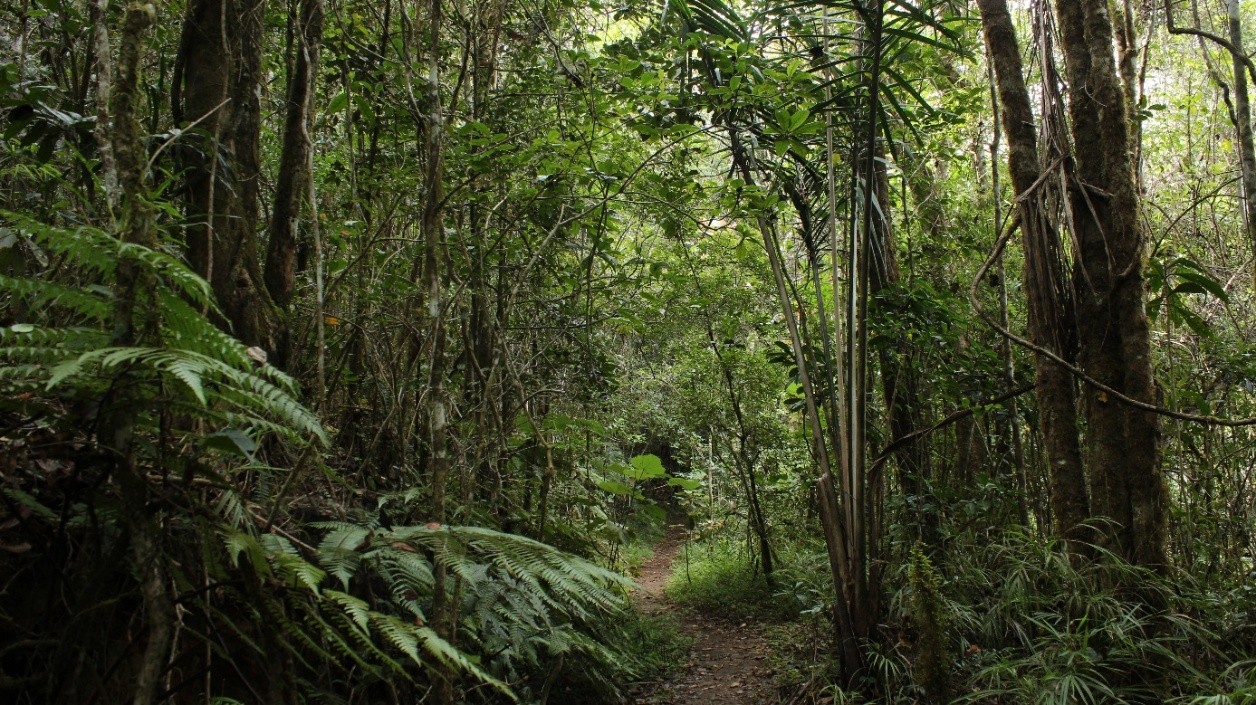
Humid highland rainforest in Andasibe, one of several contrasting environments visited during the fieldwork in Madagascar. Photo: Friederike Wölke.
Madagascar is famous for plants and animals found nowhere else on Earth. For a botanist studying the evolution of its vegetation, however, understanding that diversity means leaving the laboratory behind.
In July and August, Friederike Wölke, PhD student in Group Hackel at the Department of Ecology, Environment and Plant Sciences (DEEP), travelled through central and eastern Madagascar together with researchers and botanists from DEEP and Madagascar. The field trip was organised by Sylvain Razafimandimbison, senior researcher at the Swedish Museum of Natural History and Friederike’s co-supervisor, who held the necessary permits and was responsible for coordinating the sampling, shipping and post-processing of the collected material. Their route took them through remarkably different environments: the fire-prone Tapia vegetation of the central highlands, humid rainforest in the east, and littoral rainforest along the north-east coast.
For Friederike, the main targets were two groups of plants, Uapaca and Peponidium, which form part of the PhD research into the evolution and biogeography of Madagascar’s vegetation. Alongside this work, Jan Hackel and collaborators searched for species of Erica, a comparatively understudied group in Madagascar, collecting material to learn more about its diversity, distribution and evolutionary history
One of the exciting things about fieldwork is that you never know exactly what you are going to find. You can prepare carefully, but once you are in the field, you have to work with what is actually there.
From fire-prone highlands to rainforest
One of the first stops was the Forêt de Tapia near Arivonimamo in Madagascar’s central highlands. Here, the researchers split their attention between different plants. While Jan Hackel and collaborators searched for species of Erica, Friederike examined Uapaca bojeri, a tree known locally as Tapia that dominates this distinctive highland vegetation. Unlike most of its relatives, which are associated with forests, Tapia grows in an environment that regularly experiences fire.
For Friederike, Uapaca bojeri is particularly interesting. The trees have characteristics that allow them to persist in this environment, including thick bark and the ability to resprout from stems and roots after fire. By studying Uapaca bojeri alongside related species from other environments, Friederike hopes to investigate how this unusual vegetation originated and how it fits into the broader evolutionary history of Uapaca in Madagascar and mainland Africa.
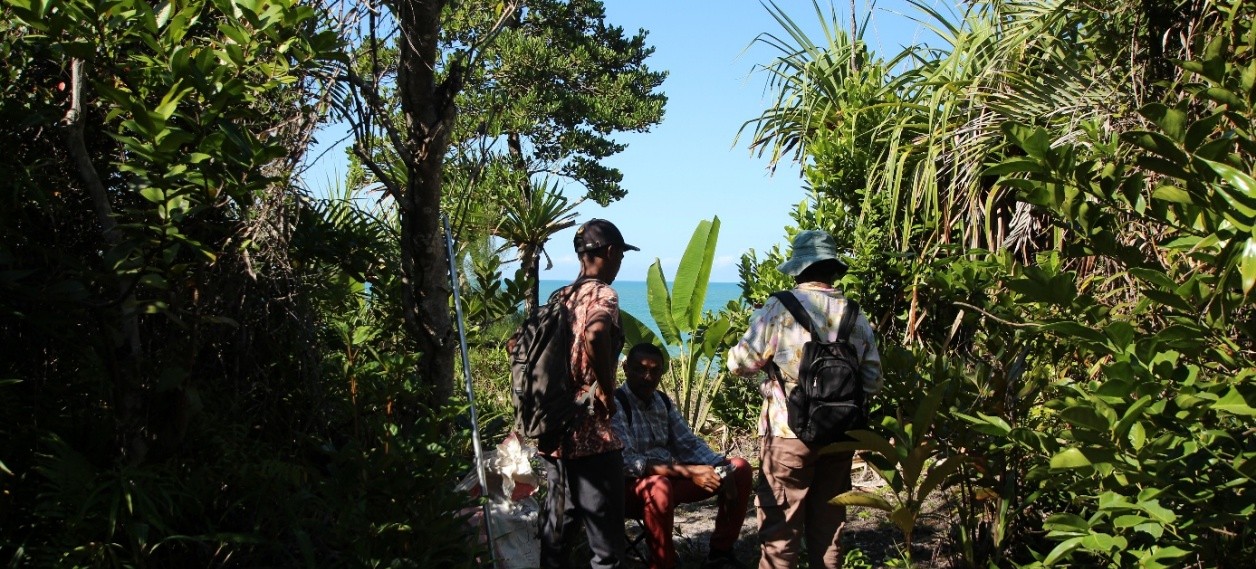
Sylvain, Rodolphe, and Madame Hanta collecting botanical specimen in the Tampolo littoral rainforest, Madagascar. Photo: Friederike Wölke
From the comparatively open Tapia landscape, the researchers continued into a very different world. Their field sites included the highland rainforest of Anjozorobe and the humid forests around Andasibe, Mantadia and Maromizaha, before the trip eventually reached Tampolo and the littoral forests of Madagascar’s north-east coast.
At each location, much of the work involved something that sounds simple but can be surprisingly difficult: finding the right plant.
Finding a plant is only the beginning
The scientists searched the vegetation for target species, examined leaves, flowers and fruits, recorded morphological characteristics and collected plant material.
Some samples were pressed and dried as herbarium specimens, creating a permanent record that can be kept in scientific collections. Leaf material intended for genomic analysis was preserved separately in silica gel so that DNA could later be extracted and sequenced.
But plants do not necessarily cooperate with research schedules.
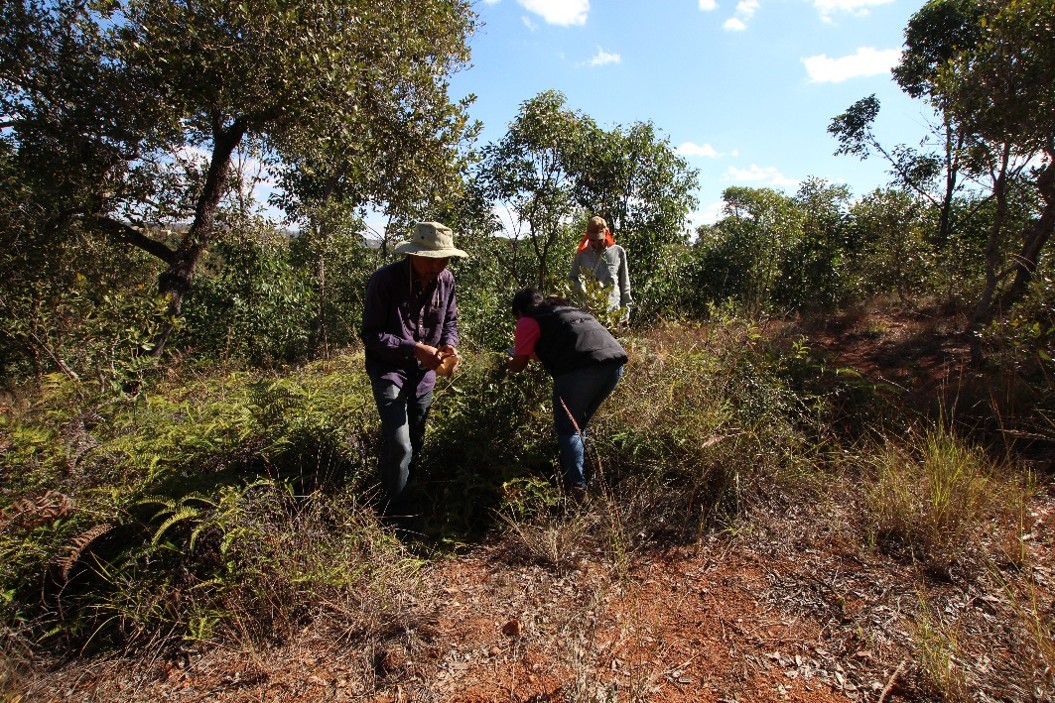
Andry (left), Nanty (middle) and Jan (right) searching for the Erica species during the fieldwork. The species Erica was one of three principal plant groups targeted during the expedition, alongside Uapaca and Peponidium. Photo: Friederike Wölke.
One of Friederike’s main targets was Peponidium, a group of plants in the coffee family. Identifying them in the field can depend on finding plants carrying flowers or fruits. Despite preparing for the trip using information about species distributions and flowering and fruiting periods, the researchers struggled to find suitable specimens. Unusually dry conditions before the fieldwork may have contributed to the lack of reproductive material.
Eventually, only two fruiting Peponidium individuals were found, both in the littoral rainforest at Tampolo.
Rather than bringing the fieldwork to a standstill, the researchers adapted their plans. Friederike focused more attention on another of her target groups, Uapaca, which proved much easier to find.
It is a useful reminder that field research rarely unfolds exactly according to plan.
An unexpected success
The change in strategy paid off. Uapaca species were found at every site the researchers visited, sometimes with several species growing close together. By the end of the fieldwork, Friederike had collected material representing all currently described Uapaca species occurring in eastern Madagascar. In total, she collected material from 37 individual plants for her research.
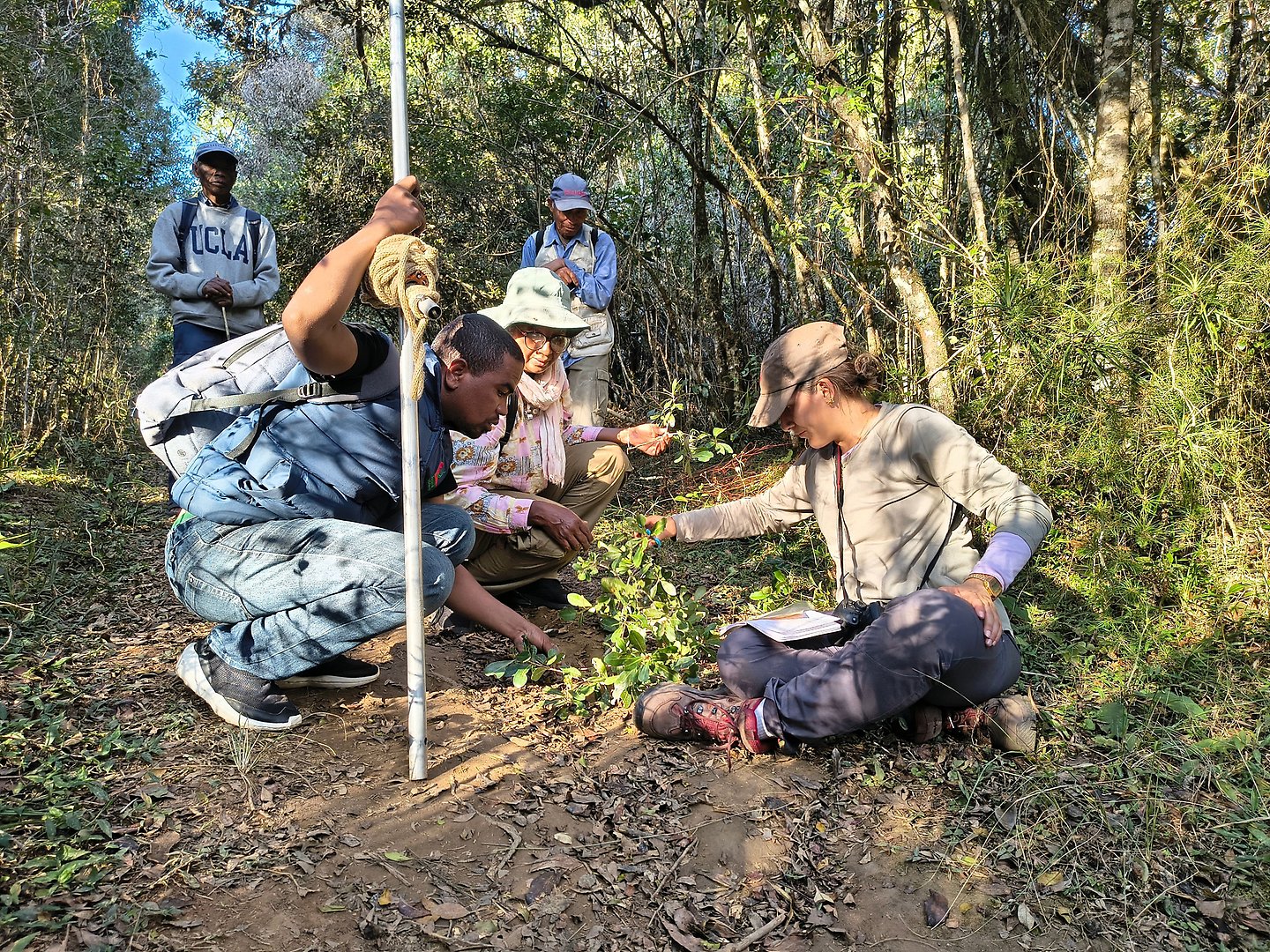
Friederike investigating freshly cut material from several species of Uapaca in Anjozorbe, Madagascar. Photo: Jan Hackel
There were surprises, too. One Uapaca specimen had an unusual combination of leaf size and venation, while the two Peponidium plants found at Tampolo did not immediately fit the species concepts the researchers were using for field identification.
Could they represent species not yet known to science?
For now, it is too early to say. Both findings require further taxonomic investigation before any conclusions can be drawn.
That uncertainty is also part of the scientific process. A specimen collected in a Madagascan forest can be the start, rather than the end, of an investigation.
From the forests of Madagascar to the lab at DEEP
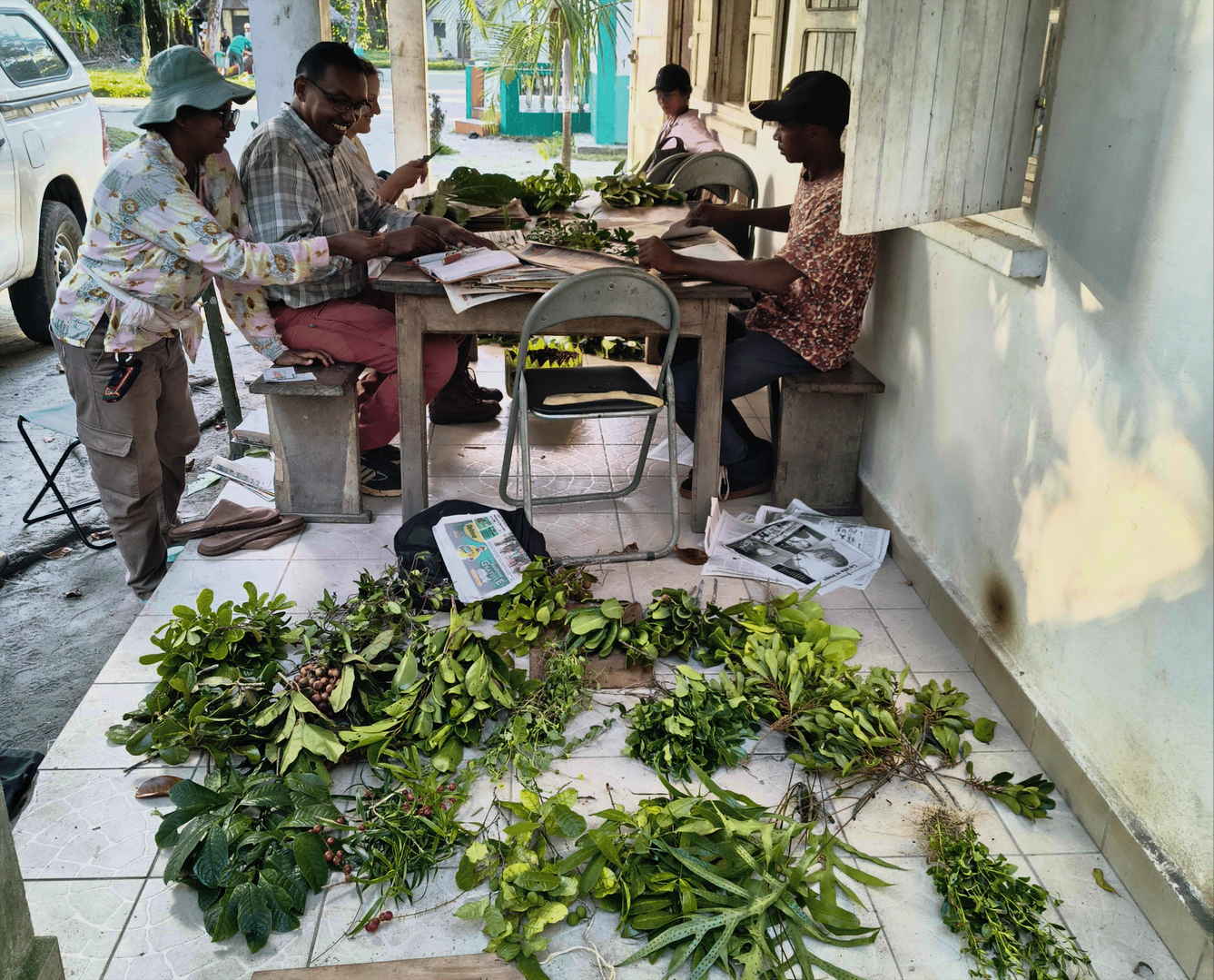
Sylvain, Madame Hanta, Rodolphe and Friederike pressing their collected plant material for preparation as herbarium vouchers. Photo: Jan Hackel
The next chapter of the research takes place far from the field. Once the collected material reaches Sweden, DNA will be extracted and sequenced. Friederike will use the resulting genomic data to investigate how species are related and reconstruct parts of their evolutionary and biogeographic history.
For Uapaca, one question is particularly intriguing: how did the fire-prone Tapia vegetation originate when most other members of the genus are associated with forests?
The pressed plants will also become part of herbarium collections, providing permanent physical records connected to the genomic data.
Meanwhile, for the Peponidium, the search is not over. Further fieldwork will probably be needed, ideally after the rainy season when there is a better chance of encountering plants with the flowers and fruits necessary for identification.
And so, a summer spent moving between Madagascar’s highlands, rainforests and coast has generated both answers and new questions, exactly what fieldwork is supposed to do.
Last updated: 2026-09-24
Source: Department of Environmental Science,Department of Ecology, Environment and Plant Sciences