News

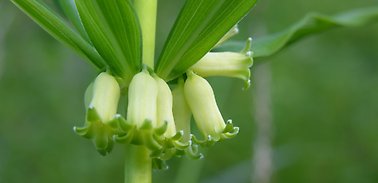
  • Krimskrans. Photo: Kristoffer Hylander

    DEEP seeks Associate Professor in Plant Ecology – apply now!

    The Department of Ecology, Environment and Plant Sciences (DEEP) at Stockholm University is inviting applications for a tenured Associate Professor position in Plant Ecology. Situated in Sweden’s dynamic capital, the university offers a world-class research environment where education and research thrive together. The successful candidate will engage in cutting-edge research, teach undergraduate and master’s courses in plant ecology, and mentor PhD students and postdoctoral researchers. The position is fully financed and the teaching on undergraduate courses normally counts to around 25%.  DEEP offers a broad suite of expertise and access to departmental infrastructure, including: access to greenhouse and common garden, temperature-controlled growth chambers, microscopy facilities, molecular labs, access to shared freezers, etc. Currently, DEEP comprises 25 research groups, 35 PhD students, and 10 postdocs, all contributing to a diverse and engaging research community. Our faculty members balance active research with teaching at the bachelor’s and master’s levels, ensuring a rich academic experience for both students and staff.  If you are passionate about advancing plant ecology and shaping the future of research and education – apply before 16 November! Read more and apply in English here. Read more in Swedish here. Please note that the application preferably shall be written in English. Contact: Kristoffer Hylander, Head of Department kristoffer.hylander@su.se
    Department of Ecology, Environment and Plant Sciences
  • New study reveals limited diet overlap among small pelagic fish in the Baltic Sea

    Small pelagic fish are central to the Baltic Sea food web. They feed on plankton and serve as prey for larger fish, seabirds and mammals. Because of this, their feeding habits influence the entire ecosystem. A new study led by researchers at the Department of Ecology, Environment and Plant Sciences (DEEP), published in ICES Journal of Marine Science, shows that the main pelagic fish species in the central Baltic, herring, sprat and stickleback, overlap surprisingly little in their use of resources. Less overlap than expected Group Winder at DEEP, together with colleagues at the Swedish University of Agriculture examined the diets of the dominant species by combining stomach content analyses with data on prey availability. Using DNA metabarcoding, they could assess the full spectrum of their resource use. Modest diet overlap was also supported by stable isotope data. The results suggest that these fishes are not locked in strong competition under current conditions. Seasonal dynamics in prey availability play a key role, as the fish adjust their diets throughout the year.

    Department of Ecology, Environment and Plant Sciences
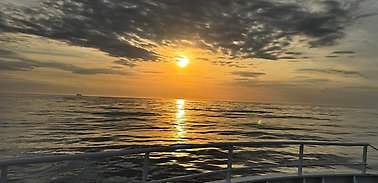
  • Sunset over the Atlantic Ocean. Ship railing in the foreground.

    Mapping Deep Ocean Currents: Uncovering the Hidden Pathways of Overflow Waters

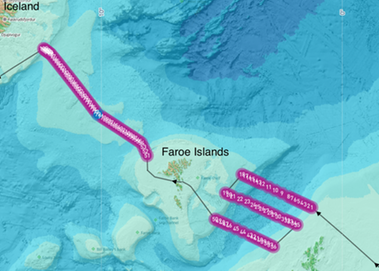
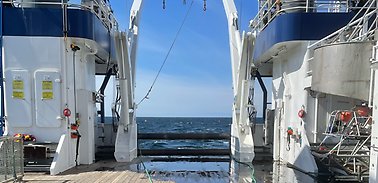
    The recent SWERVE funded FAROX cruise, led by Léon Chafik on RV Skagerak, set out to explore how dense overflow waters move between the Nordic Seas and the North Atlantic. By collecting unprecedented measurements of temperature, salinity, currents, and turbulence, the team mapped deep currents and investigated their role in shaping the climate system.

    Department of Meteorology
  • Tiny ocean partnership reveals secrets of evolution

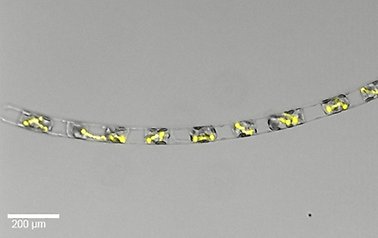
    The microscopic alliance between algae and bacteria offers rare, step-by-step snapshots of how bacteria lose genes and adapt to increasing host dependence. This is shown by a new study led by researchers from Stockholm University, in collaboration with the Swedish University of Agricultural Sciences and Linnaeus University, published in Current Biology.

  • DEEP seeks PhD student in Plant systematics — apply by 6 June

    The Department of Ecology, Environment and Plant Sciences invites applications for a four-year PhD position in the framework of the project "Reconstructing Madagascar’s biome history using plant phylogenetics”, led by Jan Hackel and co-supervised by Prof. Catarina Rydin. The project will address the origins and diversification of biomes in Madagascar using phylogenetic methods on plants. Specific research questions can focus on one plant group or involve comparative studies across different plant groups. Methods will centre on phylogenetics but can also involve molecular lab work, field work and/or computational phylogenomics and modelling, depending on the student’s profile and interests. The project structure is highly flexible and can be shaped by a motivated and independent candidate. You will be part of Jan Hackel’s newly established research group in evolutionary plant biogeography at DEEP. For more information, please visit Group Hackel - Stockholm University Apply below by 6 June, 2025: Learn more and apply in English here. Learn more and apply in Swedish here. Contact: Associate Professor Jan Hackel jan.hackel@su.se

    Department of Ecology, Environment and Plant Sciences
  • DEEP seeks PhD student in Ecology and Evolution – apply by 22 April!

    The Department of Ecology, Environment and Plant Sciences invites applications for a four-year PhD position in the framework of the project “Harnessing evolutionary transitions, machine learning, and genomics to decode pollen evolution and unravel sexual selection mechanisms shared across kingdoms” led by Prof. Tanja Slotte in close collaboration with co-investigators Prof. John Fitzpatrick, Prof. Catarina Rydin, and Dr. Allison Hsiang at Stockholm University. This project will investigate the evolutionary drivers and genomic consequences of pollen evolution in response to shifts in pollination mode in flowering plants. The thesis work will focus on identifying genomic signatures of selection on pollen in relation to evolutionary transitions in pollination mode. The work will involve comparative genomic analyses in a phylogenetic framework, as well as population genomic and transcriptomic analyses in suitable plant systems. The project is funded by the Knut and Alice Wallenberg Foundation. Read more about this opportunity and apply by 22 April: Learn more and apply in English here Learn more and apply in Swedish here

    Department of Ecology, Environment and Plant Sciences
  • Sheltered bays are significant carbon sinks in the Baltic Sea

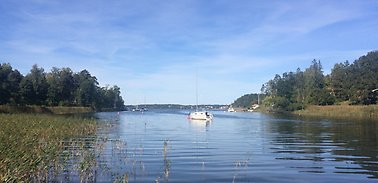
    Coastal zones are identified as important natural carbon sinks globally, especially habitats with abundant vegetation such as seagrass meadows and mangrove areas. In brackish environments like the Baltic Sea, knowledge of carbon sequestration in coastal habitats is limited, but a new study shows that shallow and partly enclosed Baltic bays are significant sinks for carbon and nutrients. 2025-03-12

    Stockholm University Baltic Sea Centre
  • DEEP seeks Associate Professor in Plant Molecular Physiology – apply now!

    The Department of Ecology, Environment and Plant Sciences (DEEP) at Stockholm University is inviting applications for a tenured Associate Professor position in Plant Molecular Physiology. Situated in Sweden’s dynamic capital, the university offers a world-class research environment where education and research thrive together. The successful candidate will engage in cutting-edge research, teach undergraduate and master’s courses in plant physiology, and mentor PhD students and postdoctoral researchers. DEEP offers a broad suite of expertise and access to departmental infrastructure, including: Temperature controlled growth chambers/cabinets Access to greenhouse and common garden Microscopy facilities with stereo, inverted, and standard upright microscopes Molecular labs outfitted with standard equipment for pre- and post-PCRs Isotope lab Laminar flow hoods necessary for cultivation Access to shared freezers (-20°C and -80°C). The Marine Ecology Laboratory with a suite of chemical analyses In addition, Stockholm University is a member of numerous national infrastructures with cutting edge instrumentation and expertise, including the SciLifeLab – a national and international community of technologies and infrastructures. The university is also a member of NMI, the Swedish infrastructure for advanced microscopy in life science. Currently, DEEP comprises 25 research groups, 35 PhD students, and 10 postdocs, all contributing to a diverse and engaging research community. Our faculty members balance active research with teaching at the bachelor’s and master’s levels, ensuring a rich academic experience for both students and staff.  If you are passionate about advancing plant molecular physiology and shaping the future of research and education – apply before 10 April! Read more and apply in English here. Read more and apply in Swedish here.

    Department of Ecology, Environment and Plant Sciences
  • Lignin paves the way for a fossil-free society

    Lignin is the substance that gives plants strength and resilience. Properties that make lignin a promising replacement for materials produced from oil and coal. Researchers at Stockholm University are investigating the potential of lignin as a basis for future materials.