


DEEP researchers awarded more than SEK 18 million in research funding
Four researchers affiliated with the Department of Ecology, Environment and Plant Sciences (DEEP) have secured funding from the Swedish Research Council and Formas for projects spanning marine ecology, biodiversity and microbial interactions. Together, the four projects represent more than SEK 18 million in external research funding to DEEP.
Three of the projects have been awarded grants by Vetenskapsrådet, while Álvaro Gaytán has received funding through Formas' Career Grant for Early-career Researchers programme. The award will enable Gaytán, currently based in Spain, to establish his research at DEEP.
Hidden biodiversity in Baltic Sea herring
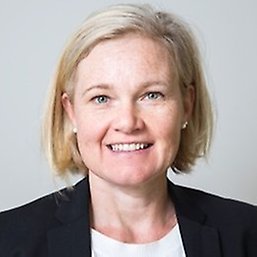
Professor Monika Winder. Photo: Private
Monika Winder has received SEK 4.2 million over four years from Vetenskapsrådet for the project: Hidden biodiversity in a connected sea: mechanisms maintaining fine-scale population differentiation in Baltic Sea herring.
Although Baltic Sea herring inhabit a highly connected marine environment, previous research has revealed distinct population differences at surprisingly small geographical scales. The project will investigate how this hidden biodiversity is maintained despite ongoing mixing between populations, shedding light on the ecological and evolutionary processes that shape marine species.
Investigating partnerships that sustain ocean productivity
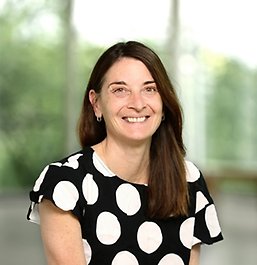
Professor Rachel Foster. Photo: Sören Andersson/2See
Rachel Foster has together with postdoctoral researcher Andrea Gamba been awarded SEK 3.17 million over three years from Vetenskapsrådet for the project: Investigating the molecular mediators necessary for establishing N₂-fixing diatom-cyanobacteria-bacterial symbioses.
In many parts of the world's oceans, the availability of nitrogen limits biological productivity. Some microscopic algae overcome this challenge through partnerships with nitrogen-fixing cyanobacteria and other bacteria. Foster's project will, in collaboration with Karolinska Institute, explore the molecular mechanisms that enable these symbiotic relationships to form and function, providing new knowledge about the microbial interactions that underpin marine ecosystems.
Exploring the hidden complexity of lichens
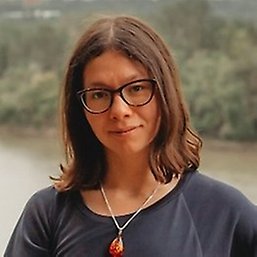
Assistant Professor Gulnara Tagirdzhanova. Photo: Private
Gulnara Tagirdzhanova has received SEK 4.8 million over four years from Vetenskapsrådet for the project: Complexity emerging from microbial interactions: Understanding lichen symbiosis through spatial multi-omics.
Lichens are traditionally viewed as a partnership between a fungus and an alga, but they are increasingly recognised as complex communities involving many different microorganisms. By combining advanced spatial and multi-omics approaches, the project will investigate how these organisms interact within lichens and how complex biological systems emerge through microbial cooperation.
Formas career grant brings international postdoctoral researcher to DEEP
Álvaro Gaytán has been awarded SEK 5,9 million through Formas' Career Grant for Early-career Researchers (career age 4–7 years) for the project: Microbial effects on plant traits and their cascading impacts across trophic levels.
Currently a postdoctoral researcher at the Spanish National Research Council (CSIC) at the Institute for Natural Resources and Agrobiology of Seville (IRNAS-CSIC), Gaytán will join DEEP to carry out the project.
Plants live in close association with diverse microbial communities that can influence their growth, chemistry and interactions with other organisms. Gaytán's research will investigate how microbial effects on plant traits cascade through food webs, shaping interactions across multiple trophic levels.
Last updated: 2026-11-09
Source: Department of Environmental Science,Department of Ecology, Environment and Plant Sciences