


New CircuLab to make sustainable materials development more efficient
By bringing together automated experiments, advanced chemical analysis and artificial intelligence, the new CircuLab research infrastructure aims to make the development of sustainable materials more integrated and efficient. The platform was inaugurated at Stockholm University on 30 September.
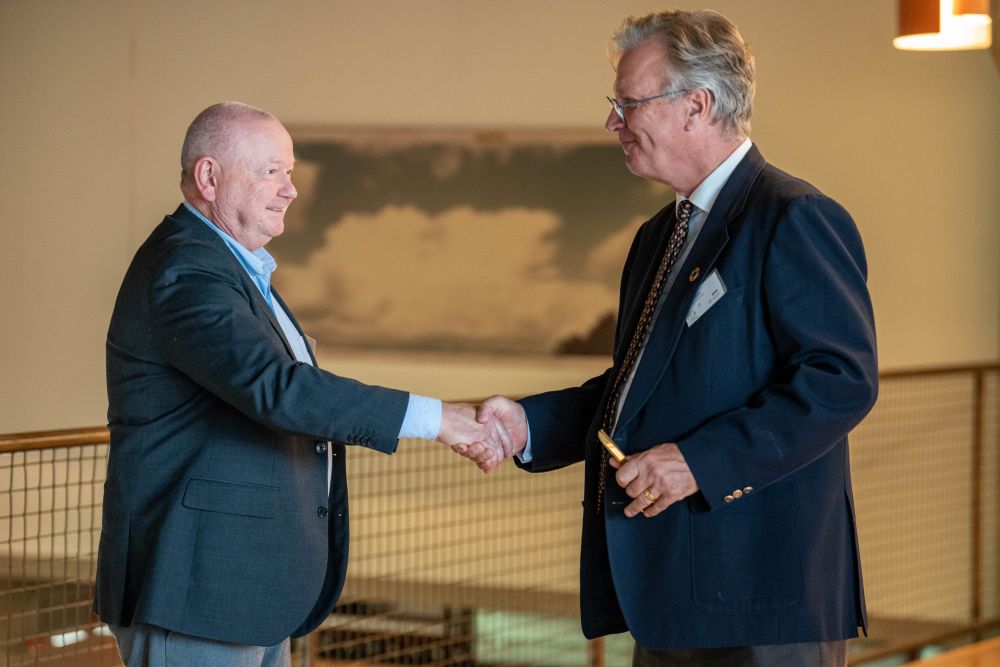
Hans Adolfsson, President of Stockholm University and Olle Eriksson, Vice-Director at WISE. Photo: Anette Gärdeklint Sylla
“Technology has evolved tremendously, and we should take this to our advantage. The amount of data will help us to improve the materials, to reproduce the materials, and to find new applications of materials,” says Belén Martín-Matute, Professor of Organic Chemistry at Stockholm University.
Developing new materials involves many stages, from synthesis and processing to analysis and testing. CircuLab is designed to connect several of these stages. Its automation platforms make it possible to synthesise materials with high precision and then test their properties, while large amounts of data can be used to develop and optimise the processes with the support of AI and machine learning.
“Everything is coming together with the data,” says Aji Mathew, Professor of Materials Chemistry at Stockholm University. The equipment can be used separately, in groups or as part of the platform as a whole.
Inaugurated at Stockholm University
CircuLab is one of the research infrastructures being established within WISE, which has made major investments in advanced equipment and research infrastructure for sustainable materials science.
“Continuously upgrading our research infrastructure is essential for us to conduct high-quality research. With CircuLab, we can connect and automate the entire research process,” says Hans Adolfsson, President of Stockholm University.
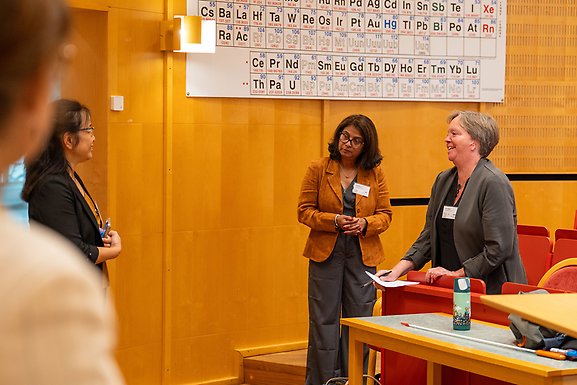
Xiaodong Zou, Aji Mathew and Lena Mäler. Photo: Anette Gärdeklint Sylla
CircuLab was inaugurated on 30 September with speeches, a ribbon-cutting ceremony and a tour of the new research environment. The programme also included a workshop on data-driven sustainable chemistry.
“It’s kind of hard to summarise what this has meant for us. We’re really grateful to WISE and to the Wallenberg Foundation for these opportunities,” says Lena Mäler, Dean of the Faculty of Science.
Open to researchers and companies
Photo: Anette Gärdeklint Sylla
CircuLab is an open research platform for academic researchers, start-ups and companies. By bringing together equipment and methods covering several stages of materials development on the same platform, CircuLab creates opportunities for new collaborations and research projects.
“This initiative is not just for Stockholm University, it is for the entire country,” says Bo Liedberg, Chair of the Committee for Research and Technology Platforms (RTP) at WISE.
He emphasises that the platform should be made accessible to a wider scientific community and attract researchers to Stockholm University to work and collaborate.
CircuLab
CircuLab is one of the research infrastructures being established within WISE, Wallenberg Initiative Materials Science for Sustainability. WISE is funded by the Knut and Alice Wallenberg Foundation and is a national initiative in materials science for sustainability.
CircuLab is a Research and Technology Platform (RTP) within WISE, focusing on the synthesis, processing and application of sustainable materials using integrated, AI-driven workflows. It includes equipment for areas such as materials synthesis and processing, catalytic materials, chemical analysis, toxicity testing and risk assessment.
WISE has allocated SEK 700 million for research infrastructure, of which SEK 500 million is within the RTP framework. The aim is to build a national infrastructure for research on sustainable materials.
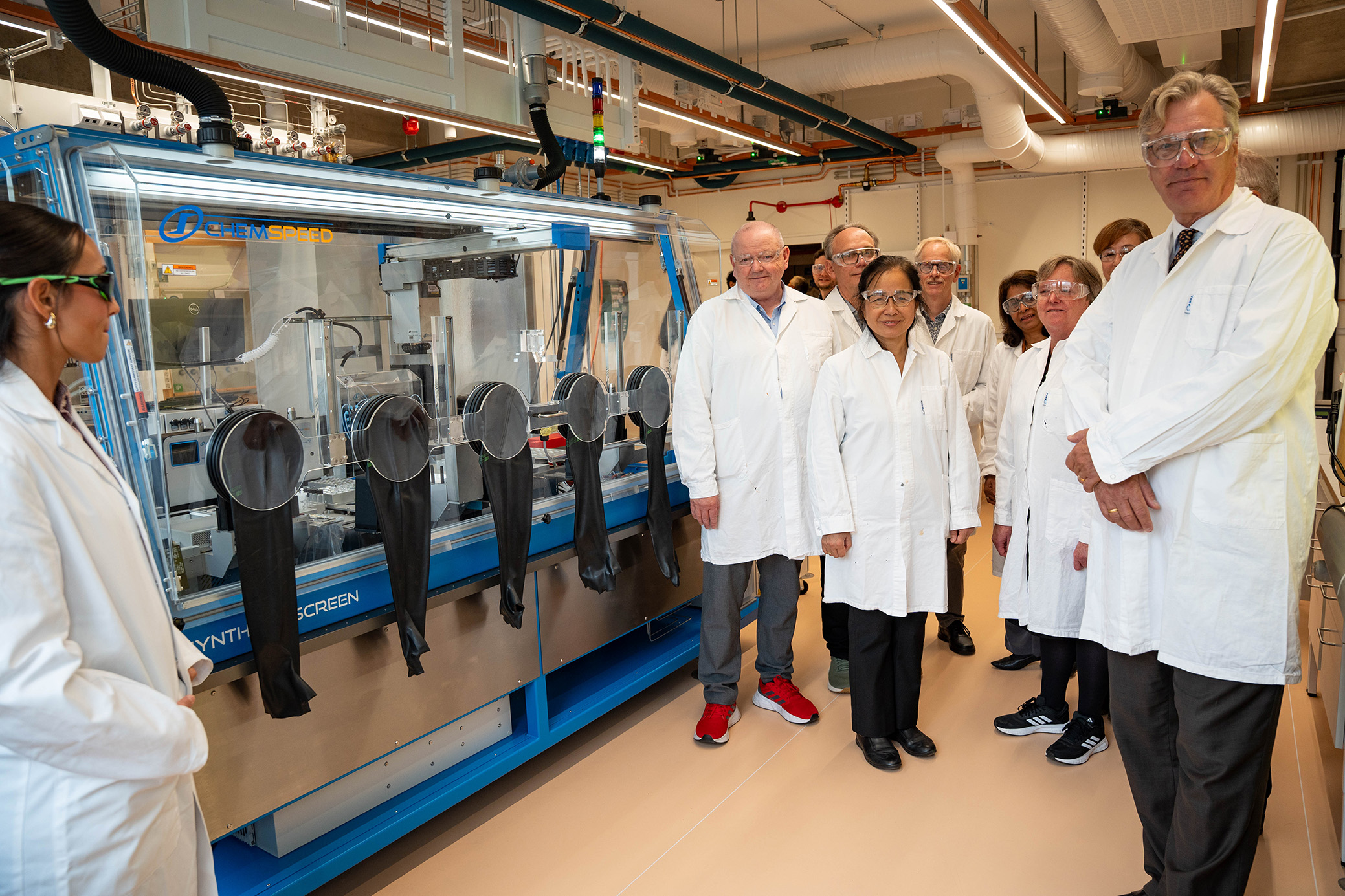
Photo: Anette Gärdeklint Sylla
Last updated: 2026-10-06
Source: Communications Office