


ERC Advanced Grant to research on the processes that power life
Ville Kaila, Professor of Biochemistry at Stockholm University, has been awarded an ERC grant of 2.5 million euro for research into how cells capture and use energy.
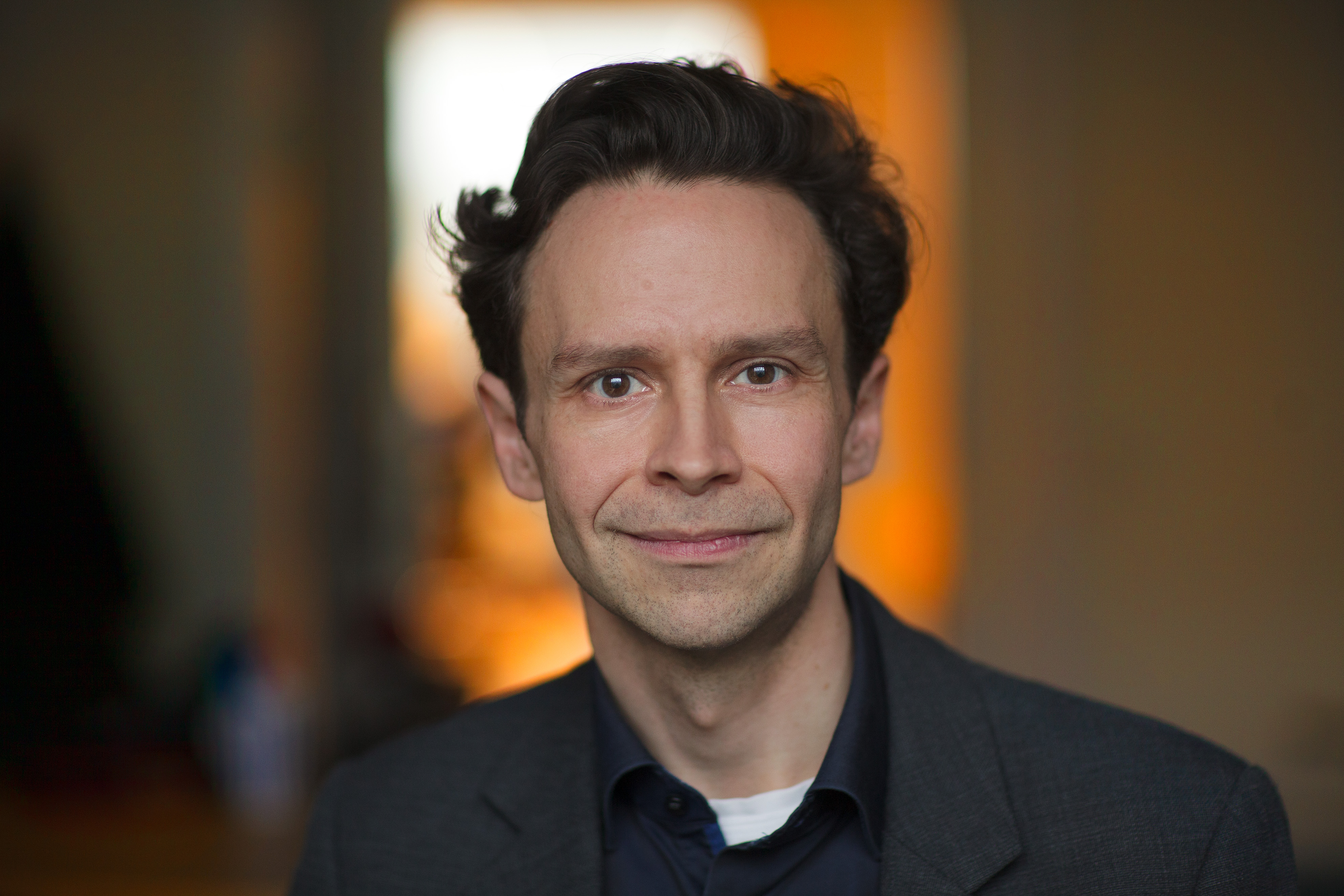
Ville Kaila. Photo: Magnus Bergström/KAW
The research aims to reveal how the cell’s most important energy-converting machines function at the molecular level, providing new insights into the processes that power all life.
“This ERC grant provides us with an incredible opportunity to tackle the molecular principles by which our cells capture and convert energy with remarkable efficiency”, says Ville Kaila.
ERC Advanced Grant 2025
The funding, worth €838 million, will go to 319 leading researchers across Europe. Eleven of the grants have been awarded to researchers at Swedish higher education institutions.
Project title: Currents of Life – Molecular Mechanism of Long-Range Biological Energy Transduction (“bioEnergetic”)
Grant amount: €2,494,937
All living organisms depend on small protein machines embedded in cellular membranes that convert energy from food or sunlight into a form that cells can use. One of the most important of these protein machines is Complex I. Acting as a biological power plant, it plays a central role in cellular energy conversion.
Internal electric fields
Although Complex I has been studied for decades, researchers still do not understand how it is able to move electrical charges so efficiently across long distances within the protein. Ville Kaila’s research group at Stockholm University will now investigate how this energy transfer works at the molecular level and unravel physical principles that underpin it.
“Our basic hypothesis is that the protein machinery of our cells efficiently transports elementary particles, protons and electrons, across large distances by relying on internal electric fields within the protein that controls the process. This is a new perspective that will hopefully change our understanding of biological energy conversion”, says Ville Kaila.
Multidisciplinary techniques
The project combines advanced computer simulations with laboratory experiments to study how the protein’s structure and dynamics control energy flow. The researchers will also investigate how different parts of the protein work together, and how disease-causing mutations can disrupt the process.
“We will combine knowledge and methodology from chemistry, physics, and biology with large-scale data-driven computational models in a completely new way to predict, test, and rebuild these fascinating biological systems. My vision is that the approach we develop in the project will change the way we study protein function, and will also have a direct impact on other fields such as biomedicine and sustainable energy technology”, says Ville Kaila.
In the long term, the goal is to understand the fundamental mechanisms that enable living organisms to convert and use energy.
Last updated: 2026-06-23
Source: Communications Office