


Anders Götherström elected to the Royal Swedish Academy of Sciences
The Royal Swedish Academy of Sciences has elected three new members. One of them is Anders Götherström, Professor of Molecular Archaeology at Stockholm University.
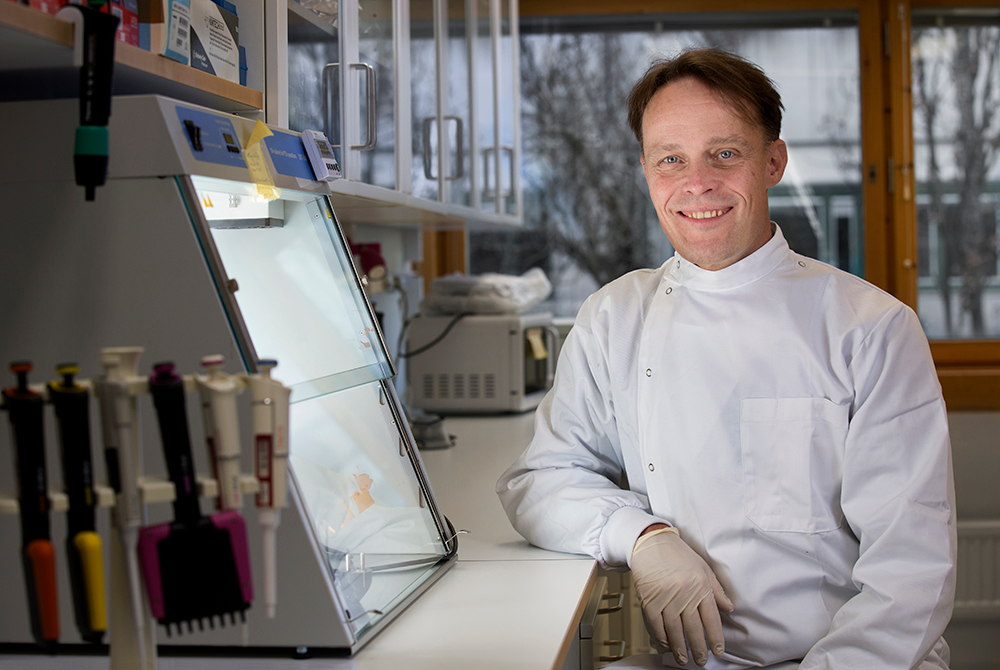
Anders Götherström, Professor of Molecular Archaeology and newly elected member of the Royal Swedish Academy of Sciences. Photo: Rickard Kilström
On 6 May, the Royal Swedish Academy of Sciences (KVA) elected three new Swedish members. Anders Götherström was elected to the "class for humanities and outstanding services to science.” He is Professor of Molecular Archaeology at Stockholm University and one of the founders of the Centre for Palaeogenetics. Throughout his career, he has worked on using genetic information to shed light on archaeological questions. He is a pioneer in establishing the study of ancient DNA as a tool within archaeology. One example is the analysis of DNA from tree resin chewed by people on the Swedish west coast during the Stone Age. The results revealed both the individuals’ origins and evidence of a severe dental infection, as well as what they had eaten shortly beforehand. Much of his research has focused on the Stone Age and the spread of agriculture across Europe. In recent years, however, his work has increasingly concentrated on the Iron Age, the Viking Age, and the medieval period, primarily through studies of human remains.
By analysing the genomes of around 17,000 present-day individuals in combination with genetic data from archaeological materials, he was able to trace how gene flow shaped the population of Scandinavia from around the beginning of the Common Era onward. The study showed, among other things, a clear gene flow from the west that reached all of Scandinavia during the Viking Age, as well as influences from the east that particularly shaped Gotland and the Mälaren Valley during the same period. Together with analyses of material from warships, hillforts, boat burials, and medieval burial sites, the research provided an overall picture of how people moved and interacted throughout the region.
Last updated: 2026-05-20
Source: Department of Archaeology and Classical Studies