News

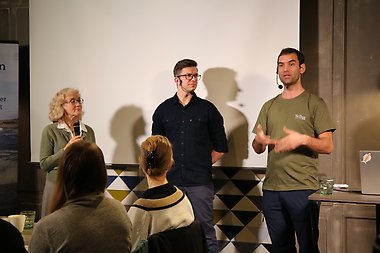
  • Baltic Breakfast: The ocean is warming – and the Baltic Sea is changing even faster

    Stratification in the Baltic Sea is increasing at a much faster rate than the global average, and marine heatwaves are becoming more frequent and intense. At Baltic Breakfast, oceanographer Fabien Roquet and marine researcher Norman Göbeler explained how warming is reshaping the sea, and how the change is outpacing science.

    Stockholm University Baltic Sea Centre
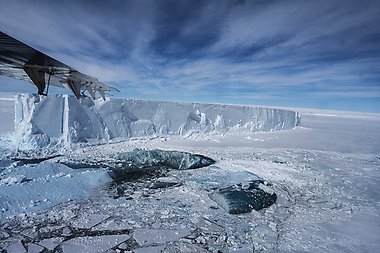
  • The edge of a large ice shelf in Antarctica. The photo is taken from a small airplane

    To predict Antarctica’s future, scientists need to see beneath the ice

    Professor Arjen P. Stroeven from Stockholm University and the Bolin Centre for Climate Research is one of 80 scientists behind a new international review highlighting major gaps in our knowledge of Antarctica’s coastal zone. The researchers warn that what we do not yet know about the landscape beneath and around the Antarctic ice could be limiting our ability to predict future sea-level rise.

    Bolin Centre for Climate Research
  • Major international research expedition underway at Tvären

    A large-scale, international and multidisciplinary research expedition is currently taking place at Tvären, a circular bay in the Baltic Sea near Studsvik in Södermanland, roughly 100 km south of Stockholm.

    Stockholm University Baltic Sea Centre
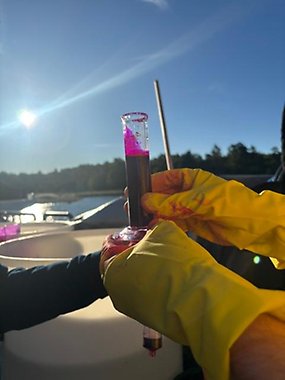
  • DEEP seeks PhD student in wetland ecology – apply by 31 October

    The Department of Ecology, Environment and Plant Sciences (DEEP) at Stockholm University is looking for a PhD student in wetland ecology. The position is part of the interdisciplinary research project BALANCE wetlands, funded by Formas.

    Department of Ecology, Environment and Plant Sciences
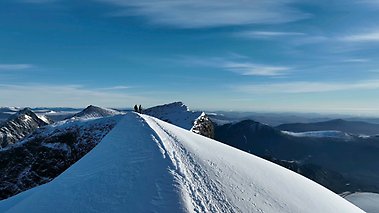
  • Researchers from Tarfala Research Station at Kebnekaise´s southern peak.

    Kebnekaise's southern peak continues to melt

    This year's measurement of Kebnekaise's southern peak shows that the peak has decreased by 0.1 meters compared to last year. This is the eighth year in a row that the southern peak is lower than the northern peak.

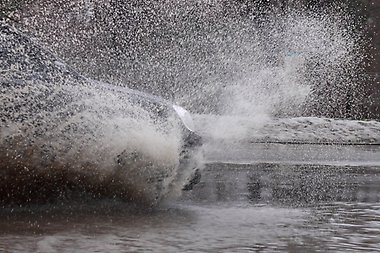
  • A car in water

    A warmer climate is changing the water cycle, but not in the same way everywhere

    The water cycle is changing in different ways across the world as the planet warms. A new study shows that the amount of water evaporating from land is increasing in the Northern Hemisphere but decreasing in the Southern Hemisphere. Looking only at the global average hides these differences, with implications for drought, flooding and water availability.

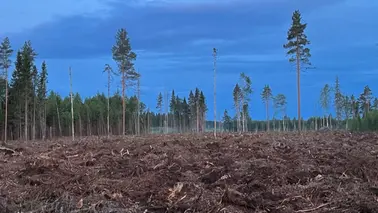
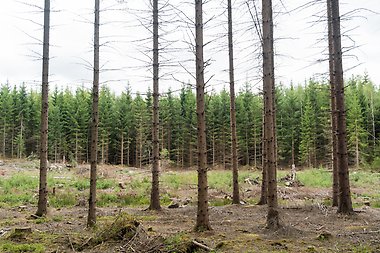
  • Clear-cutted forest that was part of the sites investigated in this study.

    Species recover slowly after forest harvesting – some may disappear

    The rate at which species recover after clear-cutting varies considerably. Some groups, such as lichens and mosses, are unable to re-establish before the next harvesting cycle, according to a major international study involving researchers from the Swedish University of Agricultural Sciences (SLU) and the Department of Ecology, Environment and Plant Sciences (DEEP) at Stockholm Unviersity.

    Department of Ecology, Environment and Plant Sciences
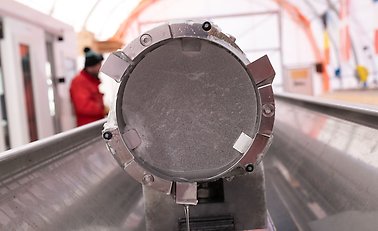
  • Close-up of the circular front of an ice core sample.

    1.2-million-year-old ice is now being analysed in Europe

    Researchers have drilled all the way down to the base of the Antarctic ice sheet, 2.8 kilometres beneath the surface. For the first time, by analysing the information contained within an ice core, scientists will obtain a continuous record of the Earth’s climate dating back 1.2 million years, and possibly even further.

    Department of Physical Geography
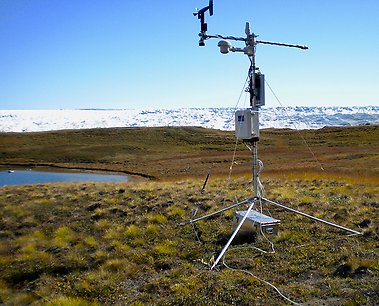
  • Rain gauge in an open field with low vegetation and a glacier in the background.

    Poor precipitation monitoring makes future predictions more difficult

    Gaps in the global network of precipitation monitoring stations are hindering efforts to assess climate change impacts on freshwater resources and to predict future pressures such as droughts and floods, according to new research published in Nature.

    Department of Physical Geography
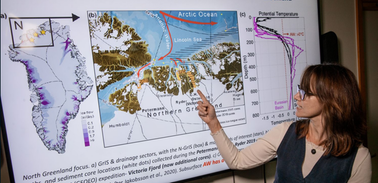
  • THAWING project

    How is the ice around northern Greenland affected by warmer and saltier water from the Atlantic flowing into the Arctic Ocean? A research project, led by Helen Coxall, aims to investigate this “Atlantification” to predict future developments. Article about Helen Coxall's project named “THAWING,” which is funded by Knut and Alice Wallenberg Foundation. Read the article at https://kaw.wallenberg.org

    Department of Geological Sciences