


Poor precipitation monitoring makes future predictions more difficult
Gaps in the global network of precipitation monitoring stations are hindering efforts to assess climate change impacts on freshwater resources and to predict future pressures such as droughts and floods, according to new research published in Nature.
“Without more data on precipitation, we cannot realistically evaluate the impact of climate change on water security and related critical areas such as food production and energy security around the world,” says Gia Destouni, Professor at the Department of Physical Geography at Stockholm University and Visiting Professor at the Department of Sustainable Development, Environmental Science and Engineering (SEED) at KTH.
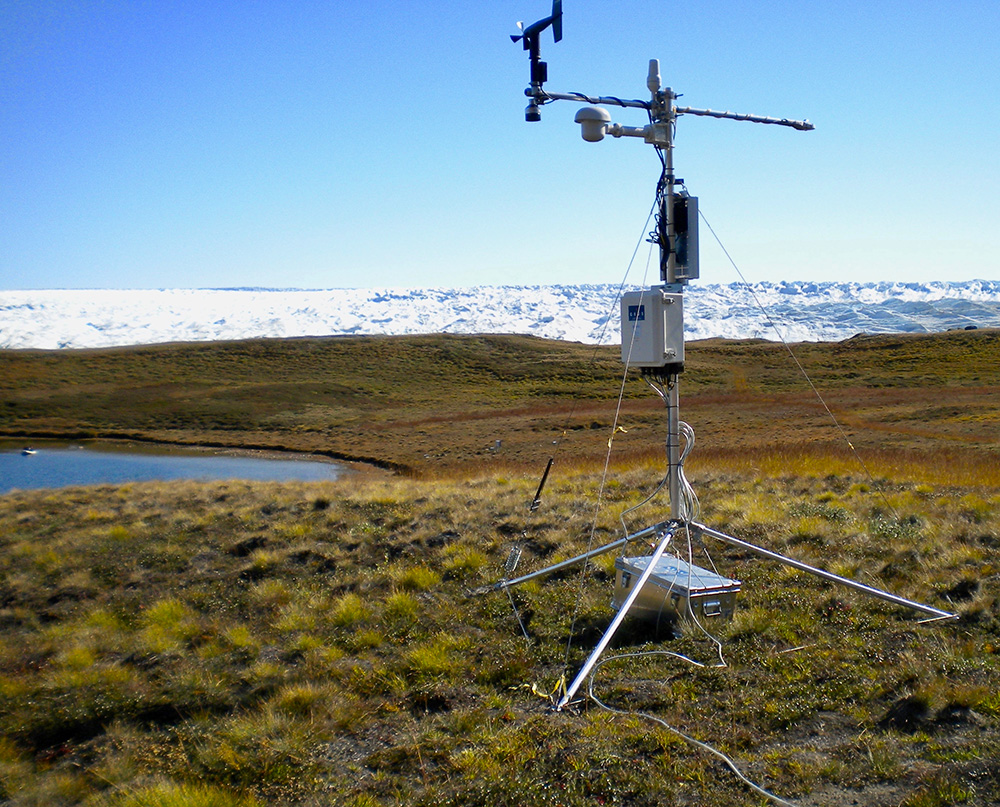
Rain gauge in Greenland. Photo: Gia Destouni
Systematic monitoring is crucial
Systematic monitoring of rain and snow (precipitation) across the Earth’s land surface is essential for understanding, predicting and planning for changes in precipitation patterns and their impacts on water resources, droughts and floods worldwide. An international research team analysed the global distribution of 221,483 monitoring stations with available data for 1900–2022, and whether the station density meets the World Meteorological Organization’s (WMO’s) guidelines for reliable assessment of precipitation on land.
Uneven global monitoring
The results highlight major global monitoring gaps, with WMO guidelines met in just 13% of the Earth’s land surface. Coverage is highly uneven, leaving many regions without enough stations to reliably detect trends or predict changes in water resources and hazards such as droughts and floods.
“Many assumptions about climate change impacts rely on the idea that we quite well understand current conditions and can predict how water resources will change. This study shows that critical information is missing. Without significantly enhanced monitoring with focus on water, we cannot reliably assess how conditions of too little, too much, and too polluted water occur and affect societies and ecosystems worldwide,” says Gia Destouni.
Germany best in class
The study shows that Europe has the densest precipitation monitoring network, with an average of 2.4 gauges per 1,000 km². Germany stands out with 22.4 per 1,000 km², while coverage in many other parts of Europe remains sparse.
“We urgently need to expand monitoring across 25% of the world’s land surface in order to understand ongoing water system changes. This particularly concerns areas in northern South America, northern North America, Central Africa and southern Asia,” says Gia Destouni.
Growing need for measurements
According to the research team, the need for precipitation monitoring will grow with forthcoming changes in climate and socio-economic conditions and vulnerability around the world. Priority areas include India, Greenland, Bolivia and China.
“The need for investment is substantial and open access to monitoring data is crucial for progress. Without more comprehensive and openly available precipitation data, we cannot realistically assess ongoing and future changes in water systems and their impacts on societies and ecosystems and feedbacks to climate.”
This text is based on an article published on the KTH website
Source: Communications Office
Last updated: 2026-04-13
Source: Department of Geological Sciences