News

  • Expedition Arctic Ocean 2026, blog post 5: Life on Oden

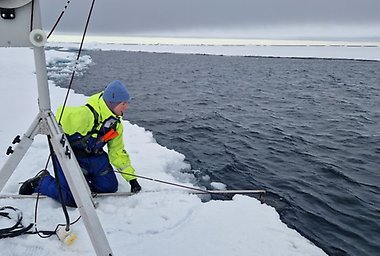
    Today we publish a collection of stories written by our researchers on Oden, August 15, 2026. Hanna Winge becomes stranded on an ice floe as the mist rolls in, Irene Bellagente has to repair a broken aerosol research instrument, Linnea Huusko explores the on-board gym and Matthew Shupe shares his thoughts on the mood of the crew.

    Department of Meteorology
  • On board Oden

    Stockholm researchers map the Arctic seabed

    This summer, the icebreaker Oden is once again on expeditions in the Arctic. The focus is on mapping the seabed for a fibre cable as well as research projects and a graduate school. Around ten researchers and doctoral students from Stockholm University are on board.

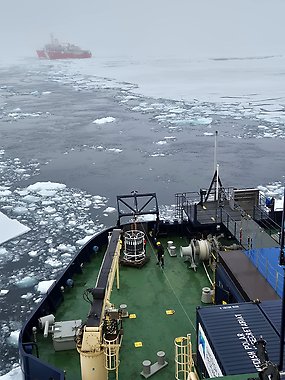
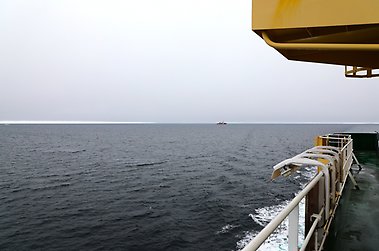
  • Image: The Icebreaker Louis S. St. Laurent can be seen from Oden as they move northward in the Arctic sea ice.

    Expedition Arctic Ocean 2026, blog post 3: Melt On Hold?

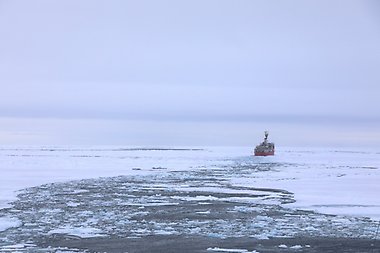
    Surely it must be melting? As we are moving northward in our journey I’m surprised to find almost no active melt ponds on the sea ice. Instead, in the middle of August, the ice floes are the bright white of fresh snow; The surface reflecting as many photons as it can to preserve the ice from its potential future demise.

    Department of Meteorology
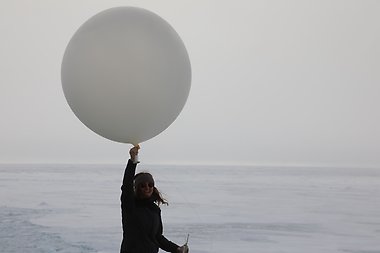
  • Woman holding a large gray-white balloon over her head, ready to release.

    Expedition Arctic Ocean 2026, blog post 2: Balloons!

    One of the things we in the met team do is launch radiosondes (weather balloons). A radiosonde is a small instrument that is attached to a helium-filled balloon. The balloon is released and allowed to rise through the atmosphere. As it rises, the instrument measures the temperature, wind speed and direction, and relative humidity. On Oden, we release radiosondes four times a day, every day, at 00:00, 06:00, 12:00, and 18:00.

    Department of Meteorology
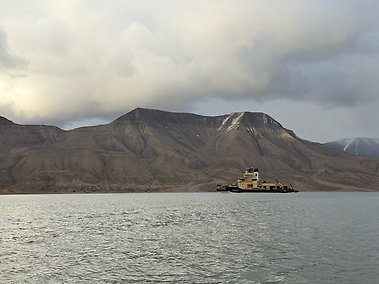
  • Image 1: I/B Oden, anchored outside Longyearbyen, Svalbard.

    Expedition Arctic Ocean 2026, blog post 1: Boarding Oden

    On Monday evening, we arrived in Longyearbyen and boarded I/B Oden to start our six-week journey into the Arctic. We got to the ship in the evening, around 21:00, tired after travelling all the way to Svalbard (some of us from Sweden, some all the way from Canada), but you probably couldn’t tell. The energy in the group was bubbling; I was giddy with excitement about finally getting to start the expedition!

    Department of Meteorology
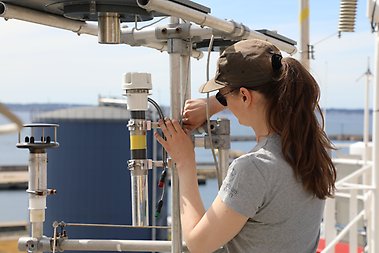
  • Image: Linnea installing a sensor to measure temperature and moisture on top of I/B Oden.

    First Journeys North: MISU PhD Students Join Veteran Researcher on Arctic Expedition

    In September, the Icebreaker Oden will once more set out on a journey to the Arctic region. On board, a mix of PhD students and researchers will engage in research and education, and a mission to map the seafloor. Meet MISU researcher Matthew Shupe and two MISU students who are presently preparing for the journey ahead. “This is a great opportunity to build new research capacity by bolstering the next generation of polar scientists,” Matthew explains.

    Department of Meteorology
  • Sweden's MATS satellite resumes its watch on the upper atmosphere after a licensing pause

    After more than a year on hold, Sweden's research satellite MATS is returning to science operations this month. The mission is led from the Department of Meteorology (MISU) at Stockholm University, where project leader Linda Megner and principal investigator Jörg Gumbel head the scientific team. Operations were paused from April 2025 until June 2026 because of a clerical error in the licensing of the radio frequencies MATS uses to communicate. With the paperwork corrected, the satellite is once again cleared to send its data home.

    Department of Meteorology
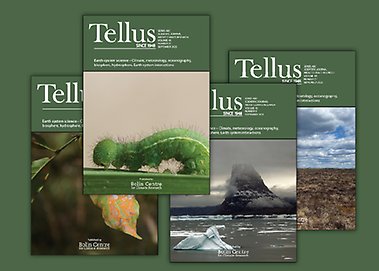
  • Tellus relaunches with first publications spanning atmospheric processes, ocean change, and climate research

    The scientific journal Tellus has been relaunched as a unified, independent, and scientist-led platform for Earth system science. The first set of publications reflects this renewed scope, bringing together research that advances understanding of the processes and interactions shaping the Earth system in a changing climate. With an expanded editorial structure and broader scientific scope, Tellus aims to publish high-quality, interdisciplinary research across the atmosphere, oceans, land, cryosphere, and biosphere—fields that are increasingly interconnected in the study of global environmental change.

    Bolin Centre for Climate Research
  • THAWING project

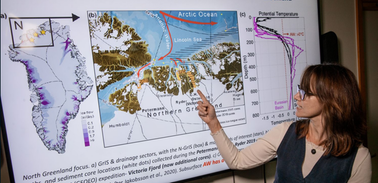
    How is the ice around northern Greenland affected by warmer and saltier water from the Atlantic flowing into the Arctic Ocean? A research project, led by Helen Coxall, aims to investigate this “Atlantification” to predict future developments. Article about Helen Coxall's project named “THAWING,” which is funded by Knut and Alice Wallenberg Foundation. Read the article at https://kaw.wallenberg.org

    Department of Geological Sciences
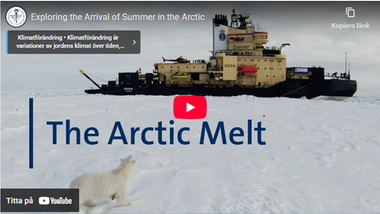
  • Icebreaker Oden surrounded by ice and snow and a polar bear. Text The Arctic Melt.

    Film about Arctic expedition wins first prize

    The film “Chasing the Arctic Melt” from Stockholm University won the “Best Science Film” category at the Explorers Festival in Iceland in November. The film, which also shows life as a researcher on an expedition, takes place aboard the icebreaker Oden, where a group of researchers are studying Arctic ice melt.

    Department of Meteorology