


Expedition Arctic Ocean 2026, blog post 2: Balloons!
One of the things we in the met team do is launch radiosondes (weather balloons). A radiosonde is a small instrument that is attached to a helium-filled balloon. The balloon is released and allowed to rise through the atmosphere. As it rises, the instrument measures the temperature, wind speed and direction, and relative humidity. On Oden, we release radiosondes four times a day, every day, at 00:00, 06:00, 12:00, and 18:00.
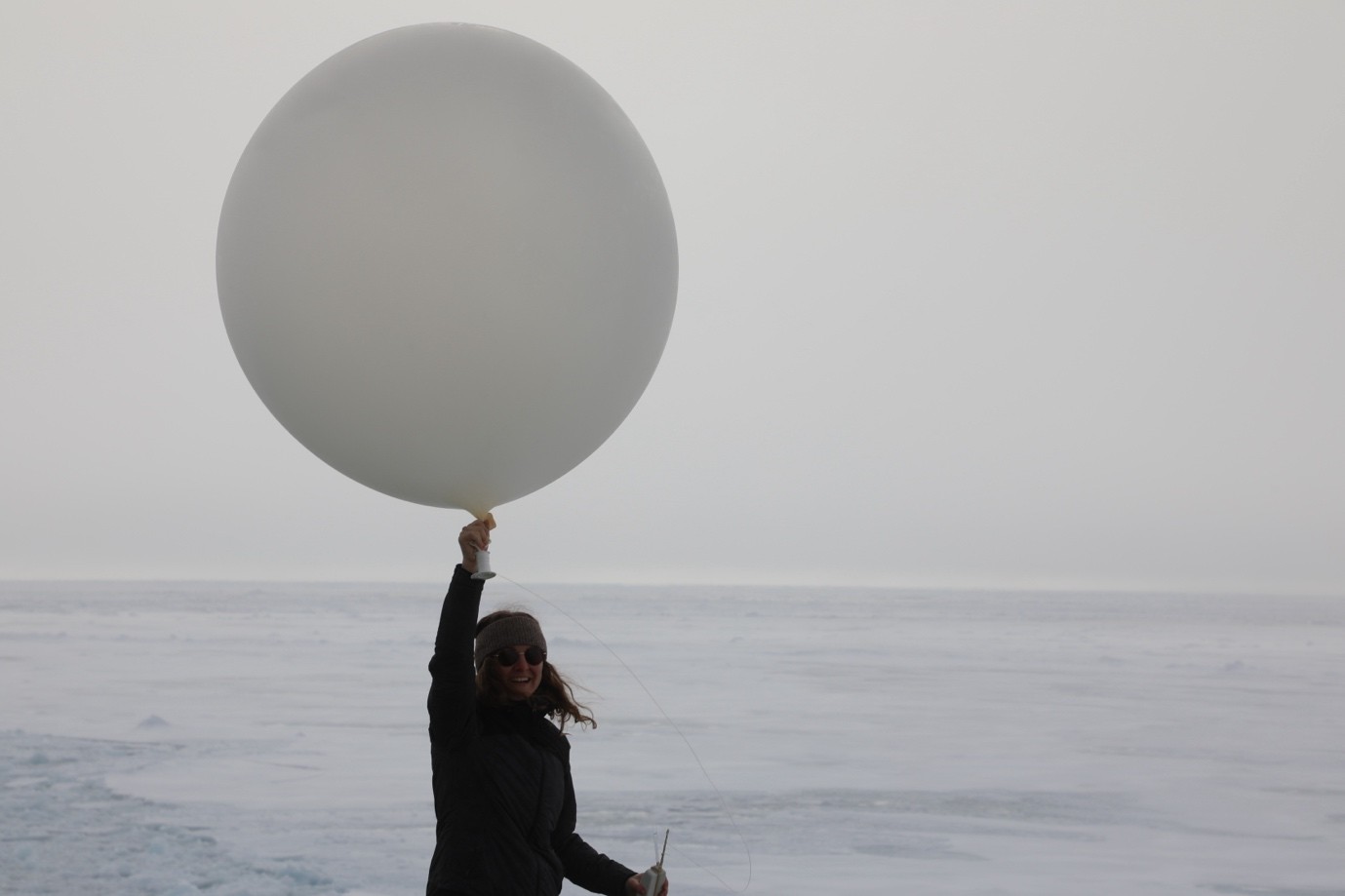
Image: Irene is ready to launch a balloon.
The radiosondes provide information about the state of the atmosphere that is helpful for the meteorologist onboard Oden as he makes forecasts. The weather forecasts are crucial for the planning of operations onboard.
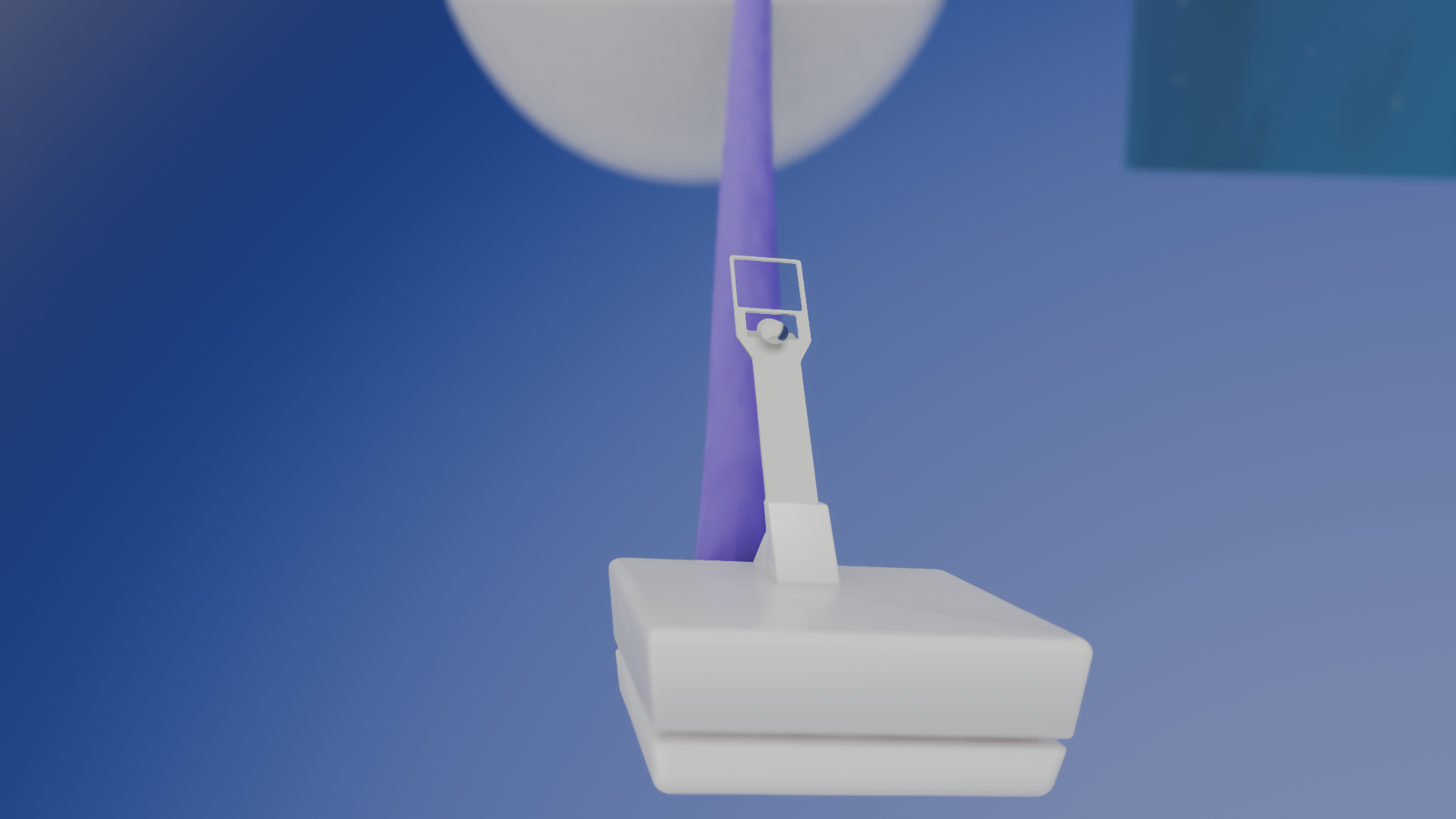
Image: Rendering of a radiosonde attached to a balloon.
The weather in the Arctic is pretty extreme; although it is the middle of August, many things on the ship currently have a 5 mm-thick layer of ice on them. We have had wind speeds of almost 20 m/s, lots of fog, and waves that forced us to cancel all work because so many of the researchers got seasick. Therefore, knowing what the weather will be like in the next few hours and days is essential for planning what work we can safely conduct.
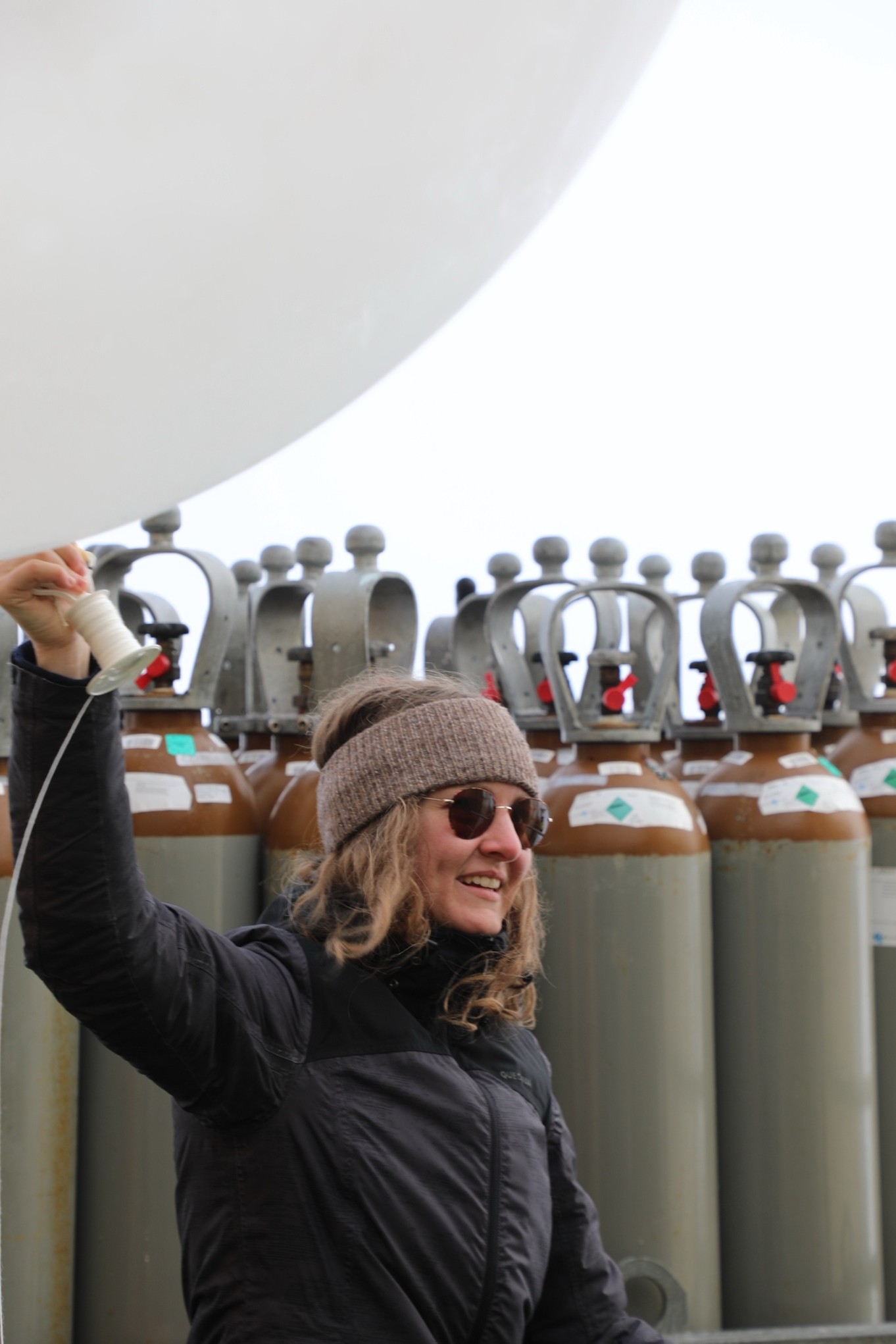
Image: Irene Bellagente (ACES, Stockholm University) has just filled a weather balloon with helium and is preparing for launch.
The data that the radiosondes collect is also sent to a global database. The data is then incorporated in weather forecast models. Radiosondes are released at a large number of locations across the globe every day, and this network of measurements provide information that is completely necessary for producing weather forecasts.
However, radiosondes in the Arctic are rare, and this means that the weather forecast in the Arctic is usually less accurate than in other places in the world. Therefore, the data that we can provide to the global network is very valuable.
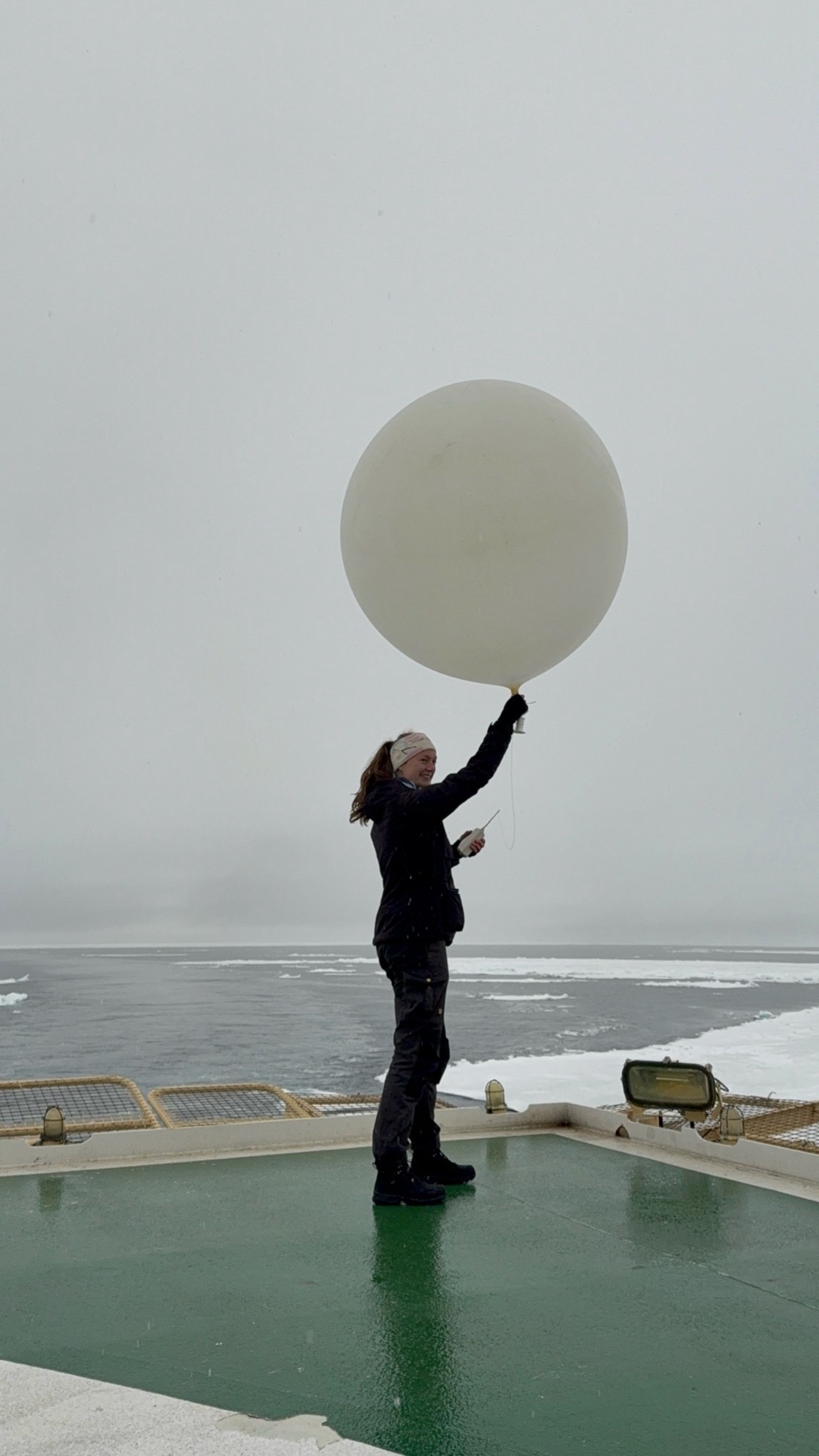
Image: Linnea Huusko (MISU, Stockholm University) is making sure all is clear before releasing the balloon.
Knowing the importance of the data that we are collecting makes it feel worthwhile to set the alarm at 5:00 to get up and start preparing for the 6:00 radiosonde launch. But even more than that, getting to fill large balloons with helium every day is just really fun! I find a childish joy in the feeling of the balloon tugging on my hand, wanting to rise toward the sky, and then releasing it and watching it rise.
So far, I have been part of the launching of 7 balloons. There are somewhere around 140 launches left to do before the end of the expedition, but somehow I don’t think I will grow tired of it!
/Linnea (2026-08-14)
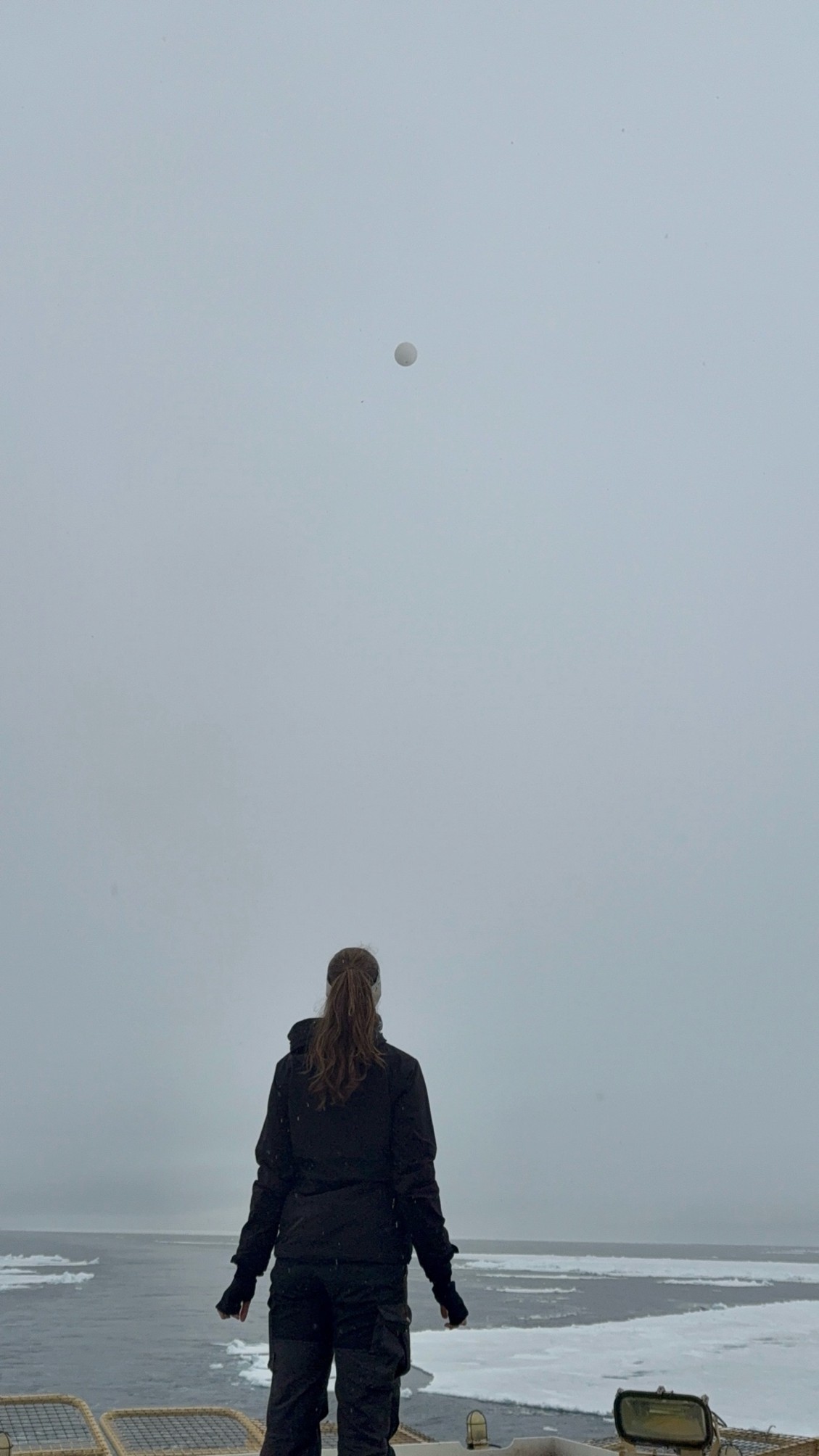
Image: Linnea watches her balloon disappear into the clouds, hoping for good measurements.
Full 2026 Arctic Expedition blog archive:
*Under construction, check back next week.
Last updated: 2026-08-20
Source: MiSU