



New research grants from the Swedish Research Council
Congratulations to Sarah, Paola, Matt, and Sascha on receiving new research grants from the Swedish Research Council (VR)!
Department of Geological Sciences
Congratulations to Sarah, Paola, Matt, and Sascha on receiving new research grants from the Swedish Research Council (VR)!
First author article by Jan Matwiejczuk et al.
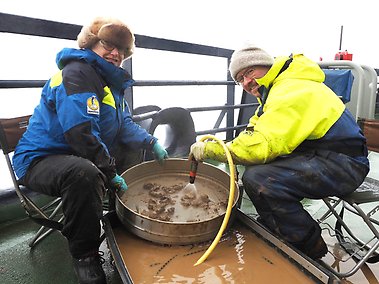
The glacial Arctic Ocean was not a barren ice desert but a breeding ground for the evolution of cold adaptation in marine fish. This is the main conclusion of a new scientific publication from Stockholm University that examines small fish bones found in deep-sea sediments during an expedition aboard the Swedish Icebreaker Oden.
First author article by Yangbaihe Hong et al.
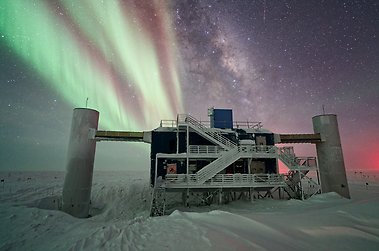
This year’s Nobel Prize in Physics has been awarded to Francis Halzen for his decisive contributions to the IceCube Neutrino Observatory and the discovery of high-energy neutrinos from space. Stockholm University has been part of this research for several decades, from IceCube’s predecessor AMANDA to today’s observatory at the South Pole.
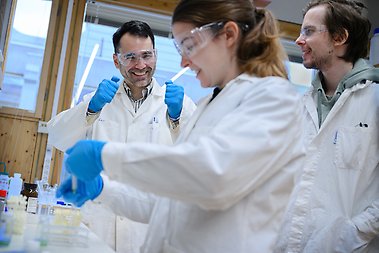
As a PhD student at Stockholm University, you will have the opportunity to deepen your knowledge within a research field and contribute to new knowledge. The Faculty of Science is now offering 18 PhD positions across a range of scientific disciplines.
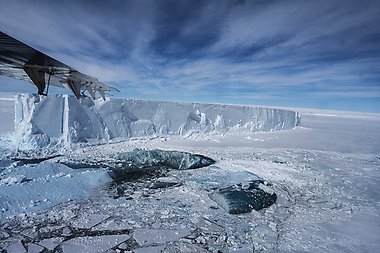
Professor Arjen P. Stroeven from Stockholm University and the Bolin Centre for Climate Research is one of 80 scientists behind a new international review highlighting major gaps in our knowledge of Antarctica’s coastal zone. The researchers warn that what we do not yet know about the landscape beneath and around the Antarctic ice could be limiting our ability to predict future sea-level rise.
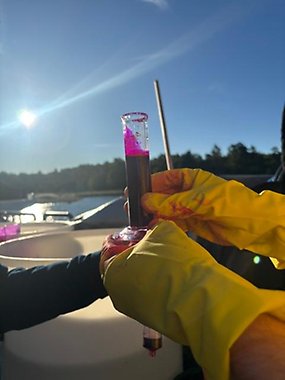
A large-scale, international and multidisciplinary research expedition is currently taking place at Tvären, a circular bay in the Baltic Sea near Studsvik in Södermanland, roughly 100 km south of Stockholm.
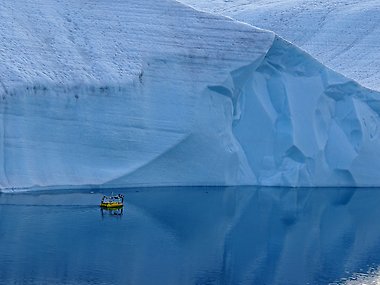
What is happening beneath thick sea ice, under ice shelves, and in other parts of the polar regions that are difficult for researchers to reach? Researchers now want to develop smart vehicles and sensors that can collect data in places that are difficult for people and research vessels to access.

On 1 October, applications for more than 40 Blended Intensive Programmes, BIPs, open. All students in the CIVIS university alliance, where Stockholm University is a member, are welcome to apply by 31 October.
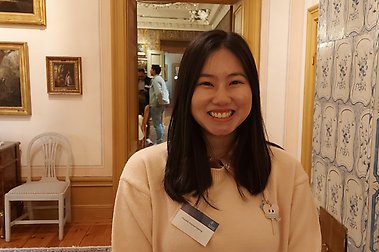
It is a mild early autumn evening when Stockholm University welcomes new Swedish Institute scholarship holders at master's level. The event is held at the historic Spökslottet (Scheffler Palace) in central Stockholm.
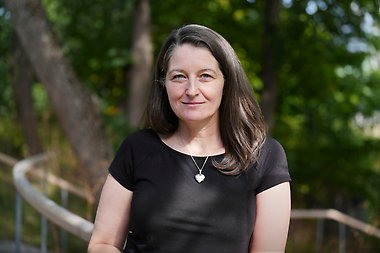
Peatlands are key areas for the Earth's climate, storing enormous amounts of carbon. What controls productivity in these types of wetlands is an important question for future climate. Newly appointed professor Malin Kylander has spent two decades trying to understand these processes, digging deep into bogs.