


The professor who digs deep into climate changes in the past
Peatlands are key areas for the Earth's climate, storing enormous amounts of carbon. What controls productivity in these types of wetlands is an important question for future climate. Newly appointed professor Malin Kylander has spent two decades trying to understand these processes, digging deep into bogs.
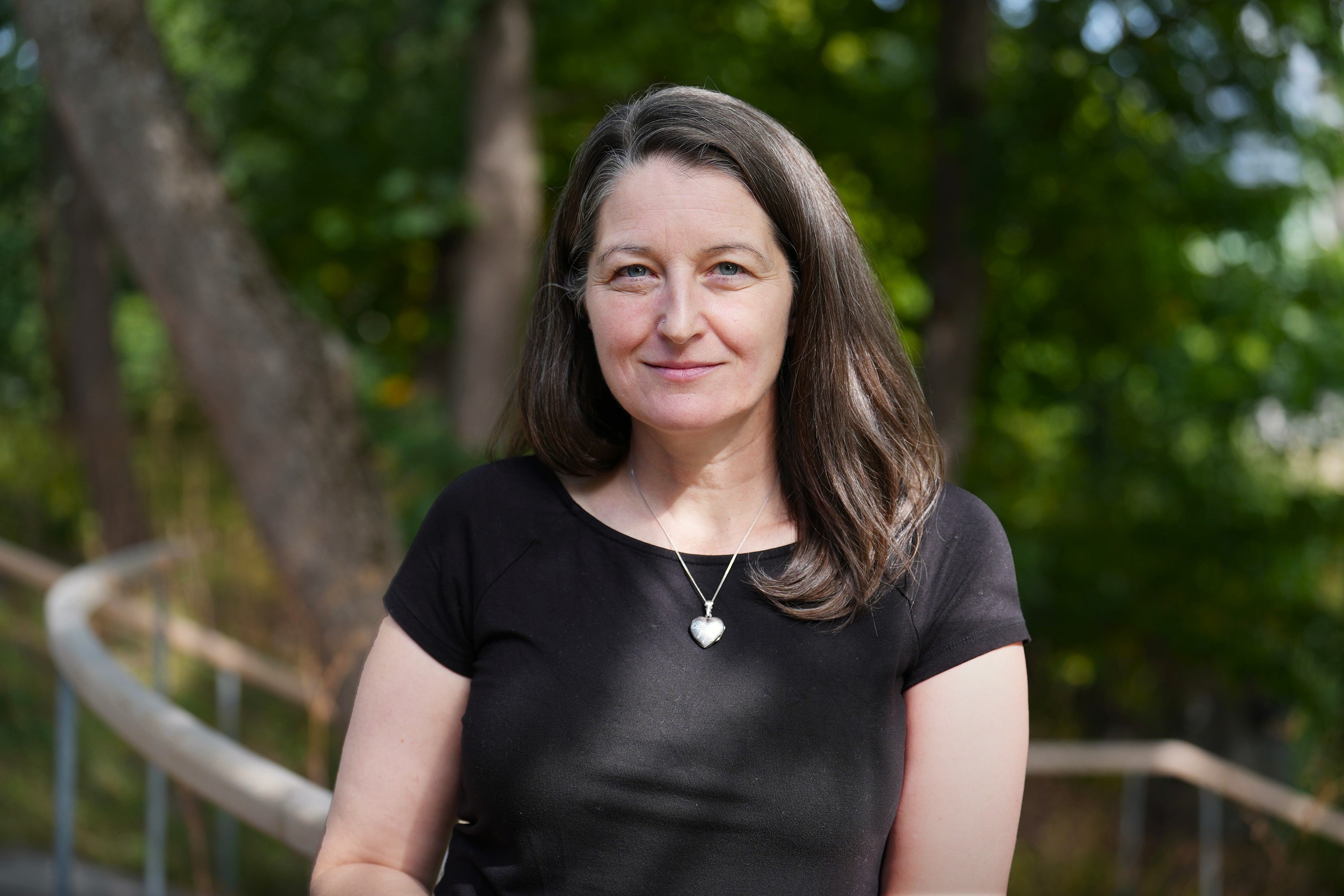
Malin Kylander at Stockholm University. Photo: Johan Lundberg
"I literally dig into the past. I go to peatlands and lakes, and I dig up peat or sediment and use those to reconstruct what has happened in the climate over the last 10,000 years," says Malin Kylander, one of 43 new professors to be celebrated at the university's inauguration ceremony in Stockholm City Hall on 25 September.
Moving to Sweden from Canada via England in 2007, she joined the Department of Geological Sciences at SU and has since devoted her time to climate changes in the past and the connection between peatlands and the atmosphere, earning her the nickname "Mrs. Store Mosse" among colleagues.
An archive of the past
Peatlands make up only 3–4 percent of the Earth's surface but hold more than 30 percent of the world's soil carbon. This is because the waterlogged, oxygen-poor environment causes plant material to decompose more slowly than it forms, allowing organic matter – peat – to accumulate over time.
Because the plants never fully decompose, this also creates an archive of the past, much like ice cores on land, ideal for studying local and regional climate conditions through history.
"In Sweden, if we dig down seven metres, we go back 10,000 years in time. The different layers give us detailed information about how the climate system worked before humans had an impact on the climate."
Because the plants never fully decompose, this creates an archive of the past, much like ice cores on land
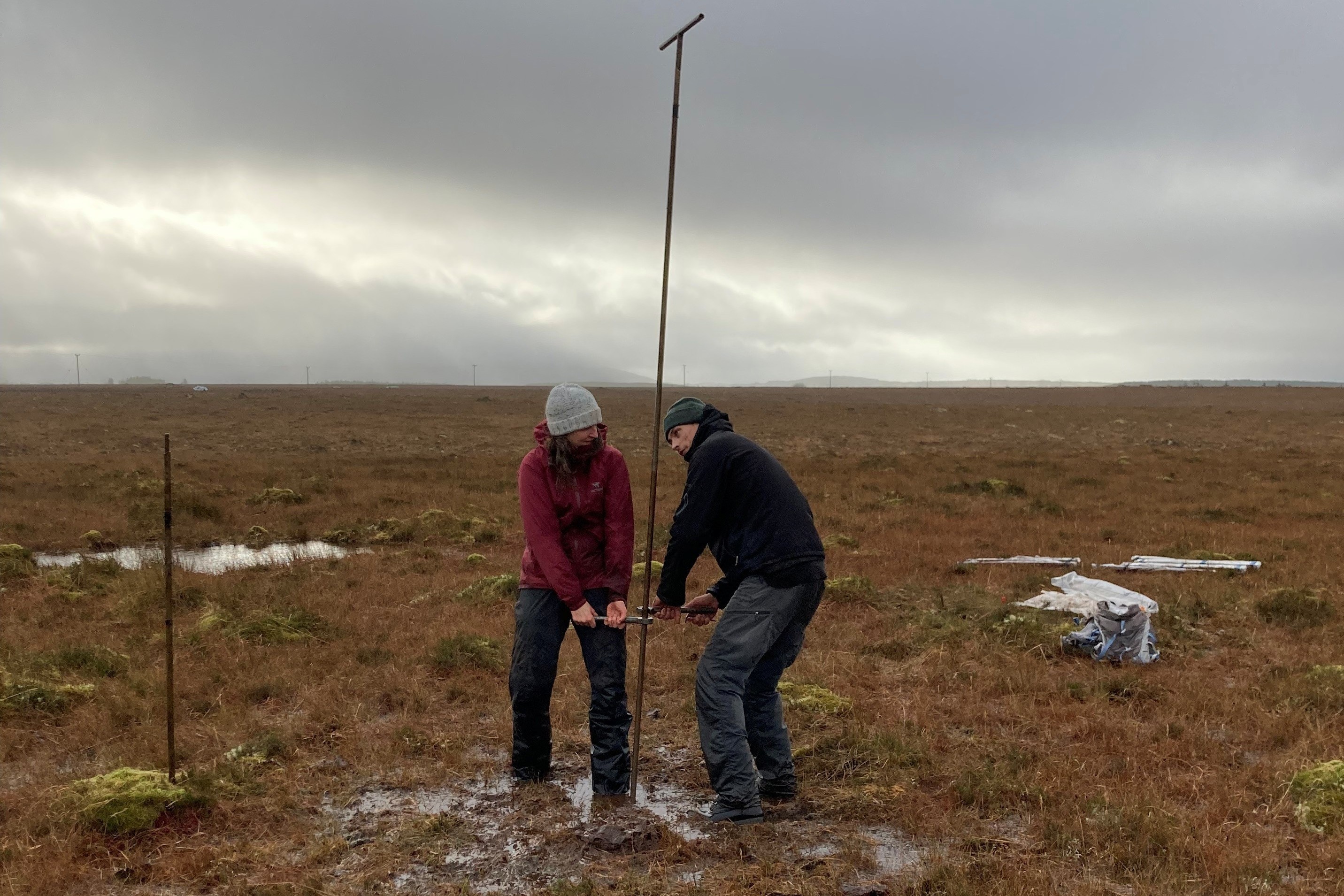
Digging deep. Malin Kylander and colleague Andreas Nylund coring on a peat bog in Ireland. Photo: Jenny Sjöström
Nutrients from the sky
Kylander's research has focused in particular on the role of airborne nutrients and their importance for how much vegetation is produced in these areas.
The data they find are eventually used to build and test models, which in turn form a small piece of the bigger puzzle in understanding and predicting current and future climate change, and its effects.
"These nutrients, which come from the weathering of rocks and soil and are carried into the air, have been an overlooked aspect when studying peatlands and their capacity to store carbon over time."
Storms of the past
Another exciting new part of her research concerns the historic study of storms. Using a CT scanner for 3D core scanning, Kylander and her team can determine from the samples they extract whether an area experienced a storm at a given time.
"By looking at how large the grains of sand are in the layers, we can infer the wind speed that would have been needed to move those particles. If they're above a certain size, there must have been a storm in the area at that time."
This data is then compared with other historical climate data – volcanic eruptions, Arctic temperatures, and more – to see how they correlate. The goal is to better understand the connections and parameters that have historically driven severe storms.
"The research field, called paleostorm, is still in its infancy, but I'm very excited about the study one of my doctoral students is publishing this autumn. We're the first in the world to publish this kind of detailed time series of storms stretching so far back."
For the love of wetlands
Although much of Malin Kylander's research concerns historical conditions, her connection to – and fascination with – these areas here and now is just as strong.
"Wetlands are these amazing ecosystems, truly unique and beautiful. When you understand more about them, about how life here is adapted to this really extreme environment, a fantastic world opens up."
Being out in the field is something Kylander values highly. It's where she finds inspiration and builds strong relationships with her research colleagues.
"When you get into a beautiful wetland, like at Store Mosse National Park in Småland, or doing field work in Lofoten or parts of Finland, it reminds you why you're doing all this in the first place. You realise why you want to protect all this and make sure it's here in the future."
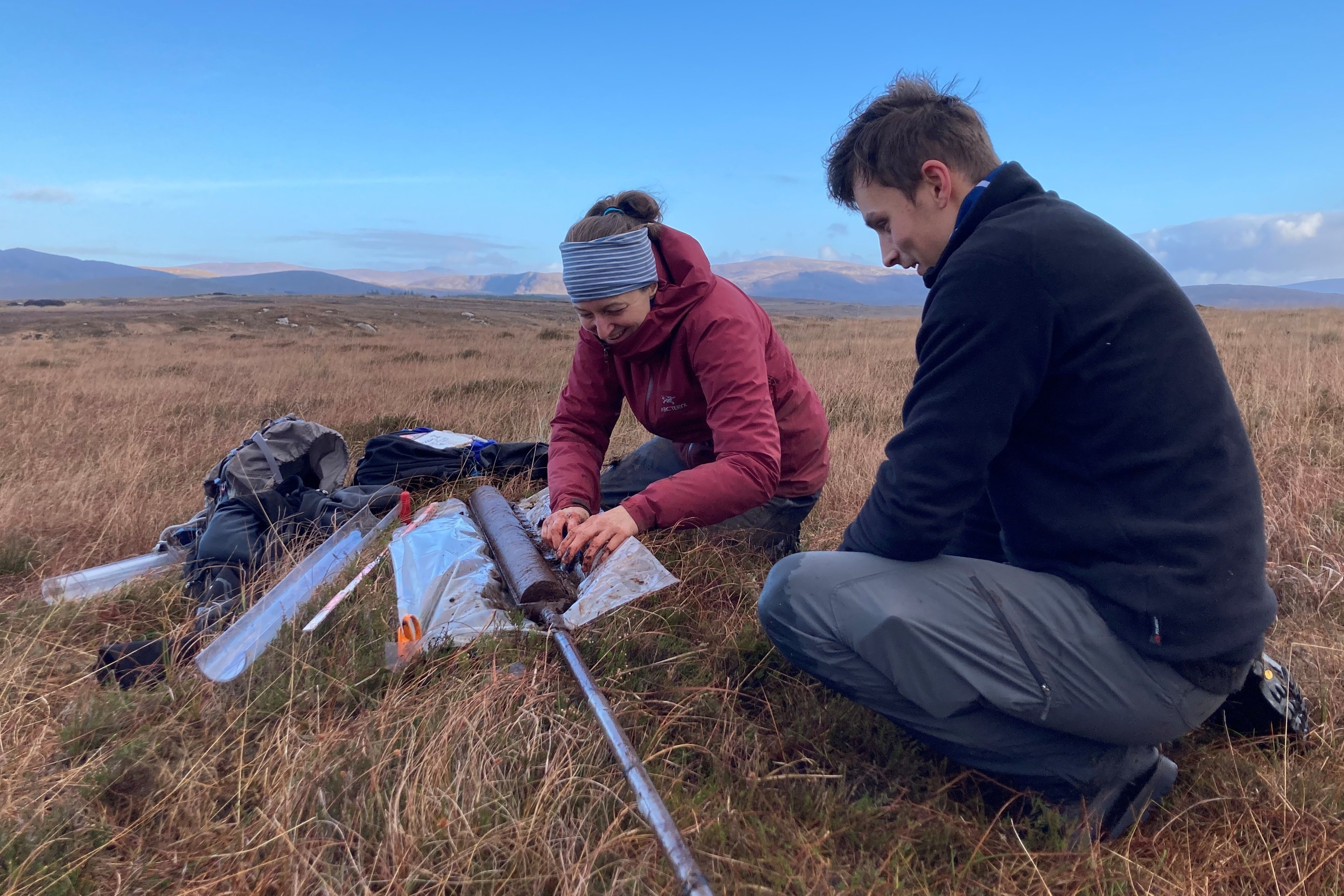
"There is something called 'bog breathing' where the surface of the bog expands and contracts over a day or weeks. A healthy bog will breathe better than a damaged one," says Malin Kylander. Photo: Jenny Sjöström
"Also, we have so much fun when we're out in the field, we laugh a lot. It bonds you in a way that helps later, when we're back at the university working together – we've built a foundation of trust."
Over the past decades, peatlands and other wetlands have received a great deal of attention, mainly for their ability to store carbon. While this aspect is crucial, she wants to highlight other qualities of these areas too.
"There's so much more to wetlands than just carbon storage. They're a really important part of our landscape and our culture, without many people knowing it. Trying to manipulate and drain wetlands has caused a lot of damage, in Sweden and elsewhere. We need to understand and protect them better – and not only for the sake of carbon storage."
About Peatlands
Peatlands are a type of wetland where the waterlogged, oxygen-poor environment causes plant material to decompose more slowly than it accumulates, allowing organic matter – peat – to build up over time.
Peatlands cover roughly three percent of the Earth's land surface but store twice as much carbon as all the world's forests combined, making them the planet's largest terrestrial carbon store.
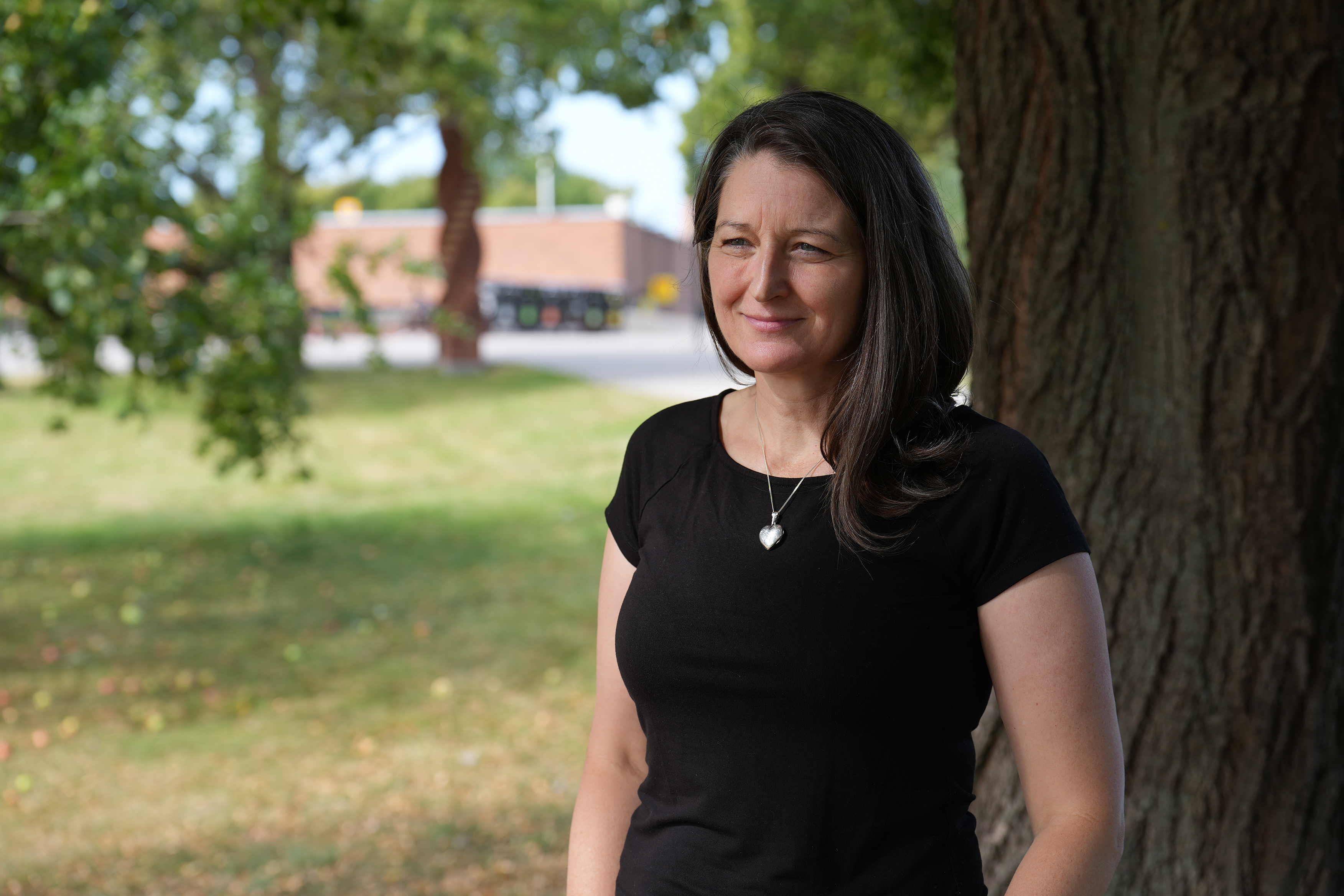
Malin Kylander. Photo: Johan Lundberg
About Malin Kylander
Position: Professor of Sediment geochemistry at the Department of Geological Sciences.
Research: See full profile at ResearchGate.
Teaching: Currently teaches the following courses at SU:
- Sedimentary Systems, Bachelor's level
- Paleoclimatology, Masters level
- Wetlands - a Swedish perspective, Introductory course
Have also participated as an expert in the SVT documentary series De första svenskarna
Interests/hobbies: Likes to read and have recently developed a fascination for stave churches. Went around Norway this summer to study them up close.
Last updated: 2026-09-17
Source: Communications Office