


Article in Quaternary Science Reviews
First author article by Jenny Sjöström et al.
Department of Geological Sciences
First author article by Jenny Sjöström et al.
Read the first newsletter of SecuCoast for a nice recap of the project's activities during the first year
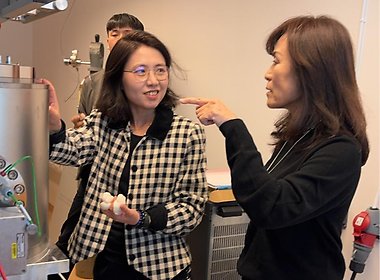
Professor Su Huey-Jen Visits the Department of Geological Sciences to Strengthen Sweden–Taiwan Collaboration
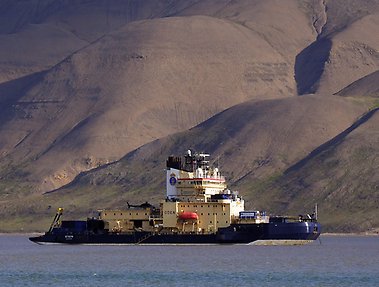
This summer, Stockholm University researchers continue to take part in the Polar Connect project, mapping the Arctic seabed from the icebreaker Oden . The work aims to improve and secure fibre-optic communications between Europe and Asia.
Researchers from the Department of Environmental Science, in collaboration with an international research team, have detected methane emissions from an Arctic subsea source not currently accounted for in greenhouse gas emission estimates. The findings suggest that natural methane emissions could be even higher than previously thought. The study was recently published in Communications Earth & Environment.
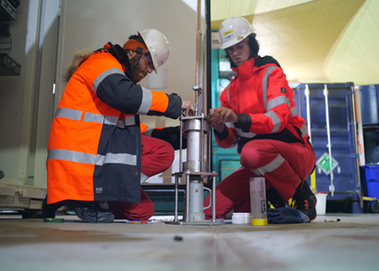
For the first time, a science team has documented and extensively sampled a freshened water system beneath the ocean floor. This major discovery comes from the initial analyses of sediment cores recovered during an international scientific drilling expedition, including researchers from Stockholm University.
Flore M.D. Wijnands has just published her first first-author paper from her PhD studies.
Sophie ten Hietbrink second first-author paper
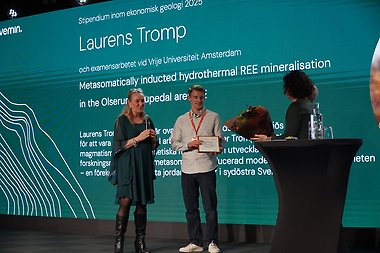
Congratulations to Laurens Tromp who was recognised for his master’s thesis "Metasomatically Induced Hydrothermal REE Mineralisation in the Olserum–Djupedal Area, SE" at Vrije Universiteit Amsterdam.
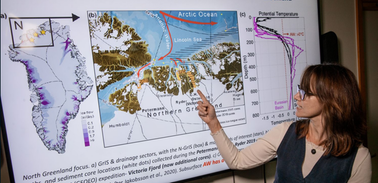
How is the ice around northern Greenland affected by warmer and saltier water from the Atlantic flowing into the Arctic Ocean? A research project, led by Helen Coxall, aims to investigate this “Atlantification” to predict future developments. Article about Helen Coxall's project named “THAWING,” which is funded by Knut and Alice Wallenberg Foundation. Read the article at https://kaw.wallenberg.org
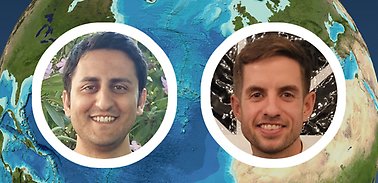
Congratulations to Mohammad and Scott on their new research grants! Scott Cocker , has been awarded a grant from the Royal Swedish Academy of Sciences (KVA) for his project (submitted together with Carl Regnéll) entitled “Integrating genomic and sedimentological evidence to trace postglacial recolonisation of animals into Sweden”. The project involves collecting sediment cores from Skåne that span the last glacial–interglacial transition. By combining sedimentology, radiocarbon dating, and ancient environmental DNA (aeDNA), the researchers aim to reconstruct both the timing and species composition of the earliest fauna to recolonise Sweden after deglaciation. They will also investigate the phylogenetic relationships of these early colonisers to both extinct and contemporary lineages using mitochondrial genomes. Read more about Scott's research at https://www.researchgate.net/profile/Scott-Cocker/research Mohammad Razmjooei has been awarded a Starting Grant (Research Grants Open Call 2025) from the Swedish Research Council (VR) for his project “Rewriting the Quaternary history of the Arctic Ocean using nannoplankton biochronology (NANNOARC)”. In this project, he will employ AI-equipped automated imaging technologies, ancient DNA analysis, comprehensive sediment investigations, and the integration of geochronological data such as nannofossils, radiocarbon dating, and U–Th isotopes to reinterpret the Quaternary history of the Arctic Ocean.
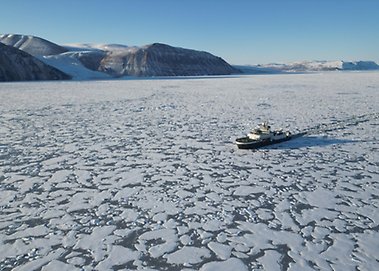
New research has documented for the first time how methane and oil escape from the seafloor off northeast Greenland. The release of hydrocarbons from the seafloor affects marine ecosystems and alters the carbon cycle in the Arctic. The study by an international team of scientists clearly documents gas hydrates are present on the Northeast Greenland shelf and are now exposed to a rapidly warming Arctic Ocean.