News

  • Attractive male guppies may spread more parasites than expected

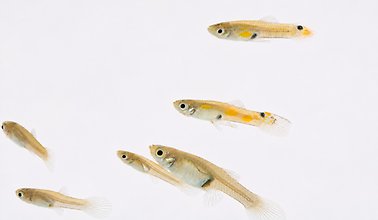
    Male guppies with larger, more colourful orange ornaments are generally more resistant to parasites. But new research published in Proceedings of the Royal Society B reveals a surprising twist: when these attractive males become infected, they can transmit more parasites to other fish than their less colourful counterparts. The findings highlight how sexual selection, social behaviour and infectious disease can interact in unexpected ways.
  • Baltic Breakfast: The ocean is warming – and the Baltic Sea is changing even faster

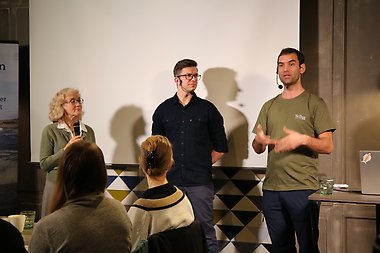
    Stratification in the Baltic Sea is increasing at a much faster rate than the global average, and marine heatwaves are becoming more frequent and intense. At Baltic Breakfast, oceanographer Fabien Roquet and marine researcher Norman Göbeler explained how warming is reshaping the sea, and how the change is outpacing science.

    Stockholm University Baltic Sea Centre
  • How life on Earth experiences climate change

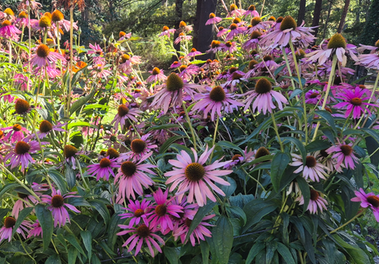
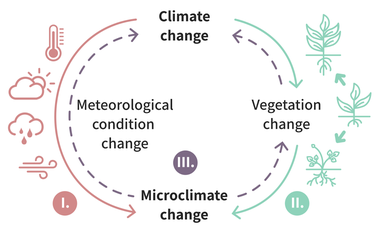
    Climate change can look very different at the scale of a forest, field or hillside. A new review led by Bolin Centre researcher Caroline Greiser shows how changes in vegetation and atmospheric conditions can cause local microclimates to warm at very different rates from the regional climate, and why this matters for understanding how biodiversity will respond to climate change.

    Bolin Centre for Climate Research
  • New policy brief calls for action to mitigate the impacts of Baltic heatwaves

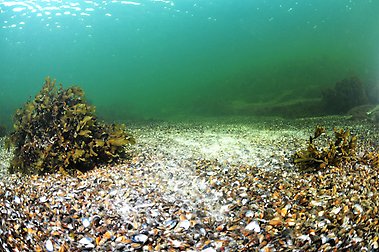
    Marine heatwaves are becoming more frequent and more intense in the Baltic Sea. This affects some organisms directly, but also the ecosystem as a whole, for example by amplifying the effects of eutrophication. In a new policy brief, researchers within the collaboration CoastClim call for societal measures to increase ecosystem resilience to heatwaves.

    Stockholm University Baltic Sea Centre
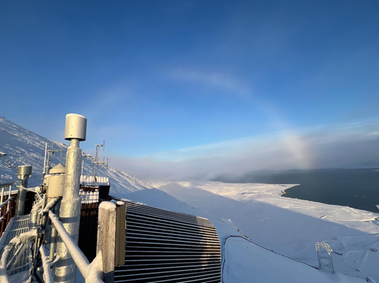
  • Bird’s-eye view from an observatory overlooking a snow-covered landscape, vast expanses of sea ice, and the open ocean.

    Arctic warming could change the availability of cloud-forming particles

    As the Arctic warms, the tiny airborne particles that help clouds form could become more abundant in some regions and less abundant in others. A new study published in Nature Geoscience, involving researchers at the Bolin Centre for Climate Research and the Department of Environmental Science at Stockholm University, reveals contrasting patterns across the Arctic and highlights the importance of regional differences for understanding future climate change.

    Bolin Centre for Climate Research
  • Bolin Centre members awarded over SEK 64 million in research funding

    Fifteen researchers affiliated with the Bolin Centre for Climate Research have been awarded grants in the Swedish Research Council’s 2026 call for Natural and Engineering Sciences. Together, their research projects will receive more than SEK 64 million in funding over the coming three to four years.

    Bolin Centre for Climate Research
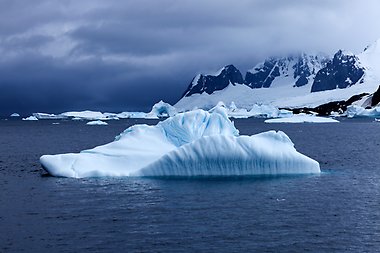
  • Antarctica landscape - iceberg floating in the sea

    Tropical–Antarctic connections offer clues to slow climate fluctuations

    Interactions between tropical oceans and Antarctica could help explain why Earth’s climate fluctuated over thousand-year timescales during the past 8,000 years. A new study combines a long climate simulation with palaeoclimate records to investigate how these slow fluctuations may be sustained within the climate system.

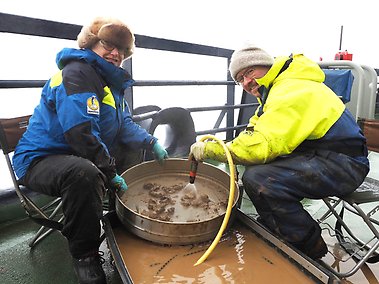
  • Ancient fish bones reveal how Arctic cod species survived the last ice age

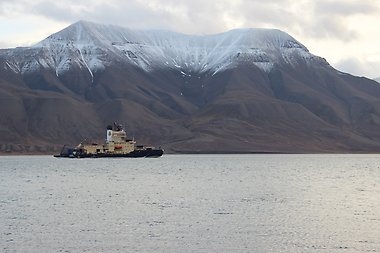
    The glacial Arctic Ocean was not a barren ice desert but a breeding ground for the evolution of cold adaptation in marine fish. This is the main conclusion of a new scientific publication from Stockholm University that examines small fish bones found in deep-sea sediments during an expedition aboard the Swedish Icebreaker Oden.

    Department of Ecology, Environment and Plant Sciences
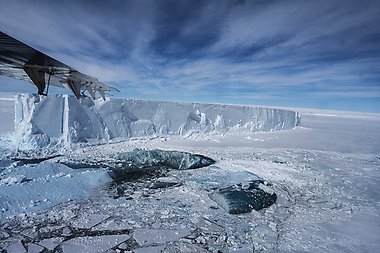
  • The edge of a large ice shelf in Antarctica. The photo is taken from a small airplane

    To predict Antarctica’s future, scientists need to see beneath the ice

    Professor Arjen P. Stroeven from Stockholm University and the Bolin Centre for Climate Research is one of 80 scientists behind a new international review highlighting major gaps in our knowledge of Antarctica’s coastal zone. The researchers warn that what we do not yet know about the landscape beneath and around the Antarctic ice could be limiting our ability to predict future sea-level rise.

    Bolin Centre for Climate Research
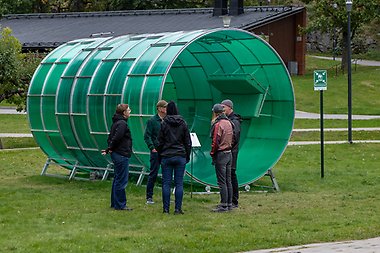
  • From climate curves to lived experience: art and research meet at Broken Greenhouse

    Climate scenarios are usually presented through models, graphs and reports. At the Broken Greenhouse Research Festival at Stockholm University, they became places to enter, walk between and discuss. On 25–26 September, researchers, artists and visitors met around five sculptural interpretations of possible climate futures.

    Bolin Centre for Climate Research
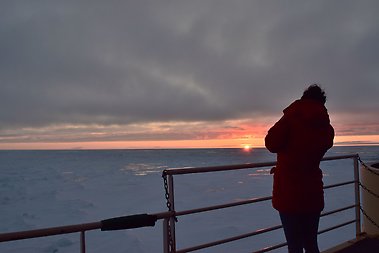
  • Caption: Faustine taking pictures of the beautiful sunset.

    Expedition Arctic Ocean 2026, blog post 17: Goodbye Arctic!

    A few of days ago, on our way south, we saw the first real sunset of the cruise. Shortly before midnight the sun touched the horizon and rose back up from the ice. It was a stunning view, but even more interesting was the atmosphere up on the bridge. People gathering and waiting for the sunset to come. It was really heartwarming to see how many people were eager to admire nature doing its course.

    Department of Meteorology