


Climate-driven shifts in marine life are increasing pollutant removal from Arctic waters
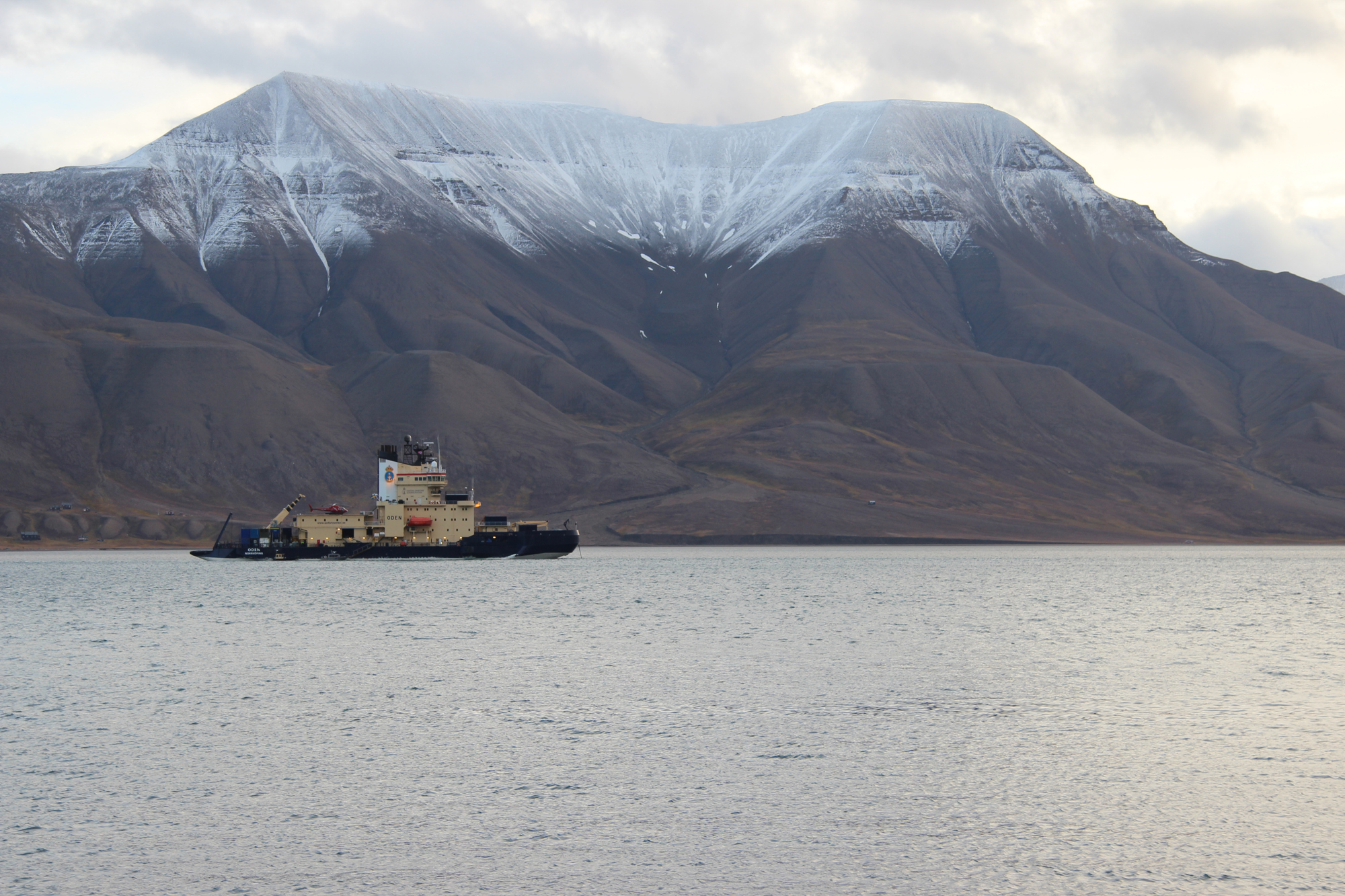
The Swedish icebreaker Oden on Svalbard during a research cruise. Photo: Jan-Ola Olofsson/Stockholm University
Organic matter produced by marine algae holds up to ten times more persistent pollutants, such as PCBs, than organic matter that reaches the sea from land. This is shown in a new study led by researchers at the Department of Environmental Science published recently in Nature Communications.
The findings show how the origin of organic matter shapes the transport of pollutants from Arctic waters to the seafloor. Model projections suggest that climate-driven growth in marine algae could increase this removal in the coming decades.
The world's oceans store large quantities of persistent organic pollutants (POPs), human-made toxic chemicals that resist degradation and can remain in the environment for long periods. Although many of these substances originate far from the Arctic, they can reach the region through atmospheric transport, ocean currents and rivers.
Once in the ocean, these pollutants can bind to organic matter – material derived from living organisms, soil particles and other natural sources. As this material sinks, it carries pollutants from the water column to the seafloor, where they can accumulate in sediments.
However, not all organic matter binds pollutants equally efficiently. Understanding what determines this efficiency is important for predicting how pollutants move through marine environments and where they ultimately accumulate.
Marine organic matter is about ten times more effective at binding pollutants than soil-derived matter
In the new study, postdoctoral researcher Xiaodi Shi, Professor Anna Sobek, and colleagues combined two large datasets to investigate how the characteristics of organic matter influence the distribution of persistent organic pollutants in sediments across the Eurasian Arctic shelf seas.
The team compiled a dataset of newly-generated and literature pollutant concentrations in surface sediments from 111 sites and combined these measurements with information on the natural characteristics of organic matter. The latter came from the Circum-Arctic Sediment Carbon Database (CASCADE), established by Professor Örjan Gustafsson at the Department of Environmental Science with collaborators. This open-science database contains more than 4,000 data points describing the characteristics of organic matter in surface sediments.
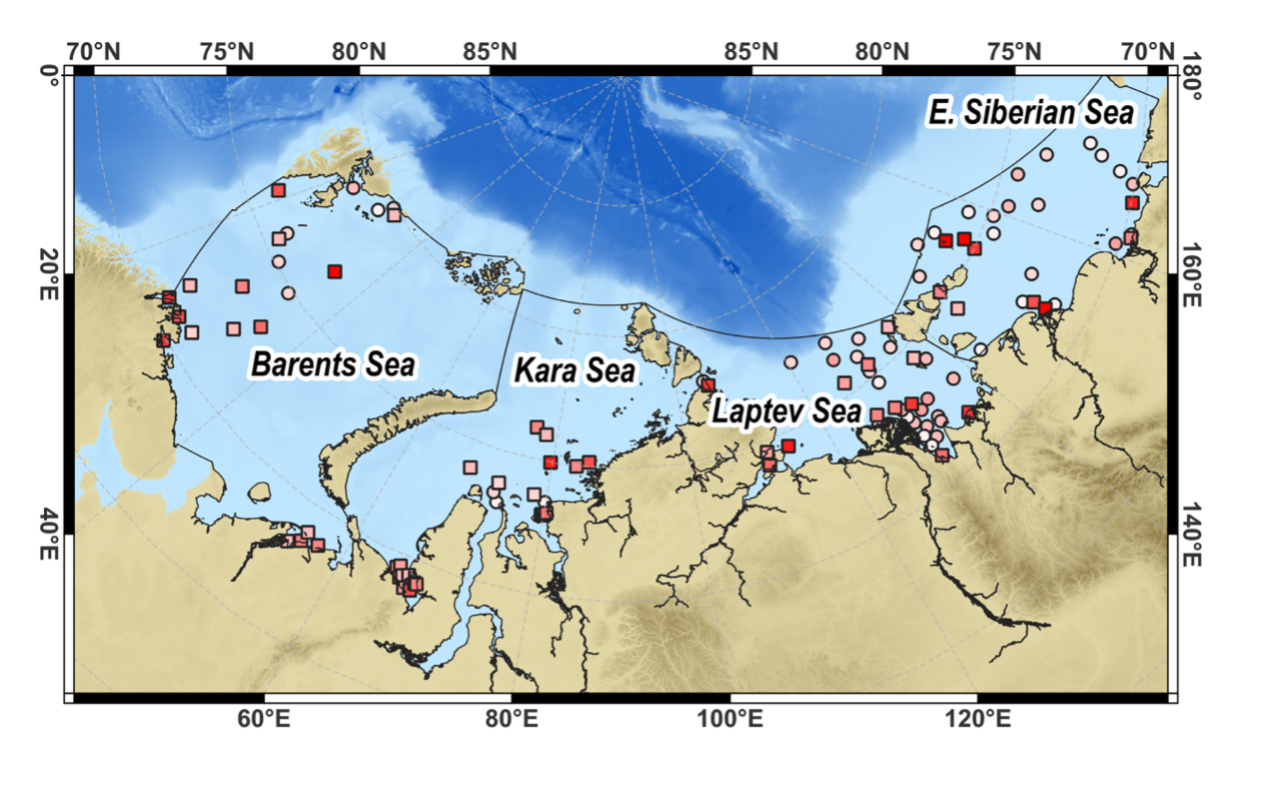
Map of the 111 sampling sites across the Eurasian Arctic shelf seas, showing the pollutant concentrations in the sediments.
The results show that organic matter produced by marine primary production – the process by which organisms such as phytoplankton use sunlight to produce organic material – is about ten times more efficient at binding pollutants than organic matter derived from soil particles.
One possible explanation is the high lipid content of marine organic matter. Oil-like, loose, flexible nature of lipids can help these pollutants dissolve into organic matter, making it more effective at binding them.
Climate change could increase pollutant removal from Arctic waters to the seafloor
The Arctic is warming approximately three times faster than the global average, with potential consequences for the alteration of quantity and sources of organic matter entering marine environments.
To investigate these effects, the researchers combined their empirical findings on pollutants with an advanced ocean–ice biogeochemical model.
The model projections indicate that climate change could increase marine primary production in the Eurasian Arctic shelf seas by a factor of 1.5 by 2100, relative to 2000 level. This increase could lead to a 1.3-fold increase in the removal of pollutants from the water column to the seafloor.
The findings suggest that climate-driven changes in marine production could influence how pollutants are transported from Arctic waters to the seafloor. As the quantity and composition of organic matter change, so too may the accumulation of persistent pollutants in sediments.
The study highlights the importance of considering not only the amount of organic matter in marine ecosystems, but also its composition, to better understand and predict the environmental fate of persistent pollutants in a rapidly changing Arctic.
Read the original paper in Nature Communications
Last updated: 2026-10-27
Source: Department of Environmental Science