


From climate curves to lived experience: art and research meet at Broken Greenhouse
Climate scenarios are usually presented through models, graphs and reports. At the Broken Greenhouse Research Festival at Stockholm University, they became places to enter, walk between and discuss. On 25–26 September, researchers, artists and visitors met around five sculptural interpretations of possible climate futures.
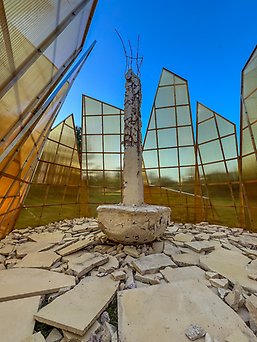
Photo: Maria Basova
The route from Accelerator to the Bergius Botanic Garden currently holds five unusual greenhouses. Each represents one of the Shared Socio-economic Pathways (SSPs) – five scenarios used in climate research to explore how different societal developments may shape future emissions and climate change.
In Broken Greenhouse – Embodied Climate Futures, artist duo Bigert & Bergström have translated these scenarios into physical installations. The exhibition is intended to make possible climate futures tangible through experience and dialogue, rather than through scientific visualisation alone.
For two days, on 25 and 26 September, the exhibition also became an interdisciplinary meeting place for researchers, artists and the public. The Broken Greenhouse Research Festival combined walk-and-talks through the exhibition with short Climate Talks, bringing together perspectives from climate science, ecology, meteorology, plant science, geography, aerosol science, ethnology, art history and other fields. School classes also took part through ForskarFredag, bringing younger audiences into the conversations around climate futures.
Rather than delivering prepared presentations during the walks, researchers joined artists and participants in conversations as they moved between the installations. Each walk brought together researchers from different backgrounds with Bigert & Bergström, creating a walking seminar.
For Caroline Greiser, landscape ecologist at Stockholm University, experiencing familiar climate scenarios in this form made a difference.
I was impressed how well-informed the artists were and how much thought they had put in the installations. Although I have seen the climate scenarios as curves many times, it DID actually make an impression to experience them physically in these installations. I loved the discussions and hope to collaborate with artists myself in the future on my research topics.”
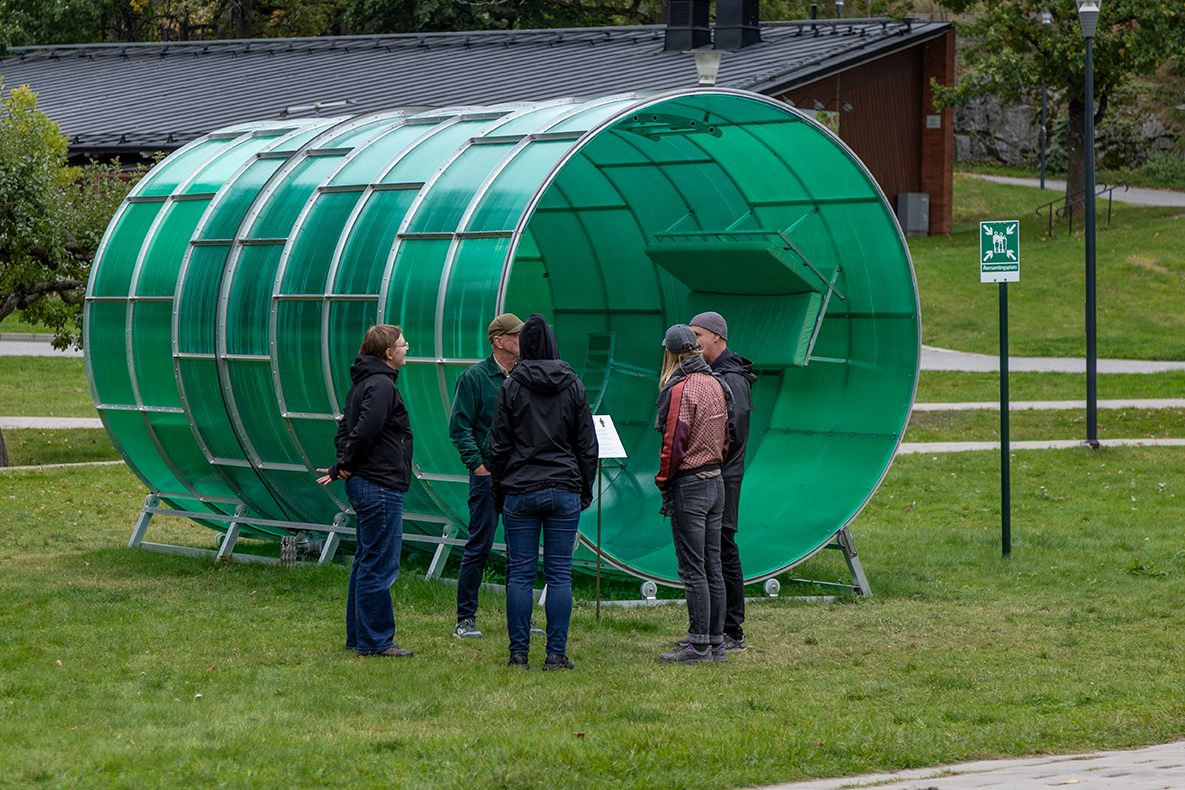
Photo: Maria Basova
That movement from abstract scenario to physical experience runs through the exhibition. The five greenhouses embody different future pathways, from more sustainable development to increasingly resource-intensive and high-emitting societies. The installations were developed by Bigert & Bergström in collaboration with climate researchers at Umeå University.
Alasdair Skelton, Professor of Geochemistry and Petrology at Stockholm University, was particularly struck by the installation representing SSP2.
Personally, I found SSP2 ‘middle of the road’ most chilling. Inside an inverted red cottage, one listens to an eerie representation of the national anthem of Sweden that is tuned such that it portrays weather – as it happens – in Abisko. The empty champagne bottle that dangles from the roof reminds us that the party is over.”
For Alasdair Skelton, the exhibition succeeds in communicating something that can be difficult to convey through conventional scientific formats.
“Broken Greenhouse is a stunning visualisation of the shared socioeconomic pathways (SSP) that are used by the IPCC.”
And his conclusion is an invitation to experience it directly:
“I recommend viewing this exhibition. It elegantly portrays the terrifying reality that we struggle to relate to.”
The research festival was a collaboration between Accelerator, the Bergius Botanic Garden, the Bolin Centre for Climate Research, the Anthropocene Laboratory, and Bigert & Bergström.
The festival may be over, but Broken Greenhouse – Embodied Climate Futures remains on view outdoors at Stockholm University until 18 October, giving visitors more time to follow the route and experience the five possible futures for themselves.
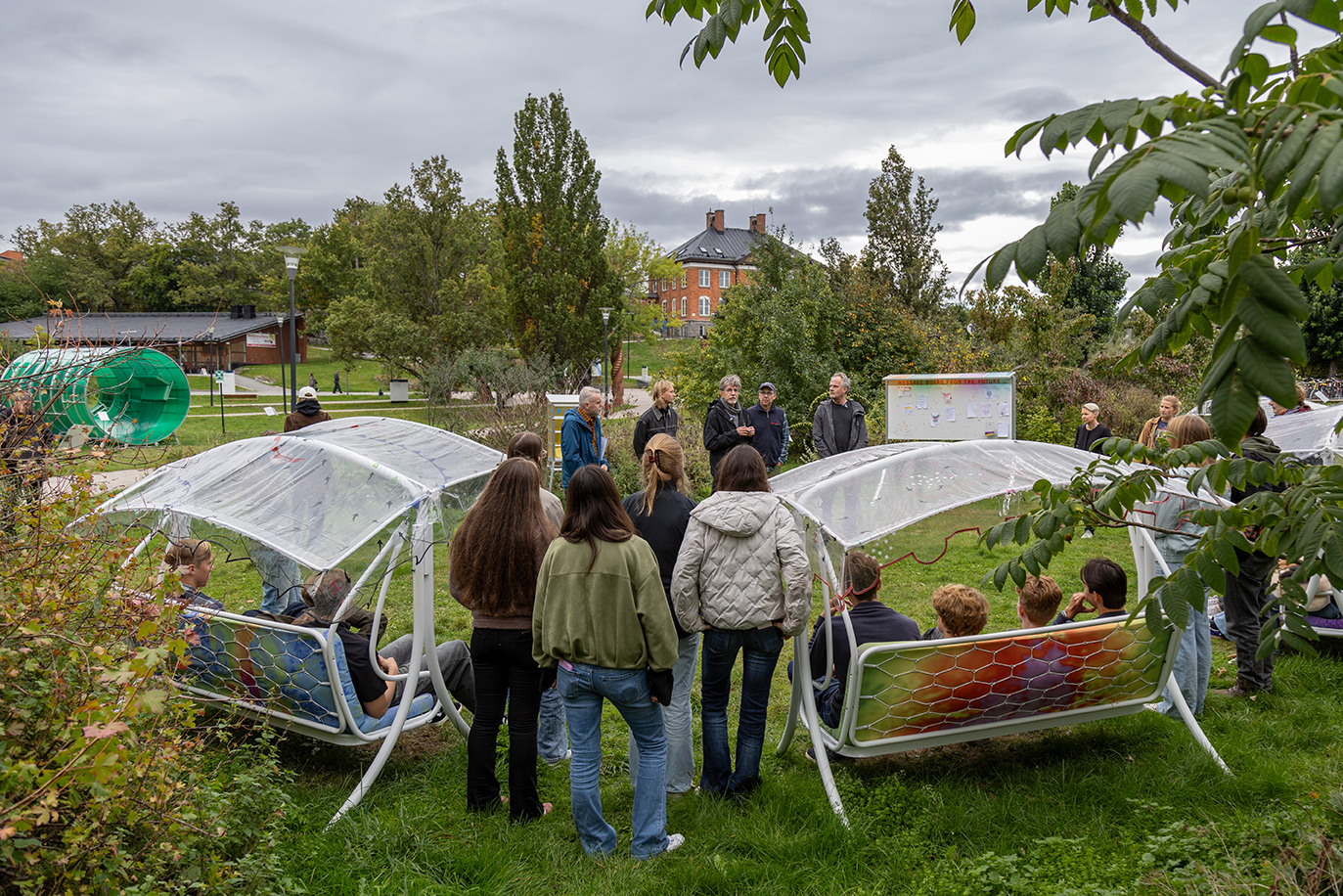
Photo: Maria Basova
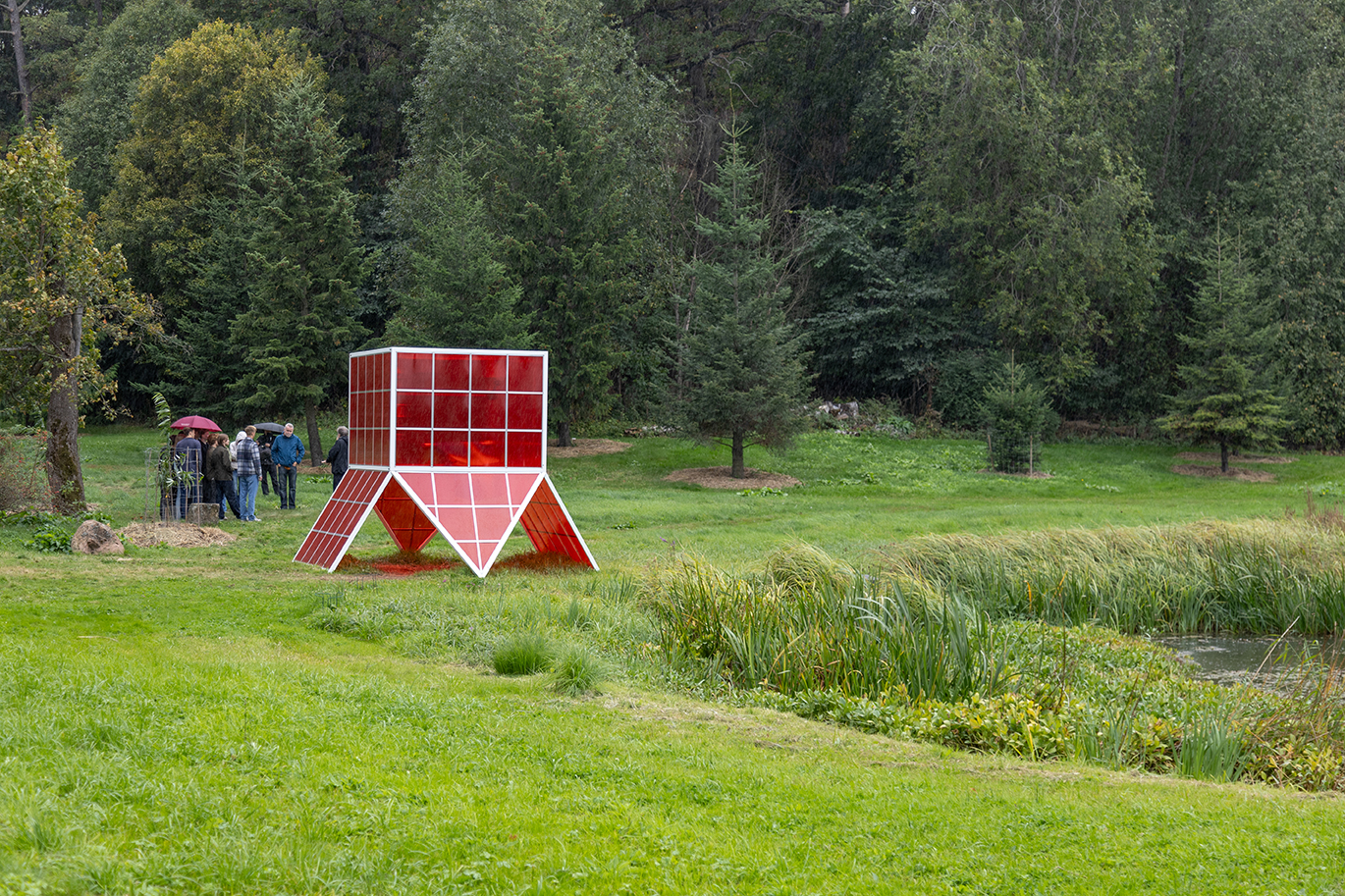
Photo: Maria Basova
Last updated: 2026-09-28
Source: Communications Office