


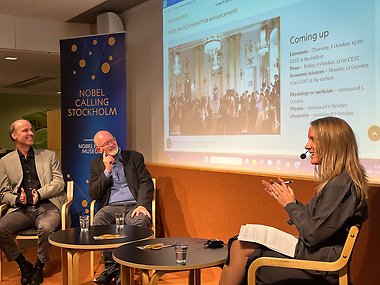
Panel praises Nobel Laureate Anne Carson: “She is such a poet”
A popular and expected choice. Those were the reactions in a panel discussion about the Nobel Prize in Literature when this year’s laureate Anne Carson was announced.
A popular and expected choice. Those were the reactions in a panel discussion about the Nobel Prize in Literature when this year’s laureate Anne Carson was announced.

In two articles published in The Conversation, Christophe Premat, Professor at the Department of Romance Studies and Classics at Stockholm University, explores how Canadian writers gain international recognition and what factors may contribute to reaching the Nobel Prize stage.
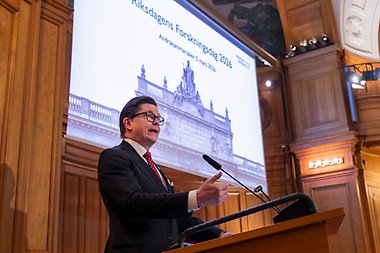
“Politicians aren’t in a position to read and appreciate primary literature – they often need somebody to explain the science and its significance,” said Erik Angner, a professor of practical philosophy, during a panel discussion at Stockholm University on how researchers can share their knowledge with politicians.
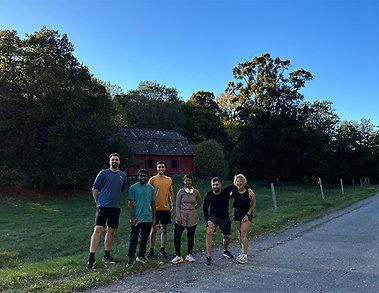
Every Tuesday and Thursday afternoon, students can join Student Health Services for Running for Beginners. The activity is not just about running, but also about meeting other students, getting out into nature and building a routine around exercise together.
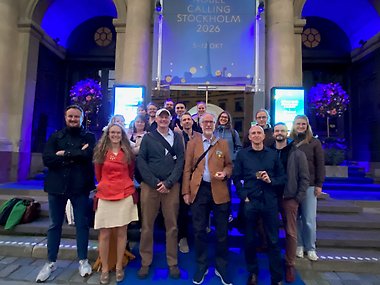
Francis Halzen’s Nobel Prize in Physics is a testament to Fysikum’s strategic initiatives and to the expertise and resources the department has contributed over several decades. Fysikum’s IceCube group will soon apply for funding from the Swedish Research Council’s Infrastructure Committee to continue its participation, operation, and development.
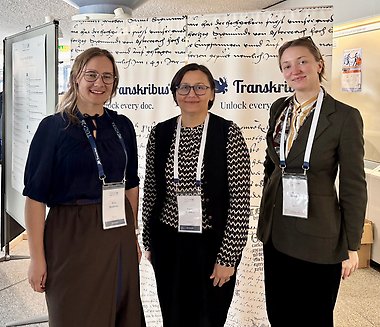
Signe Rirdance, a PhD student and a Transkribus scholarship recipient, presented her work at the Transkribus User Conference 2026 in Passau, Germany, 21-23 September 2026. Transkribus is an AI-assisted platform for transcribing, searching and analysing historical handwritten documents.

Fifty years ago, mental health problems were more common among older people than among younger adults. Today, the pattern is reversed. An analysis of data from the Swedish Level-of-Living Survey (LNU) shows that younger generations are much more likely to report mental health problems than previous generations were at the same age, while such problems have decreased among older people.
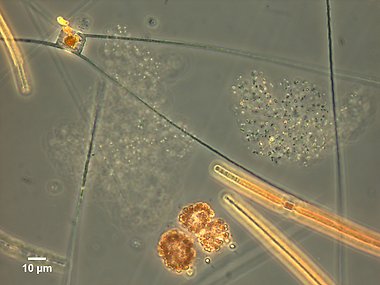
Tiny photosynthetic organisms in the Baltic Sea can contribute substantially to the transport of carbon from surface waters to deeper parts of the sea. A new study from the Department of Ecology, Environment and Plant Sciences (DEEP) at Stockholm University shows that their ability to form colonies and aggregates is an important factor determining how much of their biomass sinks.
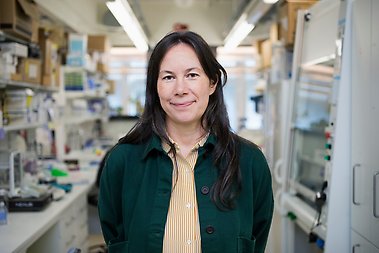
The 2026 Nobel Prize in Physiology or Medicine is awarded to Karl Deisseroth, Peter Hegemann and Georg Nagel for optogenetics – a method that makes it possible to show how nerve cells shape memories, feelings and behaviours in the living brain.
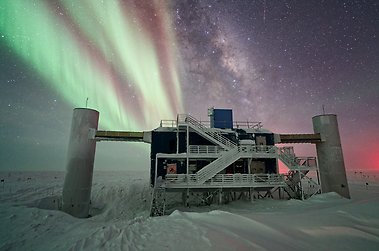
This year’s Nobel Prize in Physics has been awarded to Francis Halzen for his decisive contributions to the IceCube Neutrino Observatory and the discovery of high-energy neutrinos from space. Stockholm University has been part of this research for several decades, from IceCube’s predecessor AMANDA to today’s observatory at the South Pole.
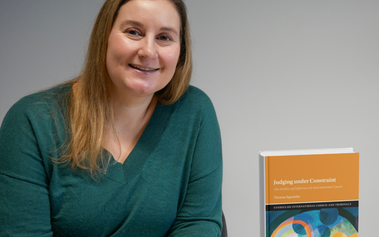
Theresa Squatrito, Associate Professor in International Relations at the London School of Economics and Political Science (LSE), is spending the next month at Stockholm University as a guest of the Department of Political Science and the Stockholm Center on Global Governance (SCGG).
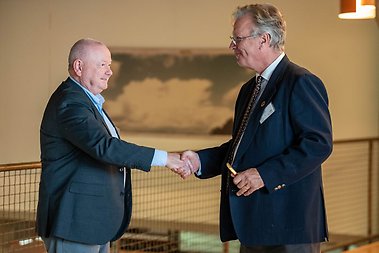
By bringing together automated experiments, advanced chemical analysis and artificial intelligence, the new CircuLab research infrastructure aims to make the development of sustainable materials more integrated and efficient. The platform was inaugurated at Stockholm University on 30 September.