


Politicians Are Smarter Than Researchers Think. They Just Need a Good Briefing.
“Politicians aren’t in a position to read and appreciate primary literature – they often need somebody to explain the science and its significance,” said Erik Angner, a professor of practical philosophy, during a panel discussion at Stockholm University on how researchers can share their knowledge with politicians.
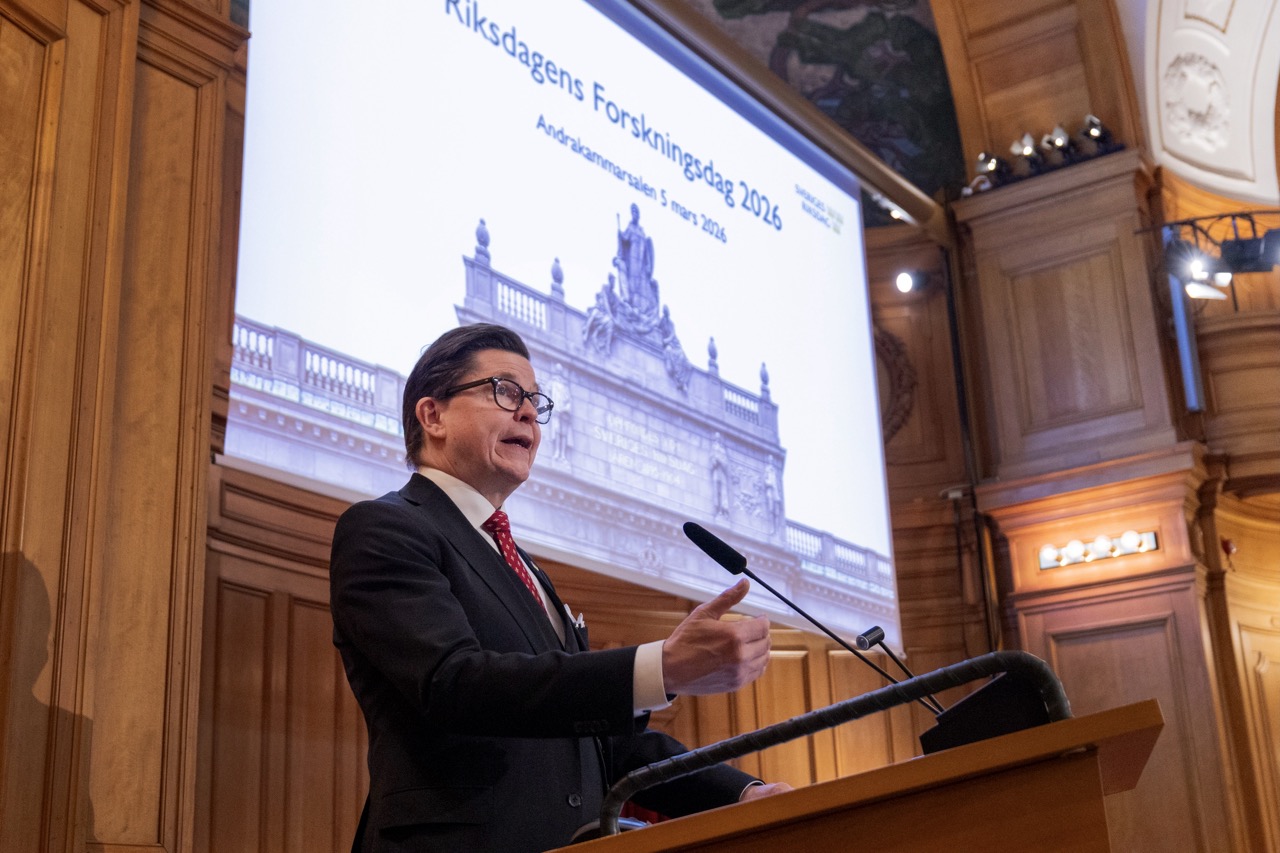
Andreas Norlén, the speaker of Sweden's Parliament, the Riksdag, opening a seminar at its annual Research Day on March 5, 2026. Photo: Melker Dahlstrand/Sveriges riksdag
But he did not want to underestimate politicians. “Politicians are a lot smarter than you think, but a lot less knowledgeable about your discipline than you can even imagine,” he said. He encouraged researchers to think of their interactions with the policy community not as a dumbed-down research seminar, but as a highly targeted introductory course in their area of specialization. “Try to translate your insights into actionable advice – advice that people can use in their life and work,” he added.
Karin Bäckstrand, a professor of environmental social science at Stockholm University, has seen the gap firsthand. During her four years on the Swedish Climate Policy Council (Klimatpolitiska rådet) “we gave 100 recommendations. The government adopted about 10 percent of them.” The council could also tell whether government policies were in line with the climate goals. “Politicians have to listen to climate science,” she said.
Jens Orback, a former journalist and Social Democratic minister who is now a strategic advisor at the Global Challenges Foundation, offered the view from the other side of the table. “From a political point of view, we are obviously interested in knowledge. If you have the knowledge and you can spread it – you have a very strong hand,” he said.
But “it is hard to read a lot when you’re a politician,” he said, urging researchers to connect with politicians and present their research in an accessible way. He also suggested turning the tables: “Why not invite them as we are inviting researchers?”
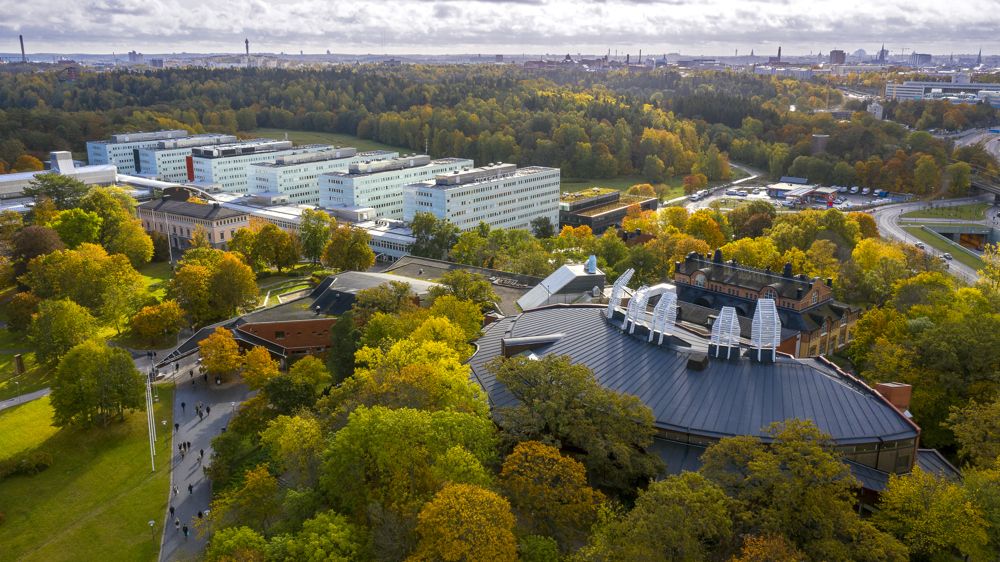
The policy outreach session was held during an SCGG workshop on October 1 in Aula Magna at Stockholm University's main campus. File photo from 2019. Sören Andersson/Stockholm University
“As a politician, it’s not enough that I get that knowledge. It’s much easier for me if the voters also get the same information. A way of affecting politicians is by affecting the citizens and voters as well,” Orback said.
From the audience, Jonas Tallberg, co-director of the Stockholm Center on Global Governance (SCGG), made a similar point: “The ultimate aim is not always to just reach the politicians but to have impact on the public.”
Bäckstrand acknowledged that “there is a huge distrust in science and scientific advice”, but said that engaging with society, though time-consuming, “can be extremely rewarding” – and can even inspire one’s teaching.
Her advice: be confident in the value of your knowledge. When you give scientific advice – be clear about what “hat” you’re wearing – “Are you providing evidence? Or translating evidence?”; and build relationships – and listen. “I think policy impact seldom happens on one occasion. You need to interact.”
Looking ahead, the panelists agreed that research will be in high demand, even as it is increasingly contested. “We need robust scientific evidence more than ever,” Bäckstrand said.
Orback agreed. “We need an IPCC for AI and for the whole planet. We need to have robust research as a platform.”
Angner warned that expertise itself is under pressure, pointing to Hungary, where universities were targeted by former Prime Minister Viktor Orbán’s government. “People didn’t see it coming in Hungary. We need to protest attacks on the very idea of expertise and the epistemic institutions that generate it, as well as act in solidarity with the members of the scientific community who are targeted.”
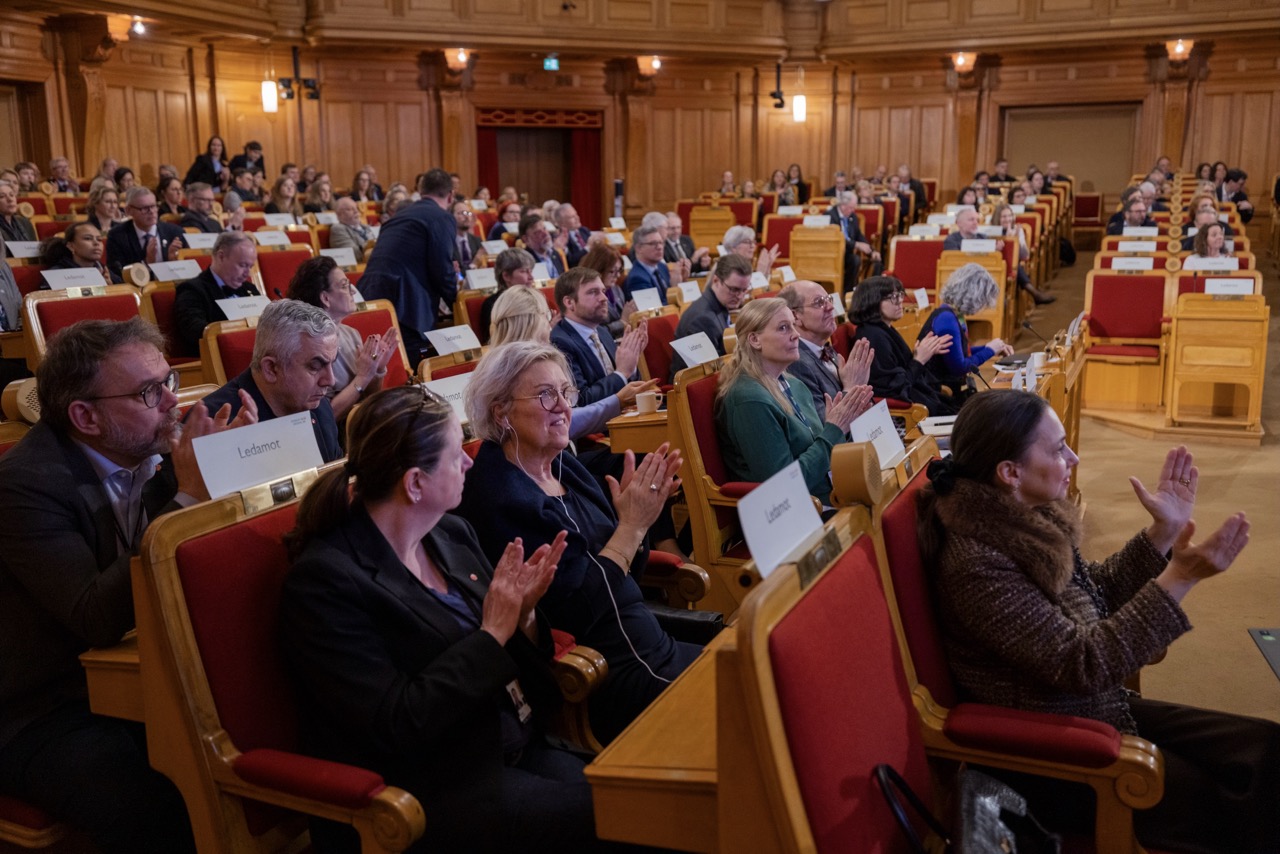
Members of Sweden's Parliament applauding at its annual Research Day on March 5, 2026. The event opened with seminars for individual committees, followed by a joint session with invited researchers on politics and long-term challenges. Photo: Melker Dahlstrand/Sveriges riksdag
About the session
The policy outreach session was moderated by Mark Klamberg, professor of public international law and editor-in-chief of SCGG’s new policy brief series. It was part of an internal SCGG workshop at Stockholm University on October 1, which also included presentations chaired by Sally Longworth, post-doctoral researcher in public international law, speed-talks chaired by Marcel Jahn, post-doctoral fellow in philosophy, and collaborative sessions focusing on ongoing research applications. The workshop was organized by Matilda Petersson, researcher in international relations and research coordinator at the center. All are researchers at Stockholm University.
Last updated: 2026-10-08
Source: Department of Political Science