News

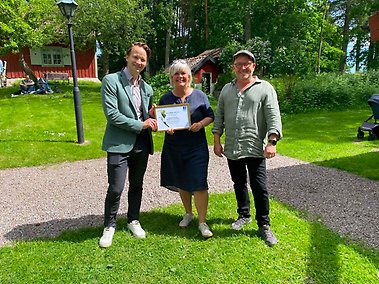
  • Station manager Eva Lindell and technician Mattias Murphy (right) receive the award from Rasmus Deltéus of Trosa Municipality (left). Photo: Trostorp

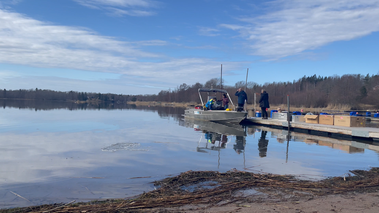
    Rewarded long-term environmental efforts at the Askö Laboratory

    Stockholm University's marine research station, the Askö Laboratory, has been awarded the Trosa Municipality Environmental Prize for 2026—in recognition of its work, which has enabled decades of research and education on the marine environment.

    Stockholm University Baltic Sea Centre
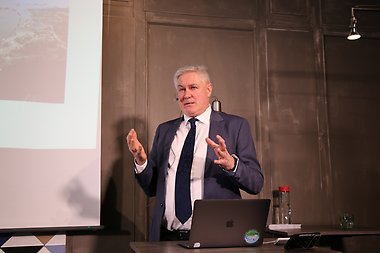
  • Nordic Marine Science Meeting brings together experts in Stockholm

    For the first time in more than a decade, marine researchers and professionals from across the Nordic region will gather under a common banner. The Nordic Marine Science Meeting 2026 aims to strengthen collaboration across disciplines from all Nordic countries while broadening the conversation to include climate, atmospheric science and policy-related perspectives on the future of the seas.

    Stockholm University Baltic Sea Centre
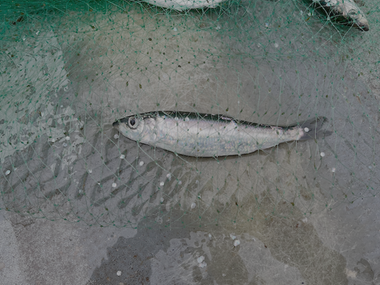
  • A singel herring in a fishing net.

    Herring stocks are increasing – Baltic Sea Centre researchers urge caution

    2026.06.04 The recent advice from ICES paves the way for a significant TAC increase ifor Baltic herring and sprat next year. If quotas are set according to headline advice, there is a high risk that the two major herring stocks will fail to meet the targets set out in the management plan.

    Stockholm University Baltic Sea Centre
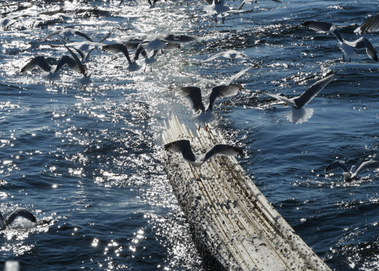
  • Herring trawling off the island Gotland.

    Lövin’s Baltic Sea Report – a political tool for more precautionary fishing quotas

    2026.06.04 Industrial fishing for Baltic herring and sprat will not be halted immediately, as suggested in the European Parliament’s ‘Baltic Sea Report’. However, in the long term, the report could serve as a political tool to make the EU’s fisheries management less risk-prone and more focused on stock recovery, according to fisheries experts at the Baltic Sea Centre.

    Stockholm University Baltic Sea Centre
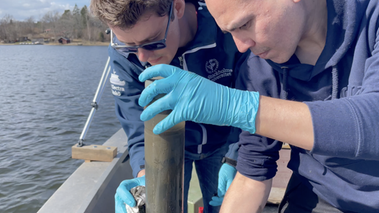
  • Researchers Martijn Hermans (left) and Alexis Fonseca (right) sample sediment cores in a Baltic Sea bay.

    Surprising discovery of cable bacteria in oxygen-free seabed

    Remarkable so-called cable bacteria have for the first time been found decimetres down in completely oxygen-free sediments. The discovery raises new questions: how can they survive there – and what impact does their presence have on oxygen-depleted marine environments?

    Stockholm University Baltic Sea Centre
  • Tellus relaunches with first publications spanning atmospheric processes, ocean change, and climate research

    The scientific journal Tellus has been relaunched as a unified, independent, and scientist-led platform for Earth system science. The first set of publications reflects this renewed scope, bringing together research that advances understanding of the processes and interactions shaping the Earth system in a changing climate. With an expanded editorial structure and broader scientific scope, Tellus aims to publish high-quality, interdisciplinary research across the atmosphere, oceans, land, cryosphere, and biosphere—fields that are increasingly interconnected in the study of global environmental change.

    Bolin Centre for Climate Research
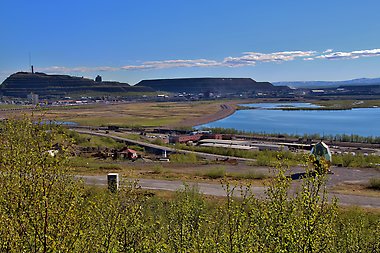
  • Researchers warn the Commission: Don't open up the Water Framework Directive

    Revising the Water Framework Directive entails significant risks, and should not be rushed. Instead, priority should be given to implementing, funding and enforcing its existing obligations. This is emphasised by a large group of researchers and experts at Stockholm University in a consultation response to an initiative from the European Commission related to the mining sector.

    Stockholm University Baltic Sea Centre
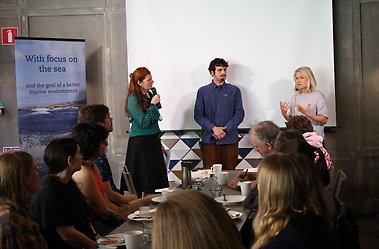
  • Baltic Breakfast: Dredging polluted sediments comes with risks – better alternatives exist

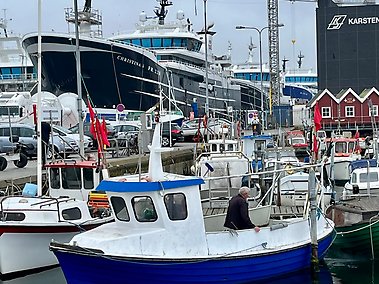
    The harbour area in Oskarshamn is one of many heavily contaminated marine sites in Sweden. To address the pollution, the area was dredged at a cost of SEK 630 million. However, research presented at the recent Baltic Breakfast seminar suggest that this remediation may have been unnecessary. Leaving the sediments undisturbed, or applying thin-layer capping, could be more suitable in this type of environment.

    Stockholm University Baltic Sea Centre